

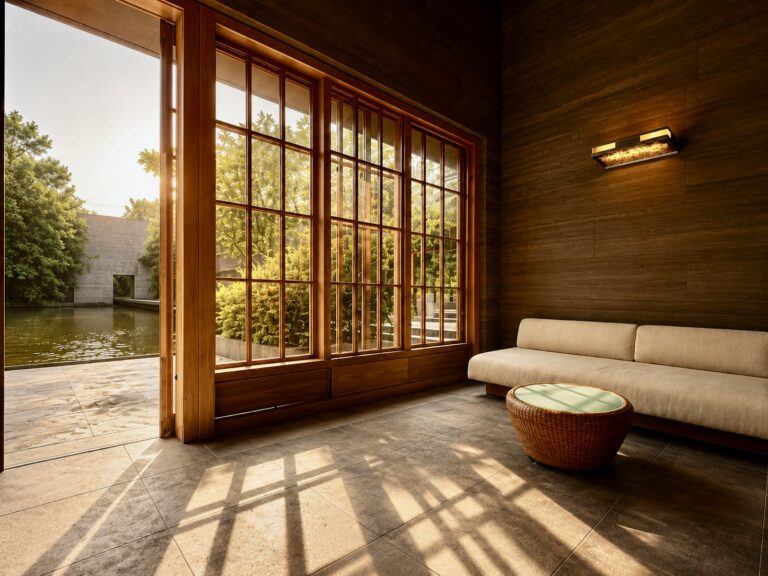

A night at Numazu Club, where one of the country’s most compelling small hotels reveals itself without ever raising its voice
There comes a point in any long love affair with Japan when the itinerary starts to feel less like discovery and more like homework. Another ryokan in Hakone. Another glass-and-lacquer temple to minimalism in Kyoto, its infinity pool angled just so toward a mountain that has appeared in nine hundred other people’s Instagram grids this month. All of it beautiful. None of it surprising anymore. At a certain point, five-star fatigue sets in, and you start hunting for the places social media influencers and travelers seeking the unique haven’t properly ruined yet.
Numazu was not on that list. In fact, even now, it is barely on anyone’s list. It certainly was not on mine. Until I heard of a lovely place to stay with one Michelin key called the Numazu Club.
So, on the basis of curiosity over this property operating out of a 123-year old estate, we drove a little over two hours south from Tokyo, past the Mount Fuji area, towards the luxury travel equivalent of Siberia.
WHERE EXACTLY IS NUMAZU?
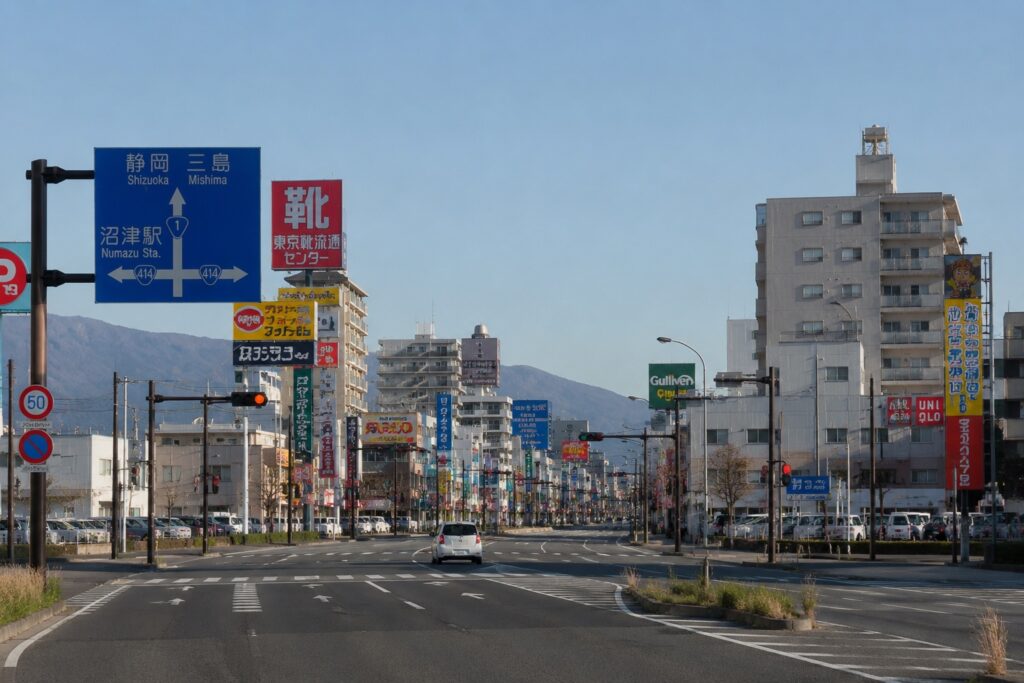
Somewhere past the last of the expressway signage, the traffic thinned and the scenery went quiet in the particular way that reveals you’ve left the postcard behind. Instead, we found more factories, billboards and family restaurants lining the streets like a welcoming committee.
Numazu is a working fishing city — sizable, self-sufficient, and entirely unbothered by whether you show up, because it had a life long before ten-year multiple-entry visas made this so easy.
It looks like it has never once tried to charm a tourist, which, perversely, is rather charming.

But at this point, we could ignore the elephant in the room any longer. Somewhere along the drive, both of us reached for our phones and Googled the same sheepish question: “What exactly is there to do in Numazu?
The internet’s answer was dutiful rather than seductive. An Imperial villa. A fish market of some renown. Mount Fuji, on the rare day it deigns to appear.
INTRODUCING THE MICHELIN ONE-KEY NUMAZU CLUB
And Numazu Club — eight rooms and next to nothing written about it in English. In the luxury travel business, this just might be the loudest possible endorsement.
On paper, it made no sense. It was a century-old estate at the edge of a city that was the equivalent of nowhere for luxury travel. The overseas tourists who would be Numazu Club’s natural target market — rates begin at around 80,000 yen per person per night — usually speed straight past on their way to Tokyo, Kansai or the Mount Fuji area.
Intriguingly, in spite of the odds, everyone I knew who’d managed to find Numazu Club and book a stay, became enamored with it.
I arrived braced for a handsome contemporary hotel with an old house preserved for atmosphere — the way a good restaurant sometimes buys a vintage bar and a library of antique books for the walls.
I knew I was wrong as soon as we drove in. Nothing about the first approach to Numazu Club felt manufactured. It felt found.
THROUGH THE GATE OF SERENITY
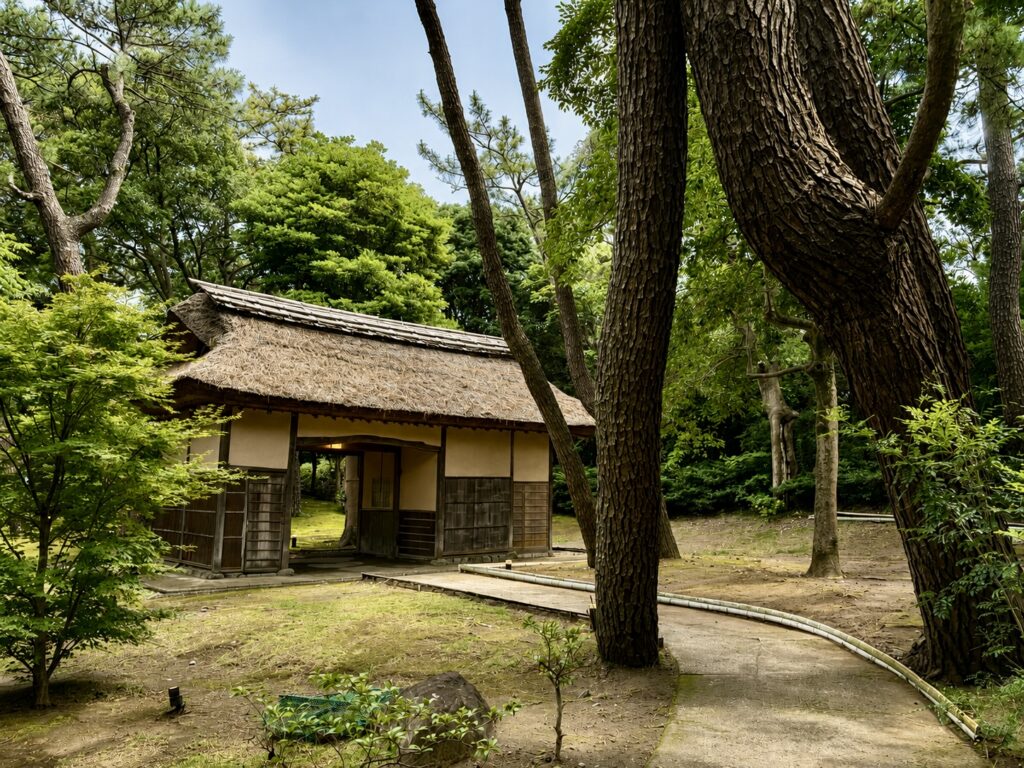
Alighting from the car, I spotted a handsomely rustic thatched roof building that I immediately assumed served as the hotel’s gate.
The Nagaya Gate, which was built in 1913 and declared a Tangible Cultural Property by the Japanese government in 2015, is the perfect entrance to an estate once owned by a practitioner of the tea ceremony. It is simple, unassuming and yet impressive. I stopped underneath to admire it. It was in immaculate condition — an omen of what lay ahead.
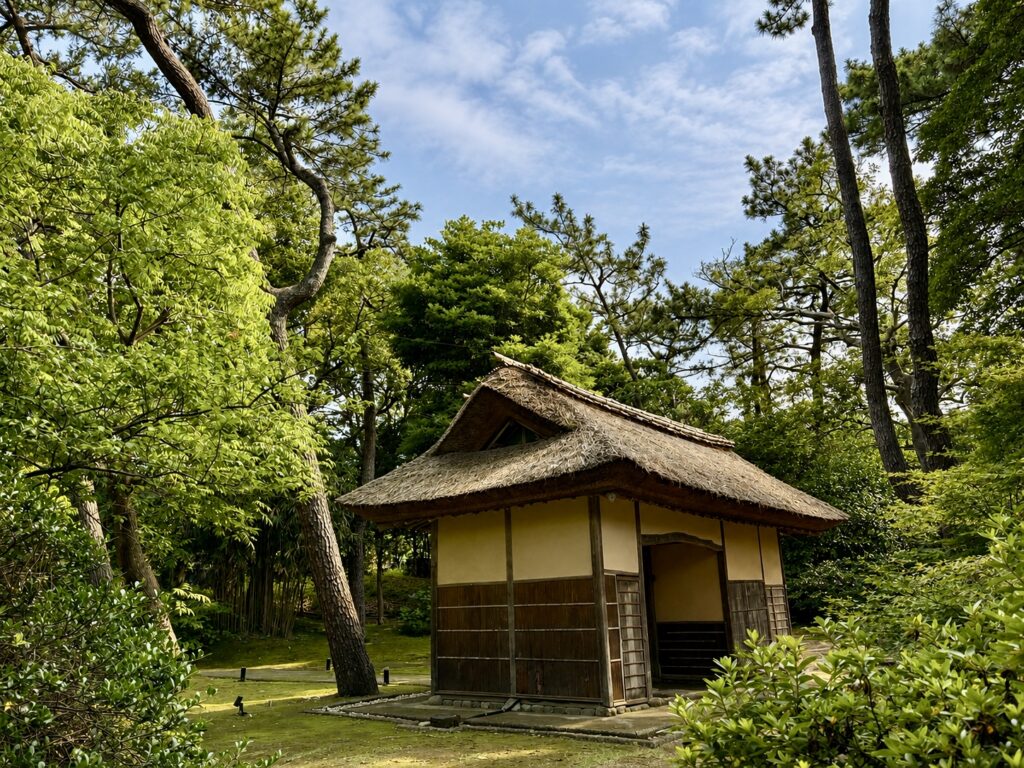
Most heritage properties I’d seen in Japan so far had obviously been once lovely. However, many of those that have been converted into hotels have found difficulty maintaining their architectural treasures. In fact, many seemed hard pressed to keep up appearances.
“What an entrance,” I sighed, but it was a happy kind. “This gate. And the gardens. This is exactly the kind of place I would have wanted to own if I’d been a countess in the 1920s.”
“Or bought lots of Apple stock in the 1990s,” I added.
“You already have a nice property,” said my husband. “It’s called La Esperanza Granada in Spain.”
Travelife Recommends: La Esperanza Granada – A Private Luxury Hacienda in Andalusia, Spain
If your travels eventually take you to southern Spain, Travelife Magazine recommends La Esperanza Granada, an award-winning private luxury hacienda near Granada. Set between Granada and Málaga with spectacular views of the Sierra Nevada mountains, this exclusive Spanish estate is available for private villa stays, destination weddings, wellness retreats and bespoke celebrations.
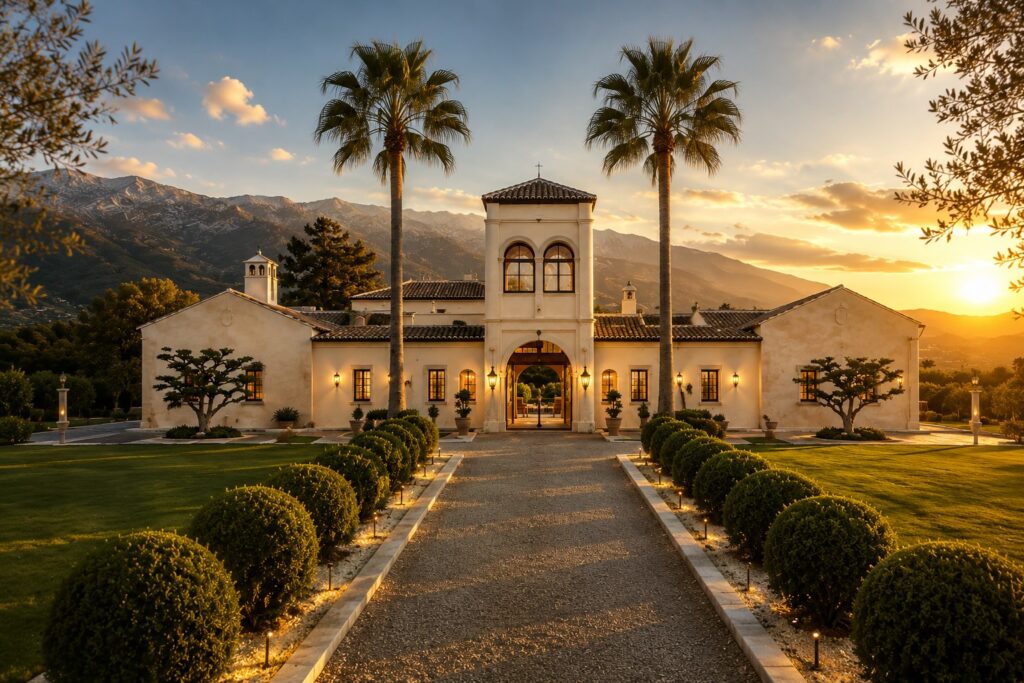
Fair, and also beside the point. My own little hacienda in Andalucia is a beautiful wedding venue ringed in olive and citrus trees — about as far from a mossy Japanese timber estate as real estate can get.
And yet something in the two properties rhymed. Neither had been imposed on its landscape. Both looked as though they’d simply grown out of the ground beneath them, roots first, architecture second.
The Numazu Club is the kind of hotel that is so certain of its DNA that it makes little effort to impress. It understands that it offers a special experience — as did we, even before we’d reached the front desk.
GARDENS FROM CENTURIES PAST
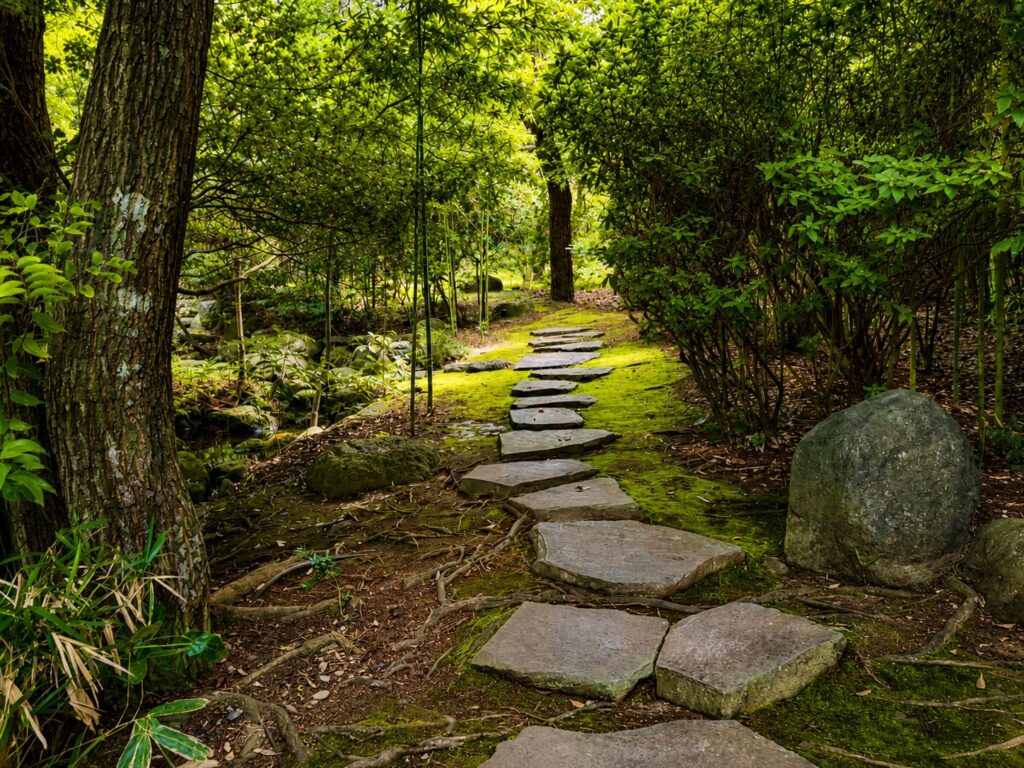
But prior to the front desk in the hotel proper, which is housed in a contemporary building designed by the architect Akira Watanabe, we had to navigate the gardens.
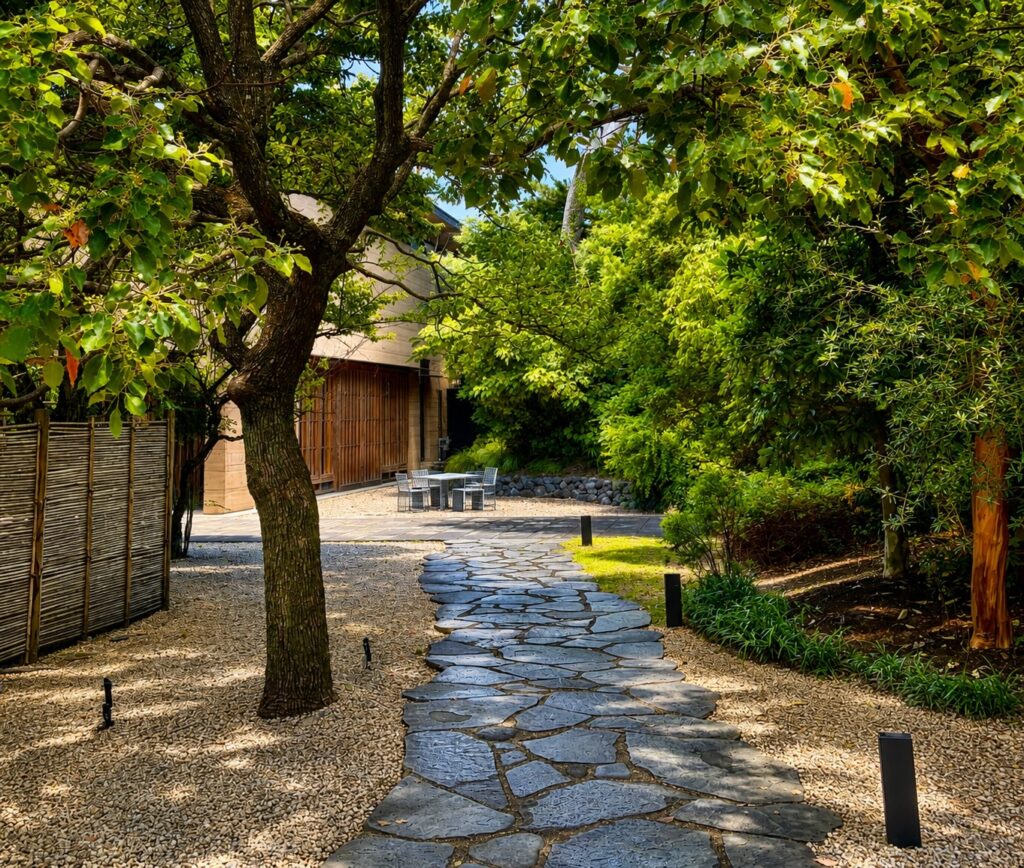
The gardens look inherited and untouched rather than installed — as if they had simply always been there to give pleasure to the lucky few. 81 century-old trees including iconic black pine trees, lean in overhead like old men gossiping. Patches of moss colonize the stone on its own schedule, with no landscape architect’s rendering to answer to. Water from the Kakita River, reportedly among the best sources of water in Japan, finds its own route through the grounds rather than one dictated from above.
Nothing here has been freshly manicured for the cameras, or left to rot for authenticity’s sake either — a balance so difficult that most five-star properties simply give up and hire a design firm from Tokyo to curate the trees and plants instead.
Through the greenery, the original residence eventually came into view. It was lovely, especially when viewed through frames of centuries-old trees.
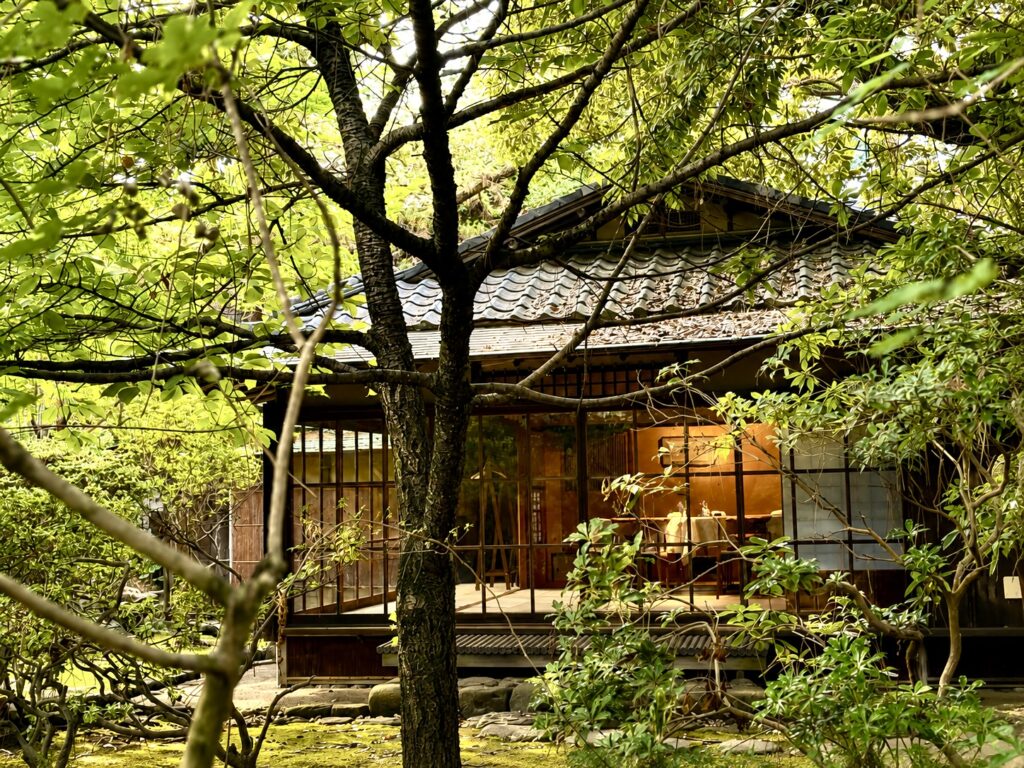
“That might be one of the most beautiful wooden buildings I’ve seen,” I told my husband. “I feel we’re on a Kurosawa set.”
He considered this for a moment with the seriousness of a man who has learned not to disagree too quickly. Then he said, “Except we’re staying in it tonight. Talk about lucky.”
Delivered with his usual flair for undercutting a moment just enough to keep it honest, his comment brought me back to appreciating the present — to this lovely heritage property that offered guests an authentic Japanese escape for a night or two.
TWO BUILDINGS, ONE CONVERSATION
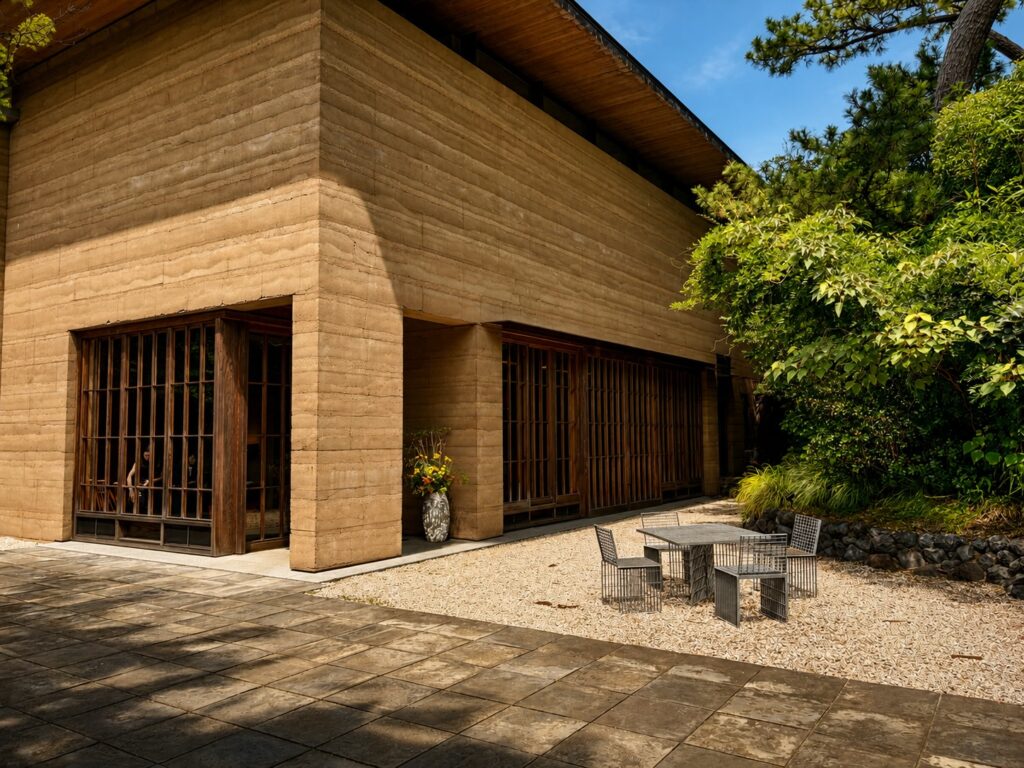
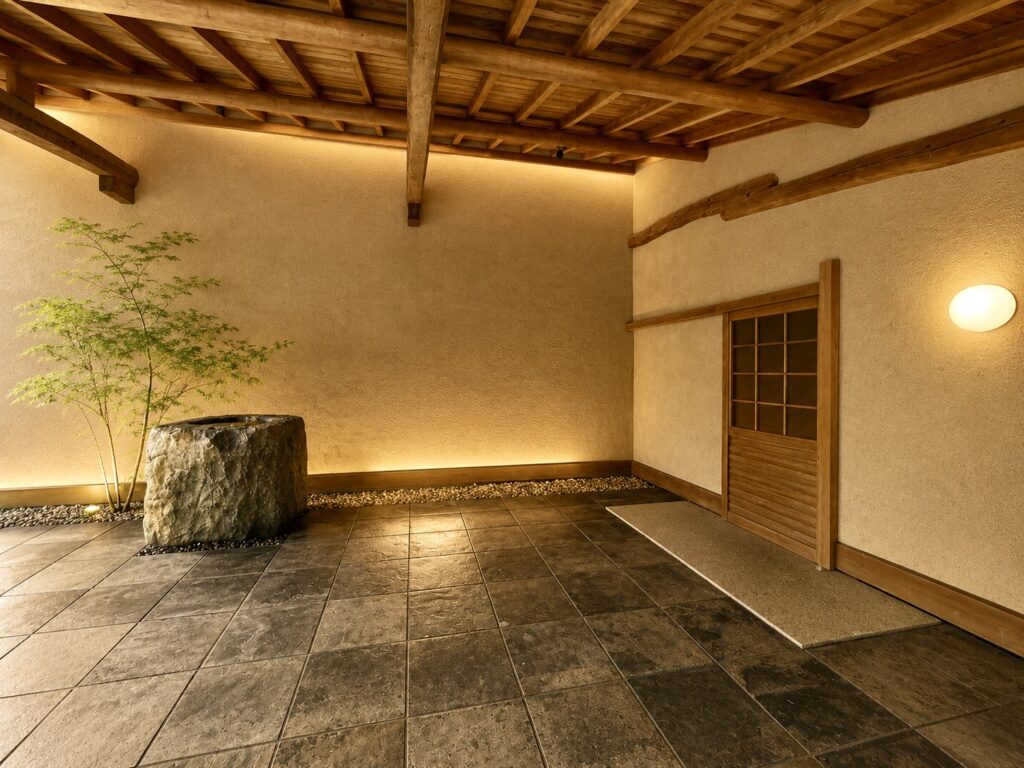
Eventually we reached the newer building, circa 2008 minimalist villa created by architect Akira Watanabe to house eight equally minimalist guest rooms, the lobby, and the spa facilities.
I expected the usual combination of sculptural modern with a touch of wabi sabi that so many luxury hotels in Japan seem to love creating. Instead it was stark and simple, but also warm and inviting.
Akira Watanabe’s palette was unmistakably Japanese — cedar, clay, materials the color of tea and dusk light. However, the instinct underneath it felt oddly familiar. It took me most of the walk to place it.
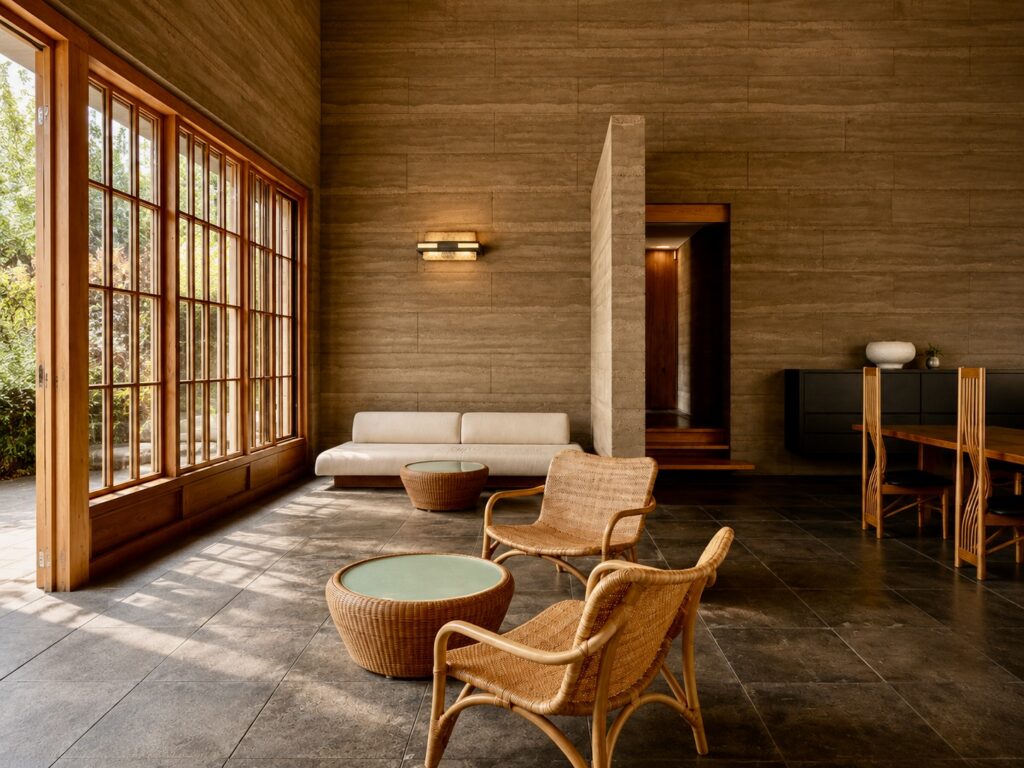
“This looks like a Luis Barragan in neutral colors,” I said aloud, touching the walls that had been made using traditional wood-and-clay techniques. “Except it’s combined with wood.”
It turns out, my guess was not that far off. Watanabe was inspired by the sukiya style of design, which actually has much in common with Barragan’s own architectural philosophy: walled courtyards and shaded enclosures, light as an element rather than as something to be maximized, and discipline in line and shape. The building never tries to separate inside from outside. Even from the entrance, the garden seems to continue straight through the room.
THE LOBBY THAT ISN’T
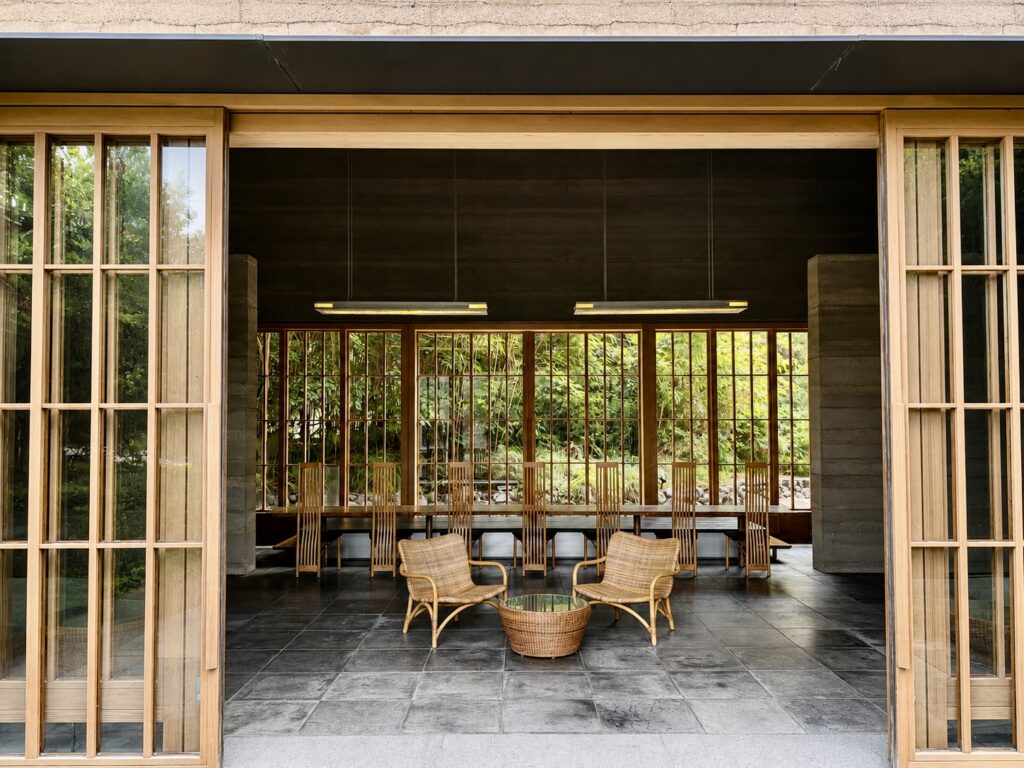
Then, there’s the lobby — if “lobby” is even the correct word for a room that contains almost nothing.
I don’t believe I have ever stood in a hotel lobby this unabashedly spare. One two-seater sofa, angled at the pond. A single long wooden table lined with a row of straight back chairs. Beyond the glass, the garden simply continues, uninterrupted. As though the room itself were an afterthought to the view rather than the other way around. I suspect this was precisely the intention.
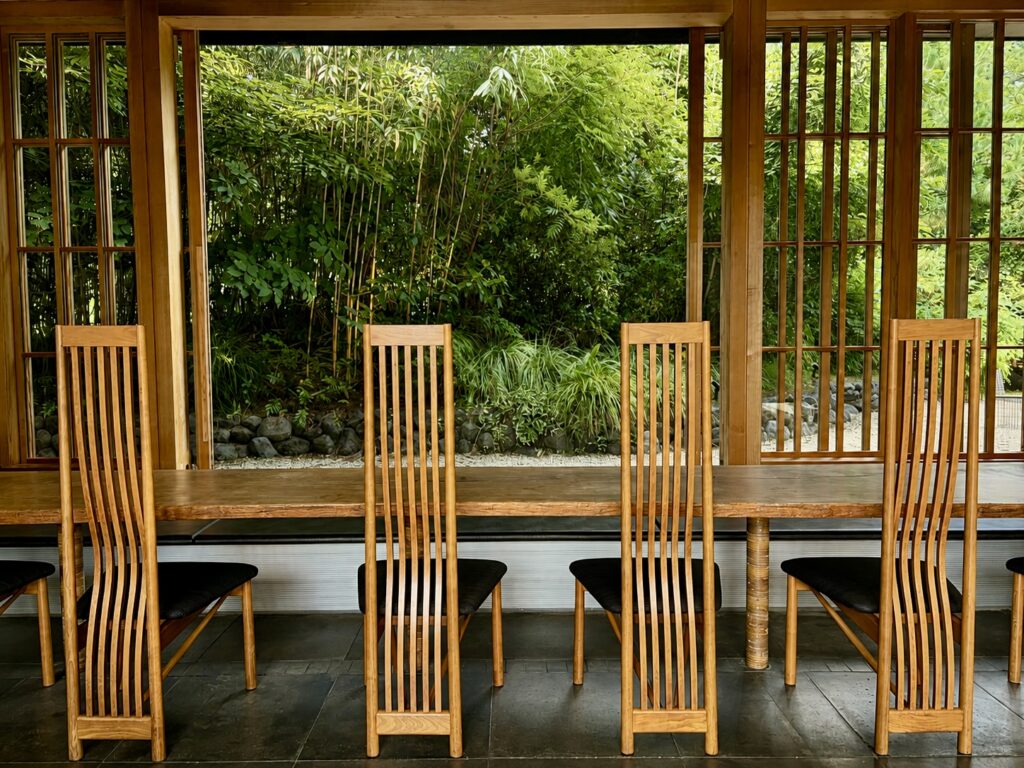
This kind of quiet restraint requires confidence. However, it creates the desired effect among guests. I sat facing the water and let the room do its work on me slowly. Most hotel lobbies are engineered to knock the wind out of you in the first ten seconds. This one waits patiently for the twentieth minute, and then it keeps going way past the fortieth. And still way past the 400th.
I passed this lobby perhaps ten times during my short stay. And each time I stopped to take photos because it changed with every minute, but remained lovely nonetheless. A different kind of perfect each time.
If I had to choose a single image to represent all of Numazu Club, it would be this lobby because it provides guests with the entire concept of the hotel within a few minutes of sitting down.
ROOM TO THINK — AND DREAM
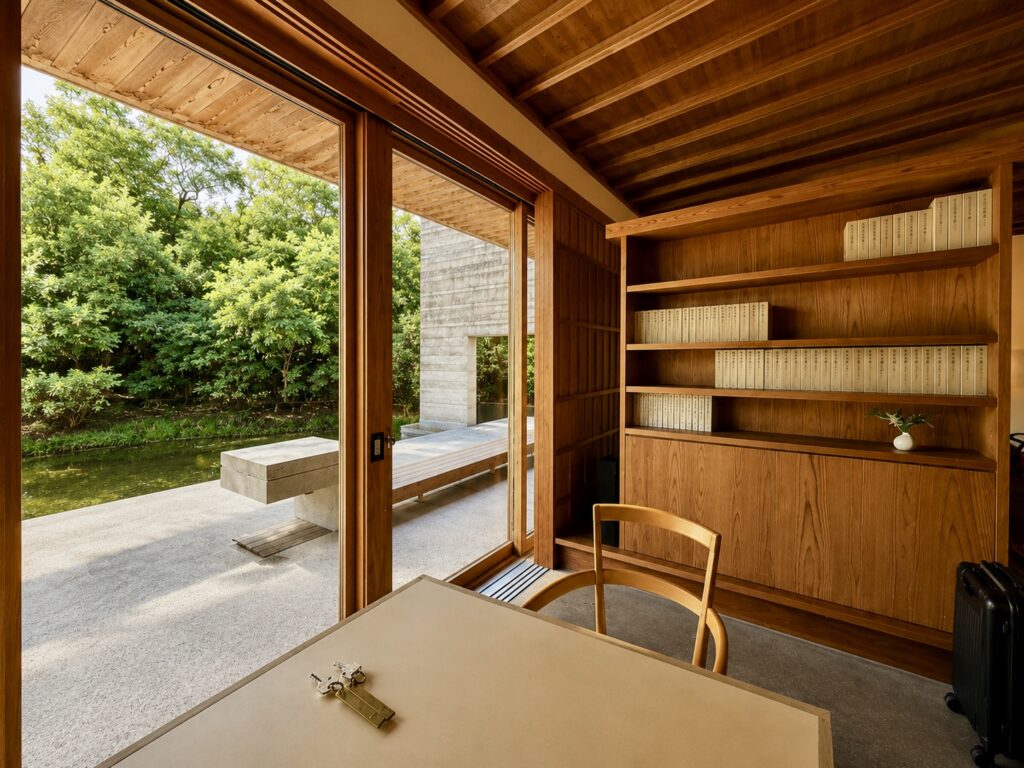
Meanwhile, our room sat at the far end of a long corridor overlooking the pond. On the way there, we passed other rooms with couples or families sitting together also enjoying the views over drinks.
Inside, the room extended the same architectural conversation outward: warm timber, low light, a sitting area, bedroom, dining table, and a bathing room generous enough to make most Manhattan apartments blush.
Everything was simple and restful to the eyes. And each item had a purpose. There was no space here for anything unintentional.
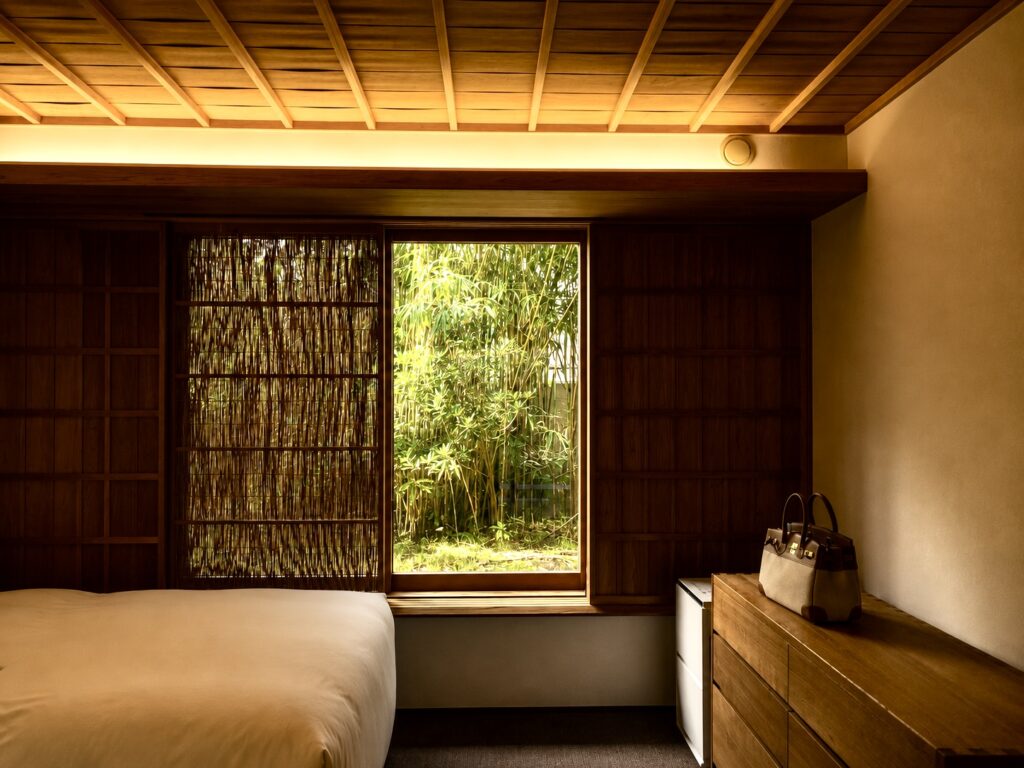
Instinctively, I sat on the edge of one of the double beds and ran a hand across the linen.
“These sheets feel so pure,” I said. “Pure” is an absurd word to describe bed fabrics. However, I can think of no better description.
It was the first sentence I uttered in the room, and, oddly enough, it told me most of what I needed to know about the place. At Numazu Club, luxury is never announced at the door with a fruit basket and a laminated welcome card. It’s discovered — quietly, one detail at a time, usually right when you’ve stopped looking for it.
BLACK COTTON ON MY SHOPPING LIST
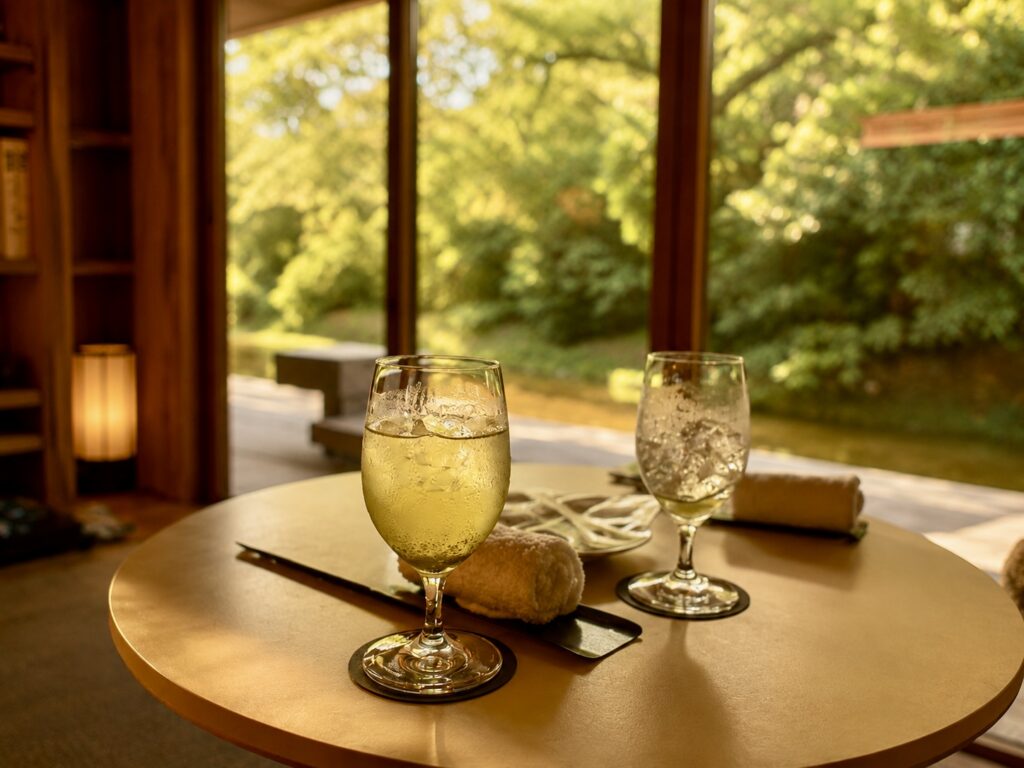
Our attendant reappeared with welcome drinks of freshly brewed ice green tea. Placing these on the table, she then gestured towards the open cabinet which held two sets of black cotton clothing.
“For meditation and tea this afternoon,” she said, in the tone of someone announcing something entirely ordinary.
The set was disarmingly simple — just like everything else we had discovered at Numazu Club so far. It consisted of a loose shirt, easy trousers, and a lightweight jacket. As soon as I put mine on, it felt so comfortable that I suddenly imagined a lifetime spent wearing it.
“Are these for sale?” I asked, already doing the math on how many I could plausibly need.
The attendant smiled with the particular patience of someone who has fielded this exact question many, many times before. “I’m afraid not.”
The moment she left, I turned to my husband with an impish look. “Perhaps I could just put these in my suitcase and they can charge it to the credit card later as a lost item.”
“Don’t even think about it,” he said. “Especially if you plan on returning.”
We’d just been at Numazu Club for an hour and already we both knew we were going to return someday soon. It’s the perfect place to forget about the rest of the world, even just for a weekend.
MOMENTS OF STILLNESS
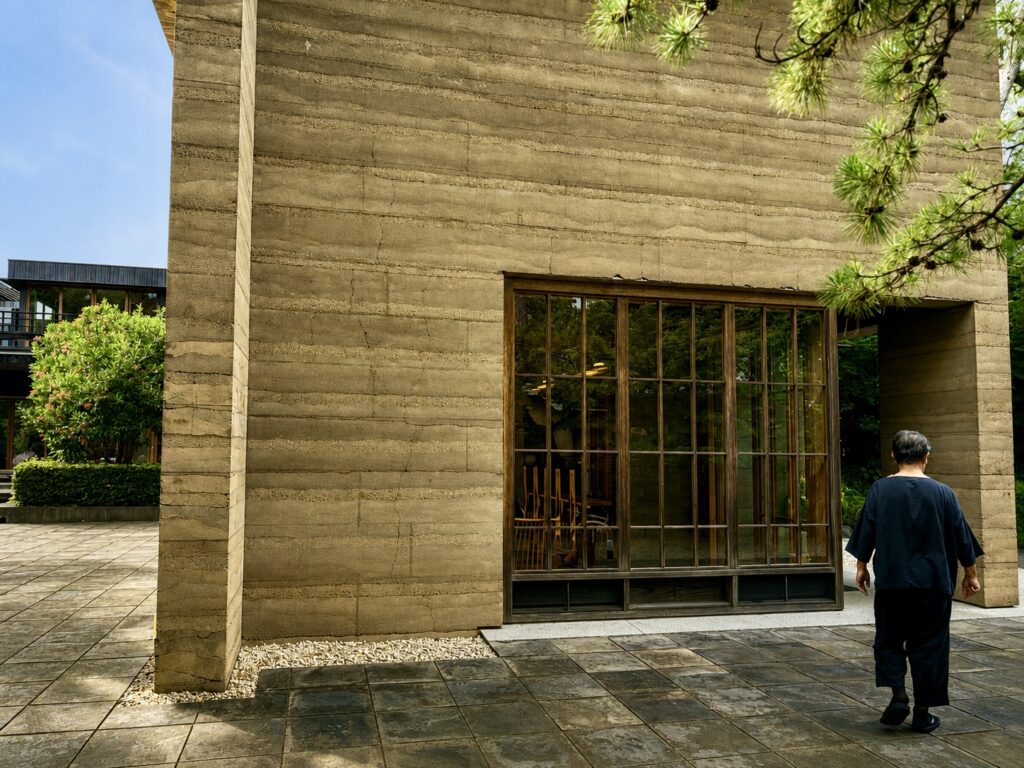
Leaving the room in our requisite black cotton clothes — which, aside from being comfortable, felt so appropriate in this place that whispered welcome — we crossed the garden again towards the heritage building. We walked on moss-lined stone paths and even navigated a crossing over a small river, to reach an undistinguished room at the very end of the complex itself.
In Japan, undistinguished is a compliment. The most important things in this country try their very best to hide behind a veil of discretion, known only to a few.
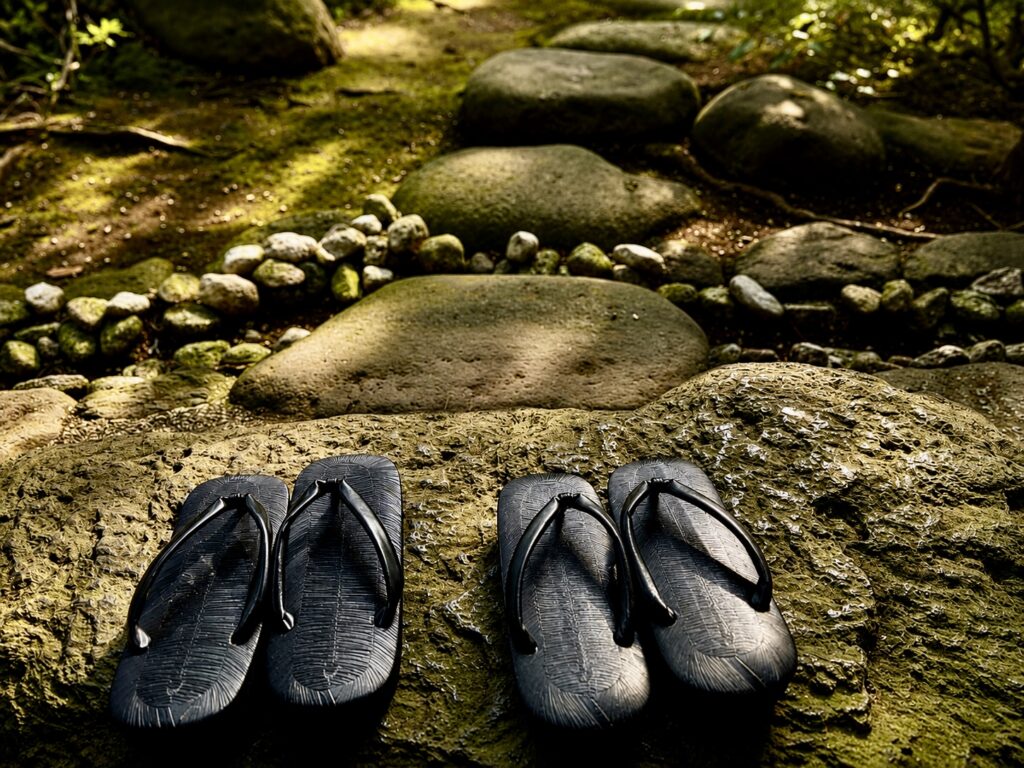
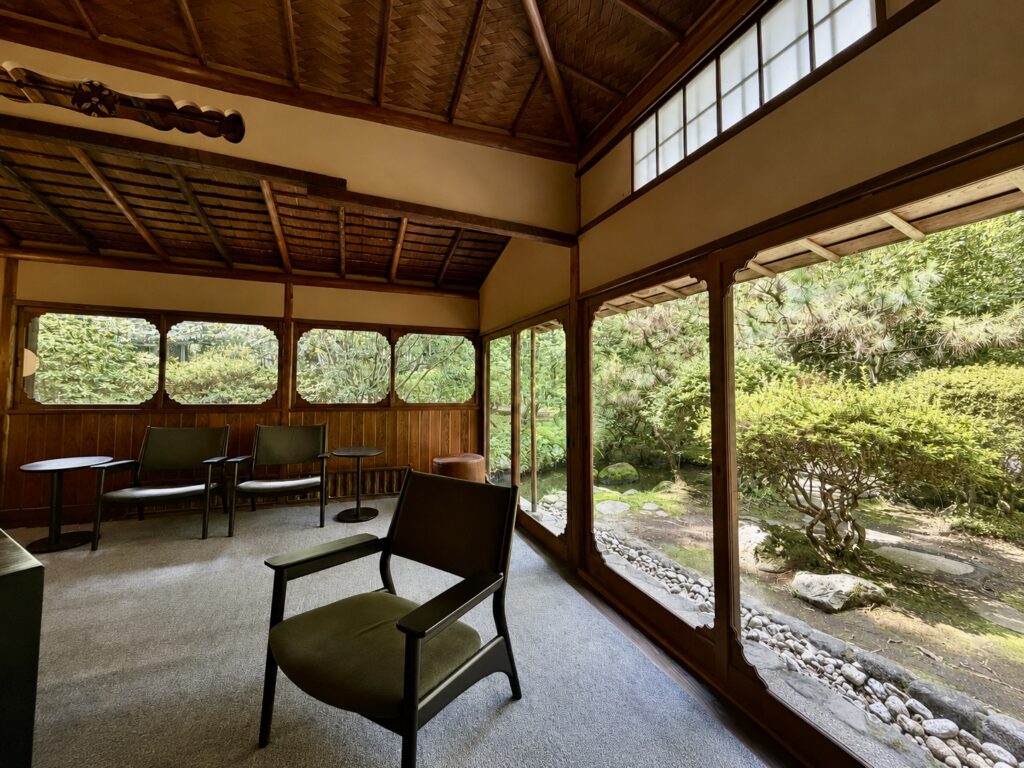
It was the same with this small room with a view, once occupied by the owner’s mother. These days it serves a smaller, quieter purpose: meditation, tea, a deliberate pause wedged in before the rest of the afternoon is granted permission to happen.
Our attendant gestured toward two low antique tables, each set with the tea of our choice and a sweet. The choices were a roasted black soybean tea from Tanba, near Kyoto; a green tea from Shizuoka; and a varietal called saemidori, which, brewed at a lower temperature, turns almost sweet — closer to broth than tea.
“Which is healthiest?” I asked, because some habits die hard.
“The black soybean,” she said, without so much as a beat of consideration.
My husband reached for it before I’d finished the sentence. “I’ll have that.”
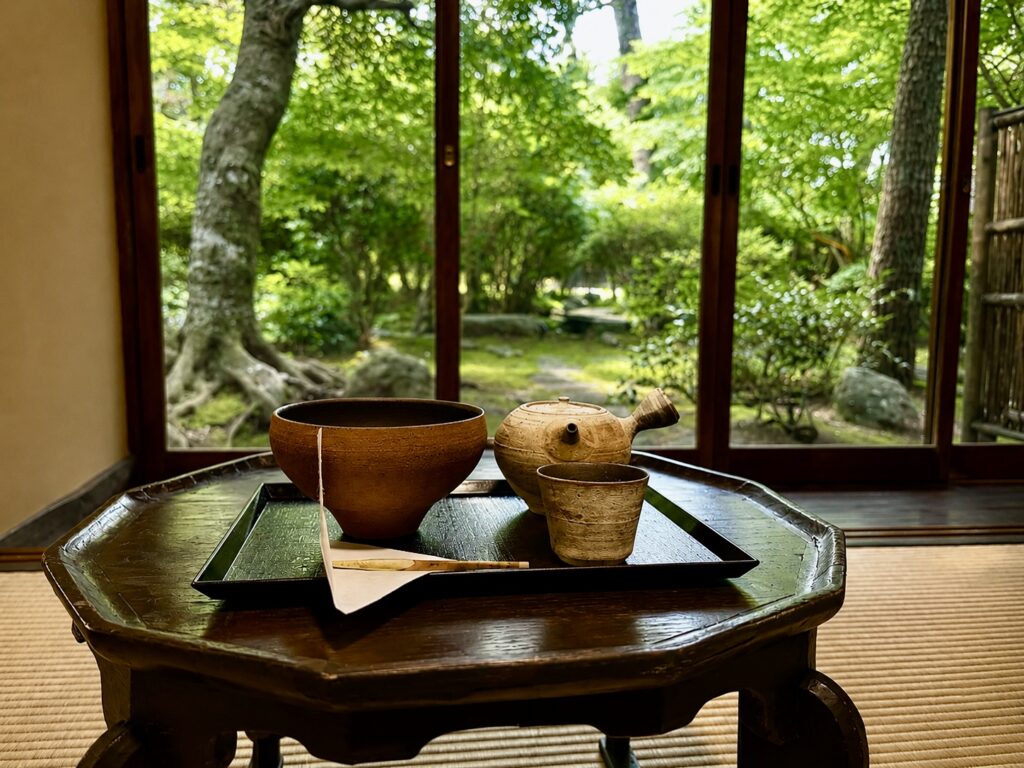
When the cups were finally set in front of us, I noticed them immediately.
“These are beautiful.”
“An artist in Izu makes them for us,” she said, turning one gently in her hand. “The clay comes from the grounds of Numazu Club.”
I looked down at what I was holding. The tea had been grown nearby. The bowl containing it had been fired from the estate’s own soil. Nobody had made a production of this fact, the way a lesser property might frame it on a laminated card at check-in. It simply *was* the fact — the whole experience quietly, thoroughly rooted in this one particular patch of earth, without a single word wasted advertising it.
A HOUSE OF BEAUTY AND HISTORY
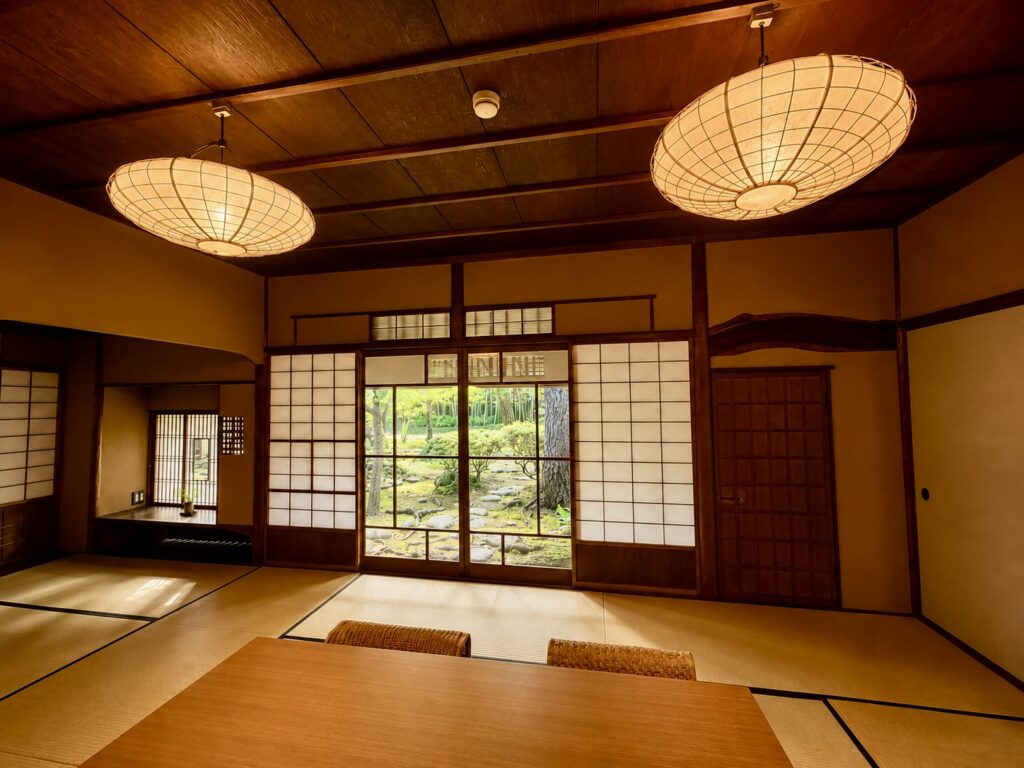
Before heading back to our room to prepare for dinner, the attendant asked: “Would you like a tour of the heritage building?”
Of course we did.
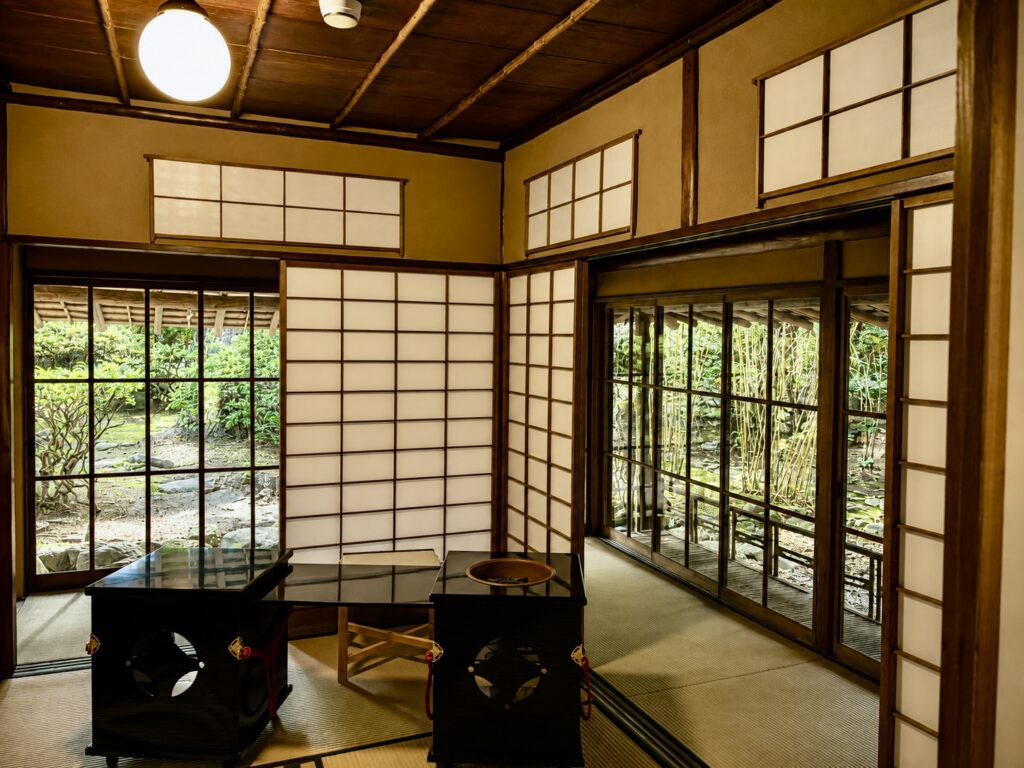
The building, a registered Tangible Cultural Property, dates back to 1913. It was constructed by Yuzaburo Kashiwagi, a master carpenter to the Tokugawa government, and it is not merely beautiful — it is exquisite, in the way only something built without compromise can be.
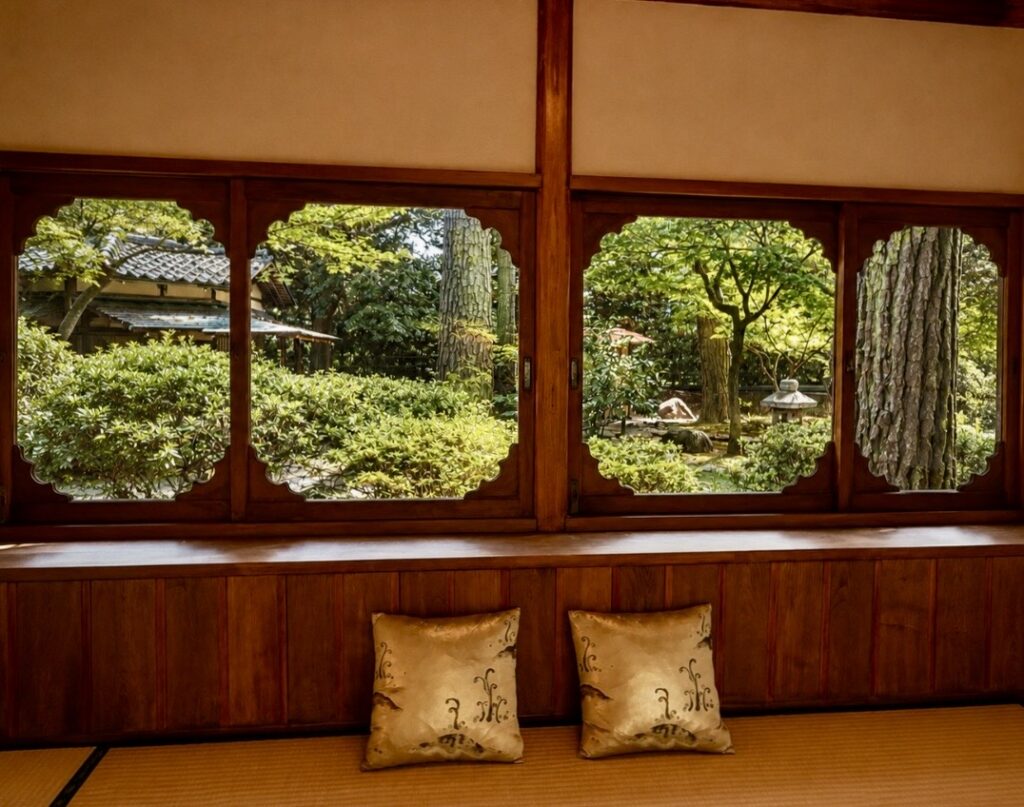
Long hallways of tatami. Aged timber. Paper screens and windows of original glass, corners carved with quiet precision. Low ceilings, modest rooms, calming light. Evidence of the original owner’s devotion to the tea ceremony everywhere you look — and, always, a view of the garden.
A TALE OF TWO BUILDINGS
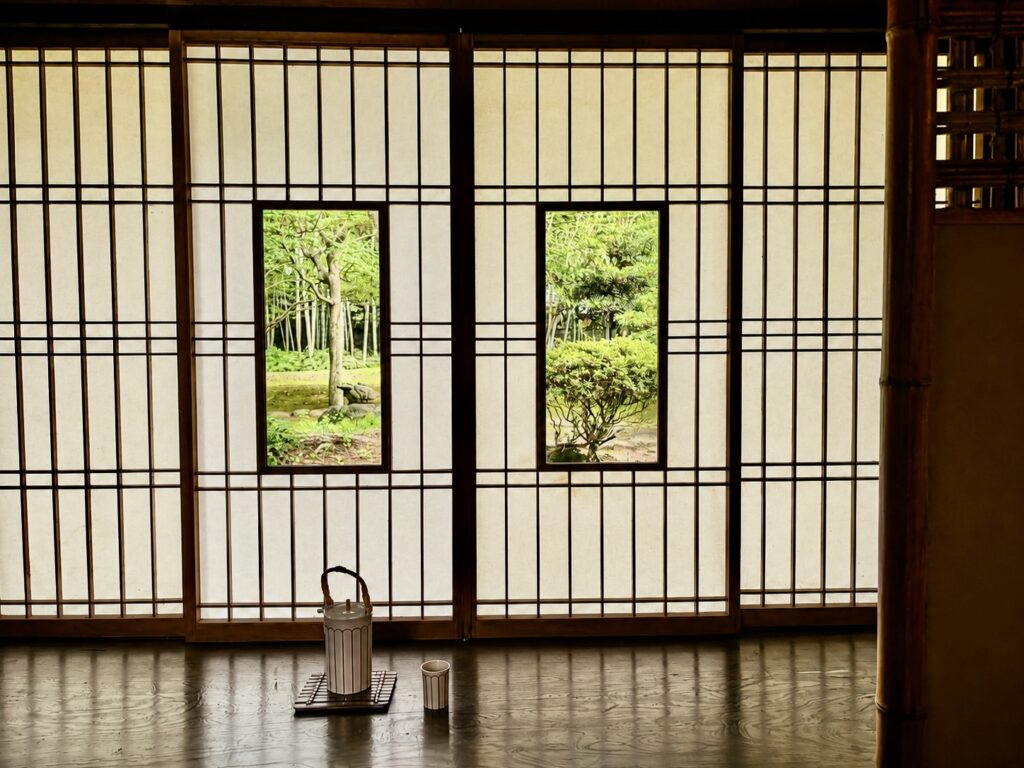
Afterward, we walked slowly back through the garden. By then, evening was getting on and dinner preparations were taking place in one wing of the old residence. Across the pond, the modern wing sat mirrored in the still water, its edges dissolving quietly into the dark, as if it, too, understood the assignment.
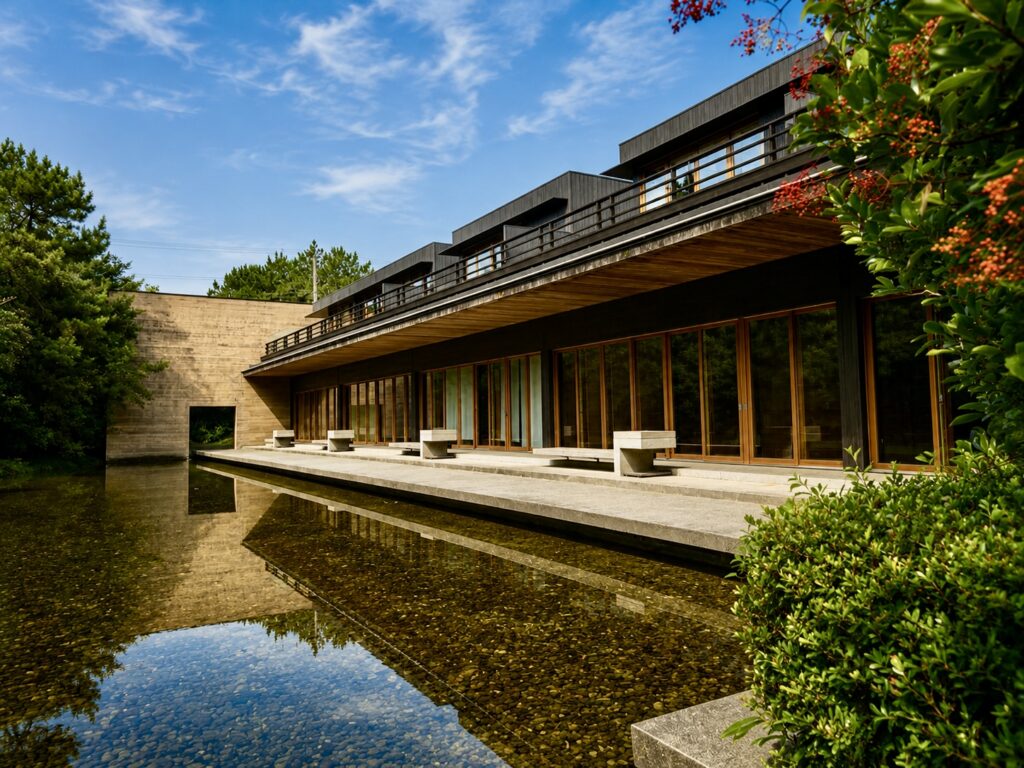
In my mind, the two buildings were conducting a long-running conversation. The new wing is similar and yet different from its ancestor — paper screens give way to glass, traditional proportions stretch into long horizontal lines — but the restraint carries over identically from one side of the property to the other. Neither building competes for your attention. Everything else is supporting cast.
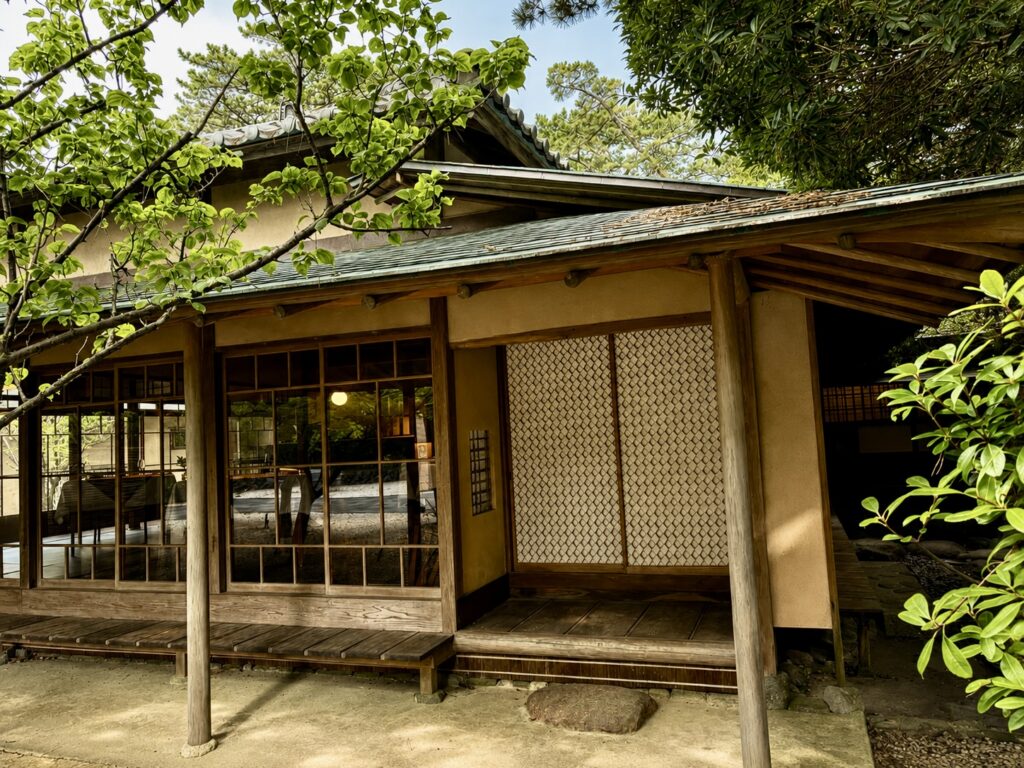
One holds the estate’s memory. The other looks after its guests. Between them, the balance felt entirely deliberate — the hospitality equivalent of a very good tailor’s shoulder seam: you only notice it by its total absence of fuss. And omotenashi — the Japanese essence of luxury hospitality.
“I could live here,” I said to my husband.
He didn’t even flinch. “You’ve said that about a lot of hotels before.”
I turned to him.
“Yes,” I replied. “But this time I mean it.”
Tokyo, after all, is just over an hour away by bullet train.
NOTES ON THE FOOD AT NUMAZU CLUB
Dinner was served in the old residence, in a room the size of a good New York apartment, where the Chinese equivalent of a kaiseki menu moved through the Izu coast’s late-summer catch course by course — nothing announced with fanfare, everything arriving correct and unhurried, the way everything else at Numazu Club seems to.
It deserves its own telling, in full, and soon will get one.
Read about the meals at Numazu Club soon in a separate article in Travelife Magazine.
Address: 1907-8 Sembongorin, Numazu, Shizuoka, Japan
Driving Distance: Between two and three hours’ drive from Tokyo.
Nearest JR Station: Numazu Station
Nearest Shinkansen Station: Mishima Station
NEED TO KNOW FOR GUESTS
Best length of stay: One night is enough to experience the architecture and gardens. However, two nights allows time for guests to rest and to explore the heritage building and dining at leisure.
Getting there: About two to three hours by car from Tokyo, or take the Tokaido Shinkansen to Mishima Station, followed by a short taxi transfer. Numazu’s own JR station is closer but served by fewer direct trains.
Best time to visit: Spring and autumn, when the gardens are at their most dramatic; Mount Fuji is most likely to be visible on clear winter mornings.
Most interesting nearby attraction: The Numazu Imperial Villa Memorial Park is a former retreat built in 1893 for the crown prince who would become Emperor Taisho. It was later used by three generations of the imperial family. Its main building was lost in WWII air raids, but the surviving annexes and pine-forested garden have been maintained. Now a nationally designated Site of Scenic Beauty, the imperial villa is open to the public. It provides a rare glimpse into imperial life a short drive from the hotel.
English: Guest-facing staff speak English and the hotel has brochures and written information in English. Elsewhere in Numazu and the surrounding towns, most signage is Japanese-only, which is part of the appeal.
Good to know: Rooms are minimalist by design and guests seeking authenticity and heritage, as well as those interested in the tea culture of Japan, will enjoy this hotel immensely. This isn’t a property for guests wanting resort-style amenities, a pool, or nightlife nearby. There are few child-friendly services.
READ MORE ABOUT THE BEST HOTELS AND RYOKAN IN JAPAN IN TRAVELIFE MAGAZINE