
The first thing you notice is the quiet. It’s a particular hush that takes hold the moment you step through the entrance of the Sofitel Legend Metropole Hanoi. Ceiling fans turn overhead. The marble stays cool even in the heat. Outside, motorbikes. In here, something that feels borrowed from a different century.
Which is fitting, because a different century is more or less what you’re standing in.
Graham Greene stayed in this building in 1951, working as a correspondent for Paris Match. He wrote The Quiet American here. Somerset Maugham came in 1923 and finished The Gentleman in the Parlour in the parlor — the room, the book title; it was that kind of era.
Charlie Chaplin honeymooned here in 1936 with Paulette Goddard, after they married in Shanghai. The hotel named suites after all three of them. The concierge at the Bamboo Bar will make you a Graham Greene martini, and it’s worth having one just to sit with the absurdity of that for a moment.
From Historic Hotel in Hanoi to Luxury Hacienda and Wedding Venue in Spain
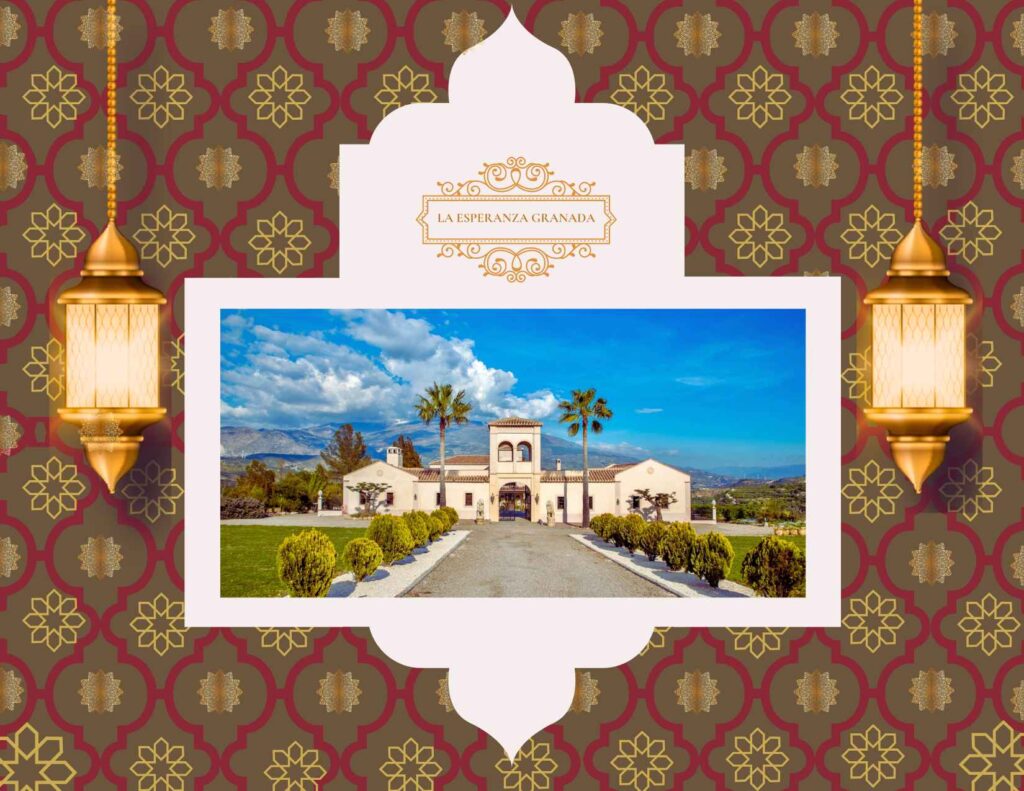
Inspired by the timeless elegance of Sofitel Legend Metropole Hanoi? Continue your journey at La Esperanza Granada, an award-winning romantic hacienda surrounded by olive groves and mountain views in southern Spain.
The Sofitel Metropole Hanoi: One of Asia’s Most Historic Hotels
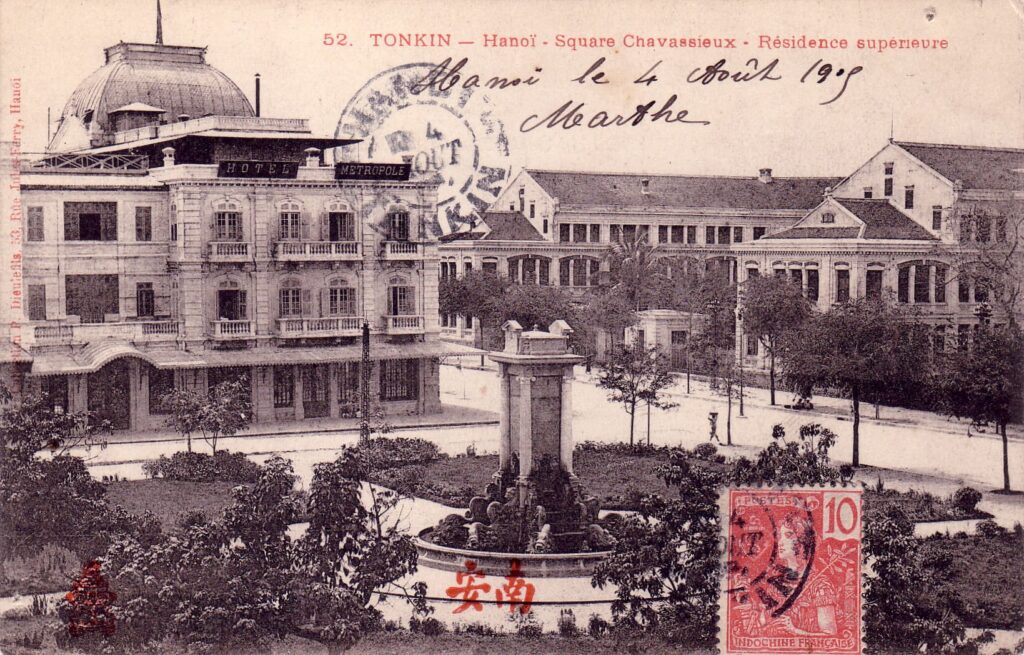
The Metropole opened in 1901, built by two French entrepreneurs — Gustave-Émile Dumoutier and André Ducamp — just as Hanoi was becoming the capital of French Indochina. Six dollars a night got you a room, three meals, and the run of what was immediately the finest hotel in the city.
Within a few years it was also the first place in Indochina to screen motion pictures.
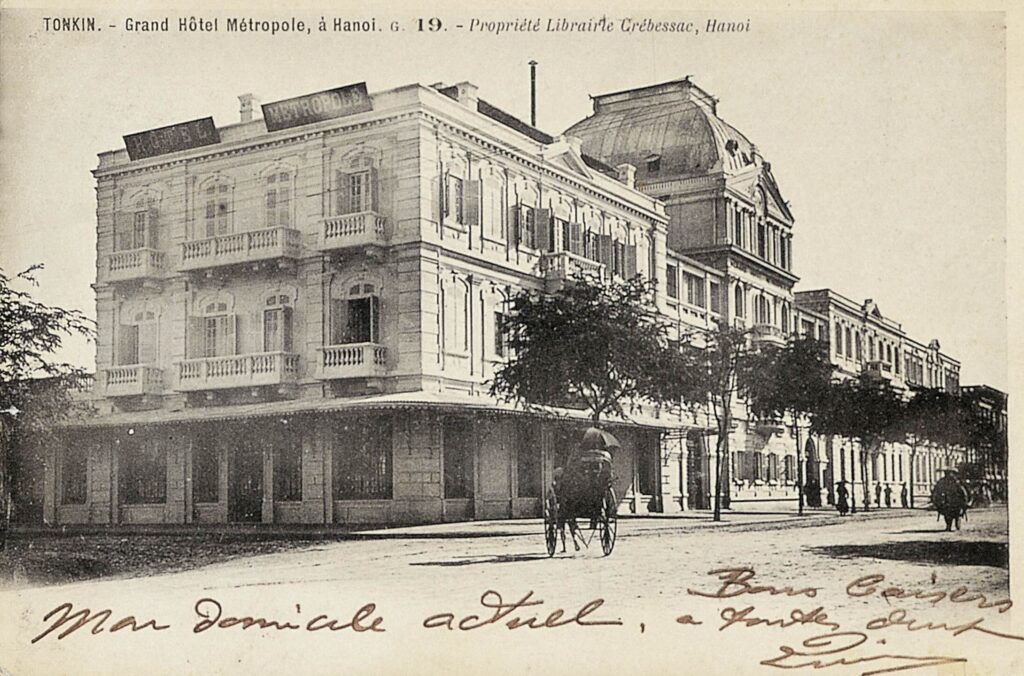
For the next several decades, the hotel served as the social center of colonial Hanoi — the place diplomats ate, writers worked, and anyone passing through with money or influence made a point of stopping. The guest list was not subtle: Ho Chi Minh hosted political meetings here. Fidel Castro stayed. Presidents Bush, Clinton, and Trump all came through at various points in history.
In February 2019, the hotel hosted a two-day nuclear summit between the United States and North Korea; Kim Jong Un took an entire floor.
That breadth — colonial French society to Cold War summits to 21st-century diplomacy — is what makes the Metropole unusual. Most historic hotels claim heritage. This one has receipts.
The Bunker Beneath the Bamboo Bar
The war years left a more physical mark. During the American bombing campaigns of 1972 and 1973, the hotel sheltered journalists, diplomats, Joan Baez, and Jane Fonda in an underground bunker below the building.
When the war ended, the bunker was sealed and eventually forgotten entirely. It was only rediscovered in 2011, when engineers renovating the Bamboo Bar jack-hammered through 280 millimetres of reinforced concrete and found a network of flooded corridors and chambers. Baez apparently sang one night while sheltering down there. The hotel has a partial recording. The bunker is now part of the daily Path of History tour.
From Government Guesthouse to Luxury Landmark
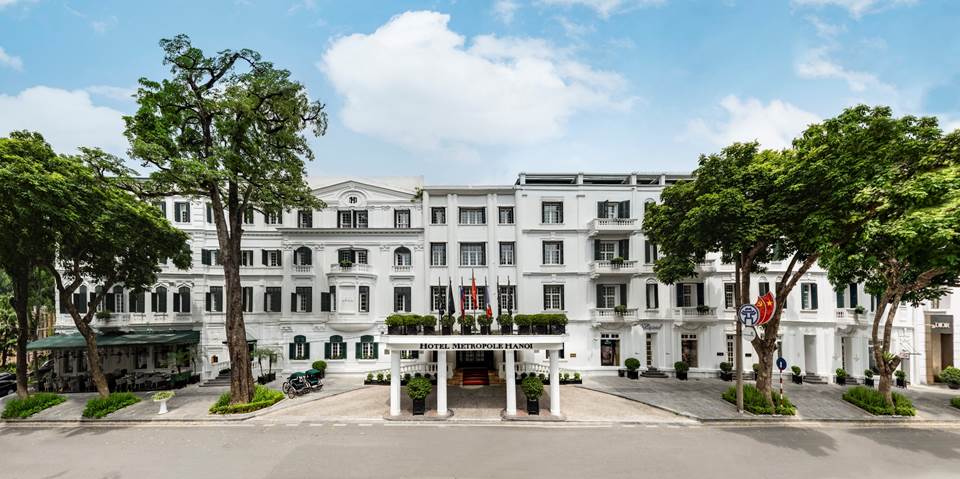
After independence, the hotel was renamed Thong Nhat — “Reunification Hotel” — and operated as a government guesthouse. By the 1980s the building had deteriorated badly. Its revival came through an unlikely figure: a French hotelier named Jacques Herbert, who happened to have married the daughter of Ho Chi Minh’s first finance minister. He negotiated what became Vietnam’s first successful joint venture between a foreign company and a local partner.
The Metropole reopened in 1992 under the Pullman name, later passing to Sofitel. In 2009 it became the world’s first Sofitel Legend property.
Two Wings, Two Eras — Heritage vs. Opera Wing
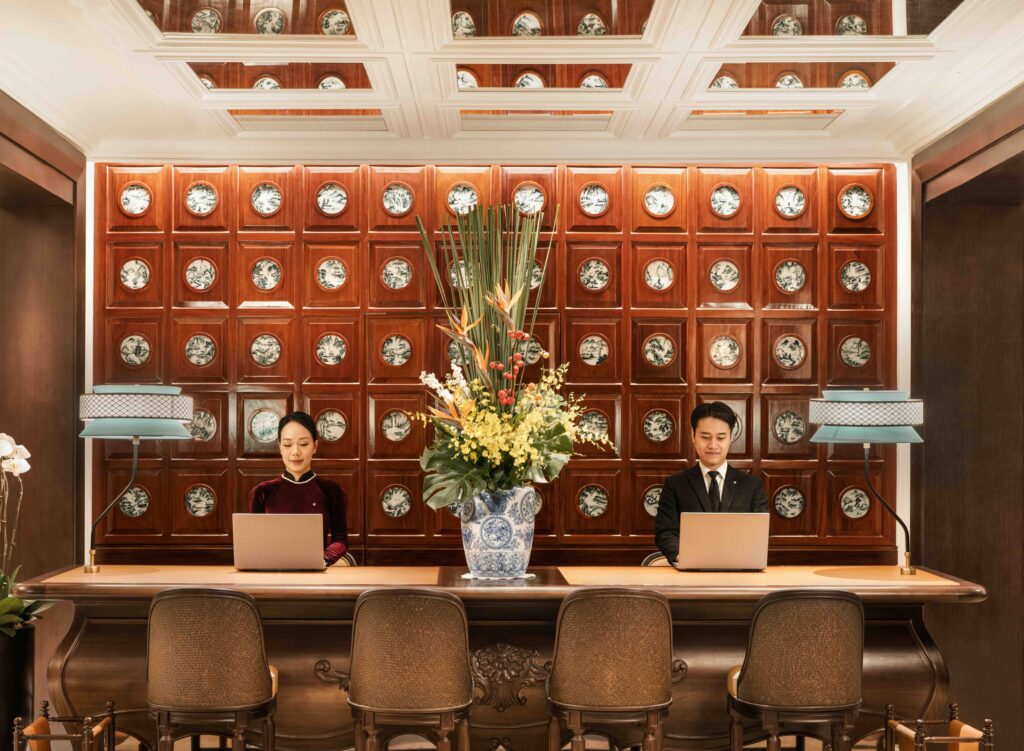
The hotel now has 358 rooms across two buildings that share a courtyard but not much else in atmosphere.
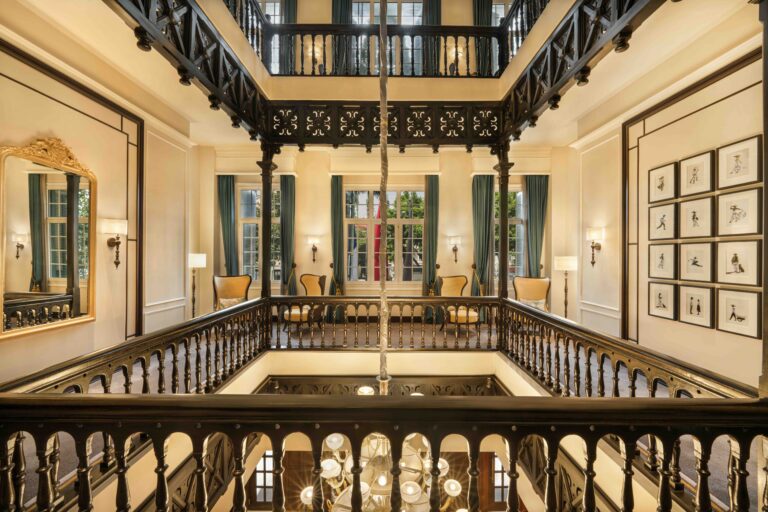
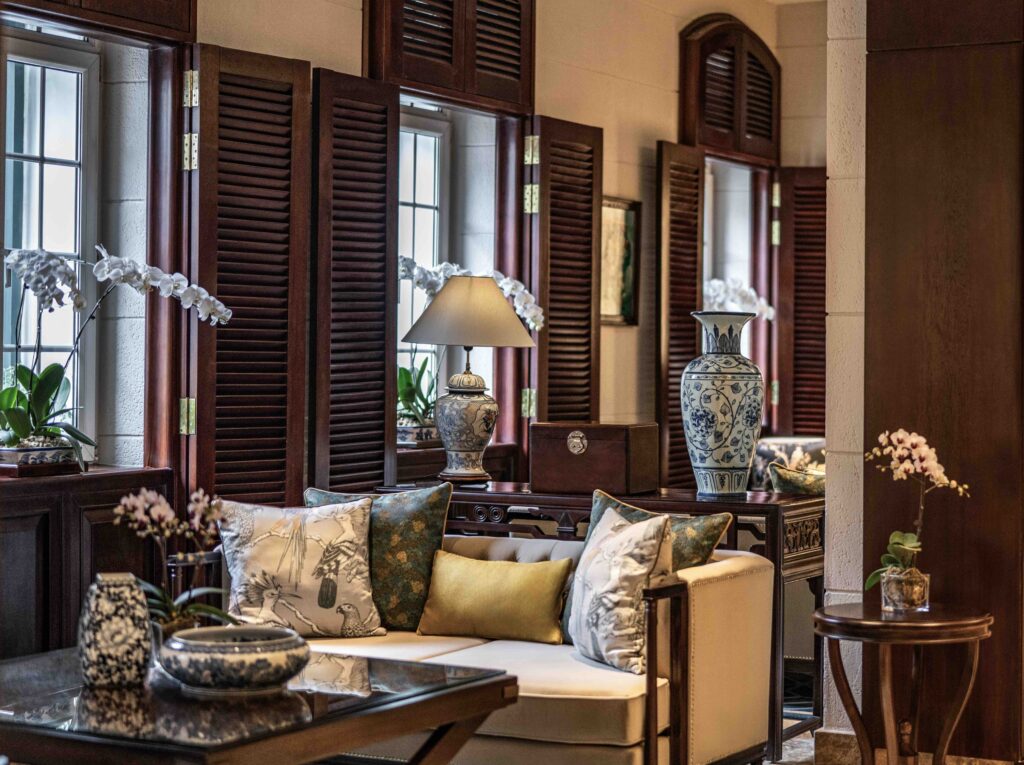
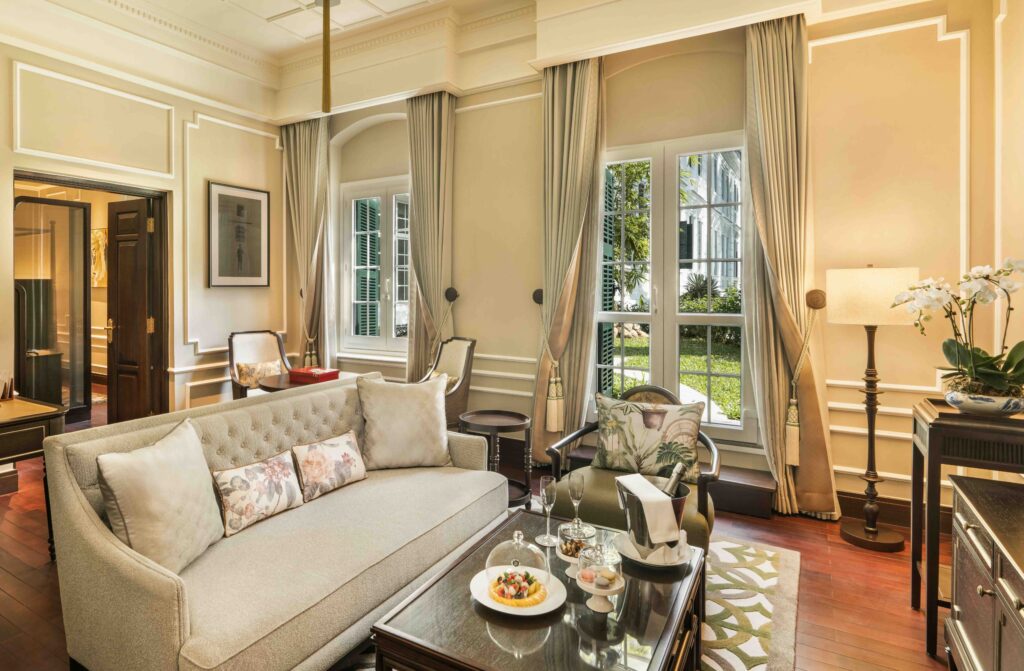
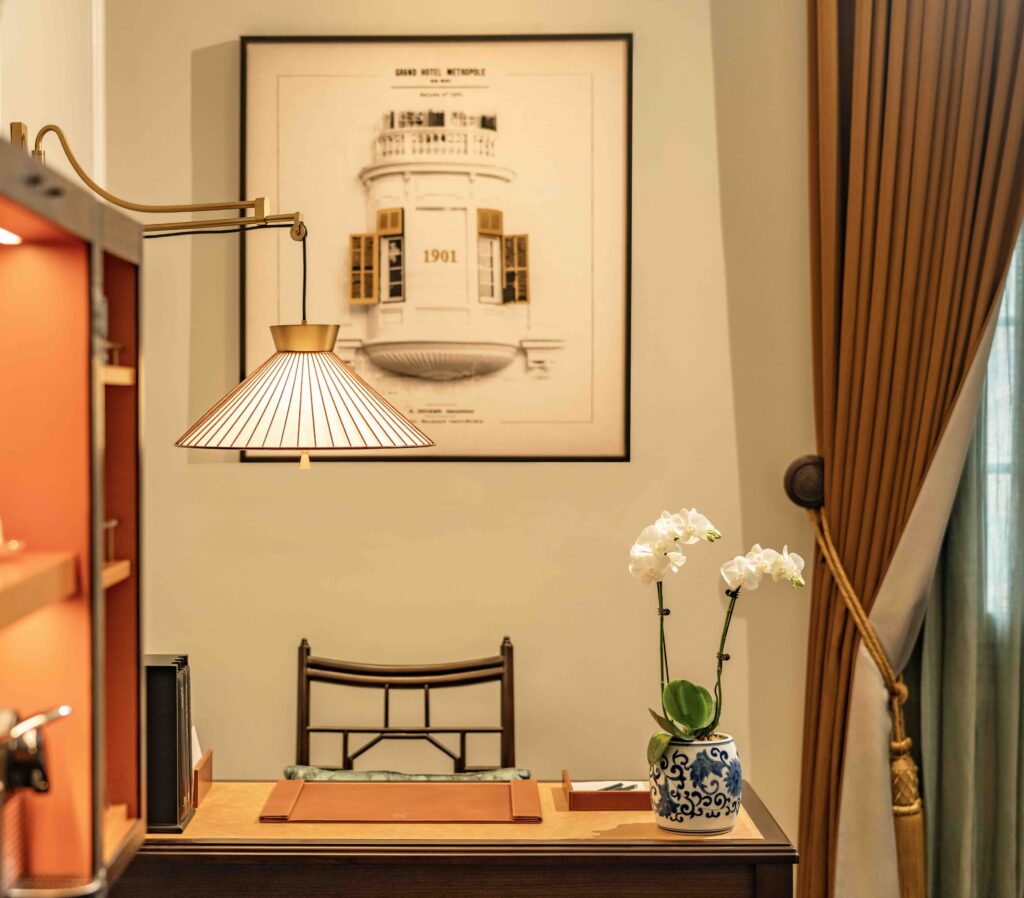
The Heritage Wing — the 1901 original — has dark hardwood floors, louvred shutters, vintage illustrations on the walls, and art-deco marble bathrooms. Meanwhile, the Opera Wing, added in 1996, is neoclassical and considerably quieter, with higher ceilings and larger rooms. Families and people on work trips tend to end up there. People who want to feel like they’re somewhere specific book the Heritage Wing.
About the Coffee a Bartender Invented During Wartime
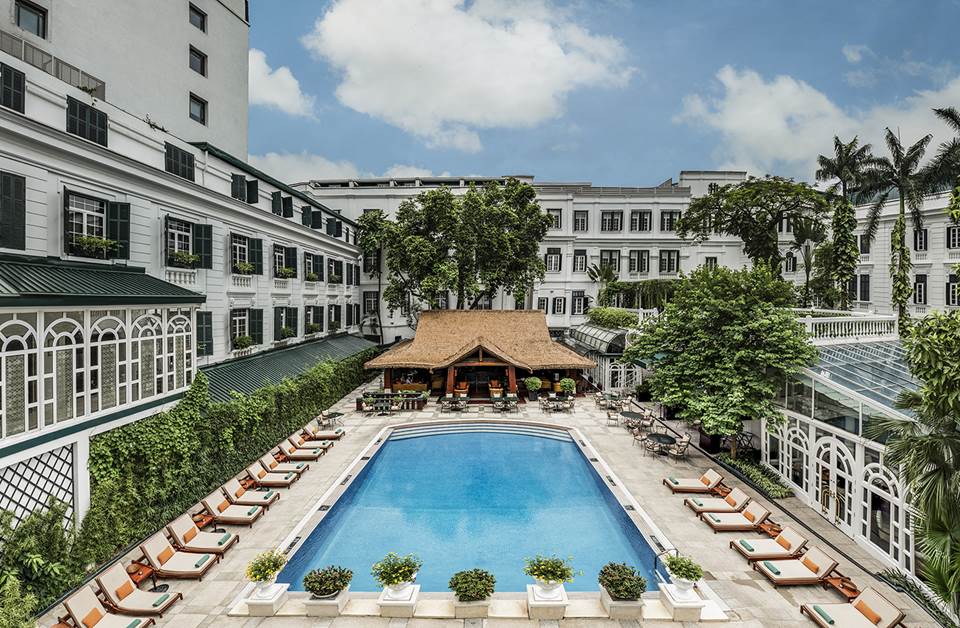
Le Spa du Metropole was named Vietnam’s Best Hotel Spa at the 2026 Tatler awards. The signature treatment is a Kansu bowl massage, and French skincare lines SOTHYS and Anne Semonin cover the facial menu. There is a heated outdoor pool in the garden courtyard.
The six restaurants and bars include Le Beaulieu, which boasts of serious French cooking, and La Terrasse. The latter is a pavement café where the thing to order is Vietnamese egg coffee.
The Vietnamese egg coffee has its own Metropole origin story. In 1946, with milk impossible to find during wartime rationing, a hotel bartender named Mr. Giang started using whipped egg yolk instead. The result — thick, sweet, served over strong Robusta — is now one of Hanoi’s most copied drinks. You can still get it where it was invented.
What the Condé Nast Traveler Triple Crown Actually Means
This year, Condé Nast Traveler gave the Metropole what it calls the “Triple Crown” — a simultaneous listing on the Hot List, the Gold List, and the Readers’ Choice Awards. Only 396 hotels in the world have achieved all three.
Travel + Leisure has had it on the 500 Best Hotels list for six years running. Neither publication gives those distinctions out lightly, and neither readership is easily impressed.