

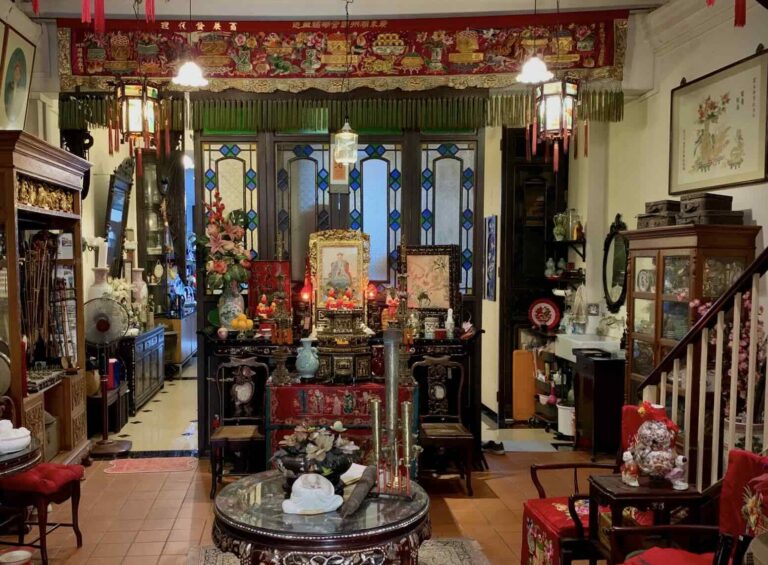
Tucked away in a historic shophouse in Geylang, a living time capsule awaits
While global travelers are often drawn to Singapore for its impressive skyscraper skyline, seamless transport systems and vibrant culinary scene, the city’s deepest cultural identity thrives far beyond the modern cityscape.
Instead, it is the living traditions passed down through generations—and the quiet acts of cultural preservation that make Singapore so fascinating.
Today, Eng Tiang Huat (荣泰发) actively preserves vital community memories as a living cultural museum. Originally, its namesake patriarch founded the business in the 1930s as a tailor shop along Merchant Road.
Eng Tiang Huat has earned a reputation as Singapore’s last surviving traditional Chinese cultural goods shop. Yet far from fading into obscurity, it actively bridges early immigrant heritage with a contemporary approach.
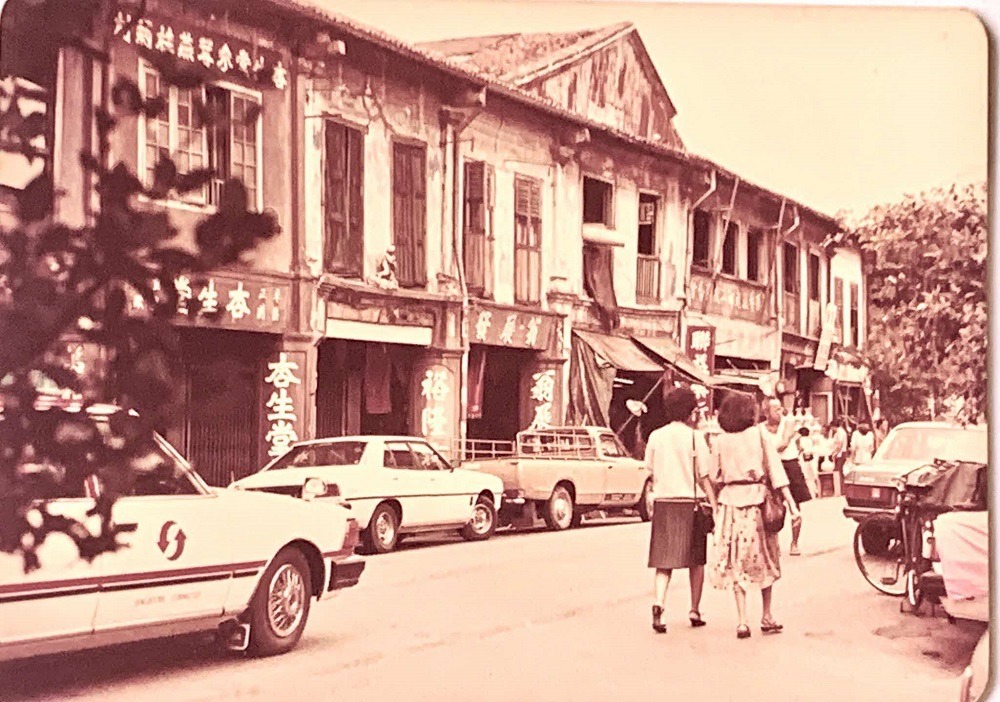
Mindful Discovery of Memory, Culture and Community
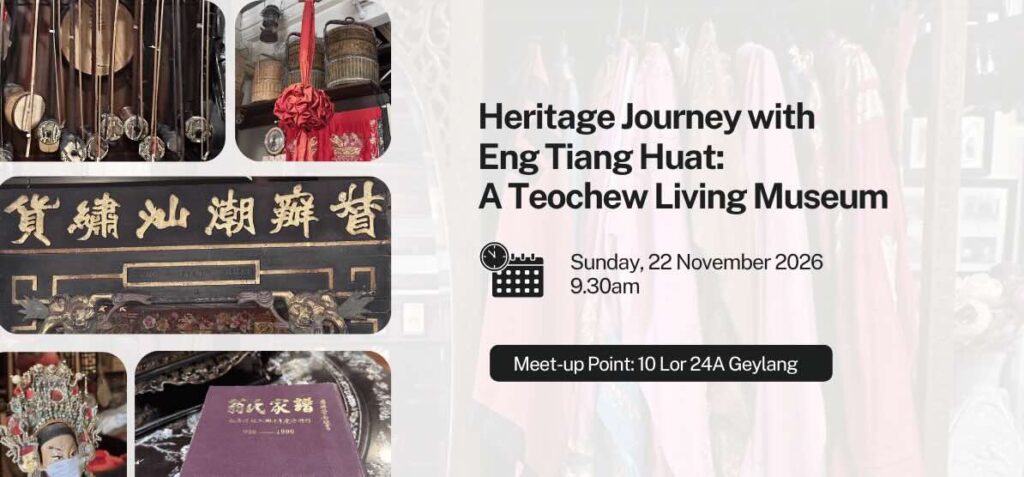
To celebrate Singapore’s living heritage, mindfulness educator Ms. Tan York Cheng (York) has partnered with third-generation custodian Jeffrey Eng. Together with guest speakers, they will host an immersive cultural journey at Eng Tiang Huat on 22 November 2026.
York wants to offer these experiences for participants of all ages and pique their curiosity to learn more about Singapore’s cultural roots. In fact, this mission was sparked by a heartfelt desire to cultivate greater respect and lasting awareness for elderly-run trades
The experience can be booked on SISTIC, at SGD $38 per person. Additionally, Singapore Citizens can use their SG Culture Pass to offset ticket purchases.
Mindfulness is not just a practice; it is a way of living with gratitude, intention, and connection. We can cultivate an inner sanctuary of awareness, both in our daily lives and in how we honour our shared heritage,” said Tan York Cheng, Mindfulness Educator & Founder of Mindfulnests.
From Tailoring to Traditional Crafts
Originally, Jeffrey’s grandfather, Eng Tiang Huat, migrated from China to Singapore in the 1930s to build a new life. First, he opened a modest tailor shop; however, stiff competition soon forced him to pivot his business model. Meanwhile, homesick Chinese settlers began asking him to import traditional cultural goods that would reconnect them to their homeland.
As a Teochew native, Mr. Eng responded by sourcing goods directly from his hometown of Chaozhou. Consequently, over time, his shop evolved into an indispensable supplier for the community’s most important immigrant milestones.
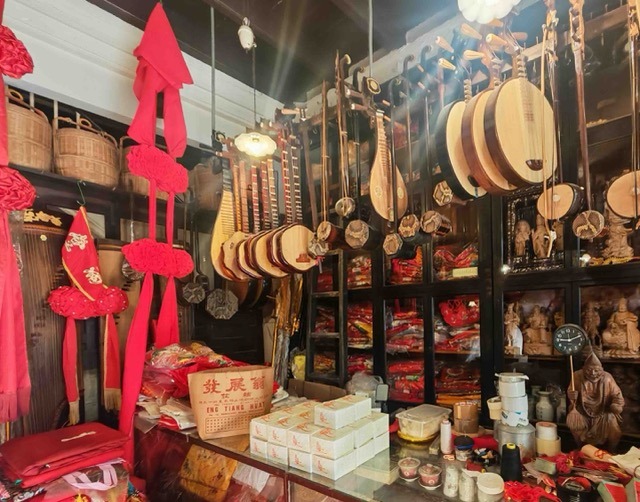
Customers could find everything at the shop —from Teochew wedding embroidery and hand-carved furniture to authentic opera troupe weaponry. Eventually, Eng Tiang Huat became a vital cultural lifeline for the Chinese diaspora across Singapore.
Emporium of Chinese Culture
The 1960s were a pivotal decade for the family business, Jeffrey’s father Eng Song Leng took over the business. Working closely with the Chinese Chamber of Commerce in Singapore, the shop started to expand their offerings. They imported a variety of items from prominent cultural hubs across mainland China, including Shanghai, Beijing, Suzhou, Tianjin, and even Inner Mongolia.
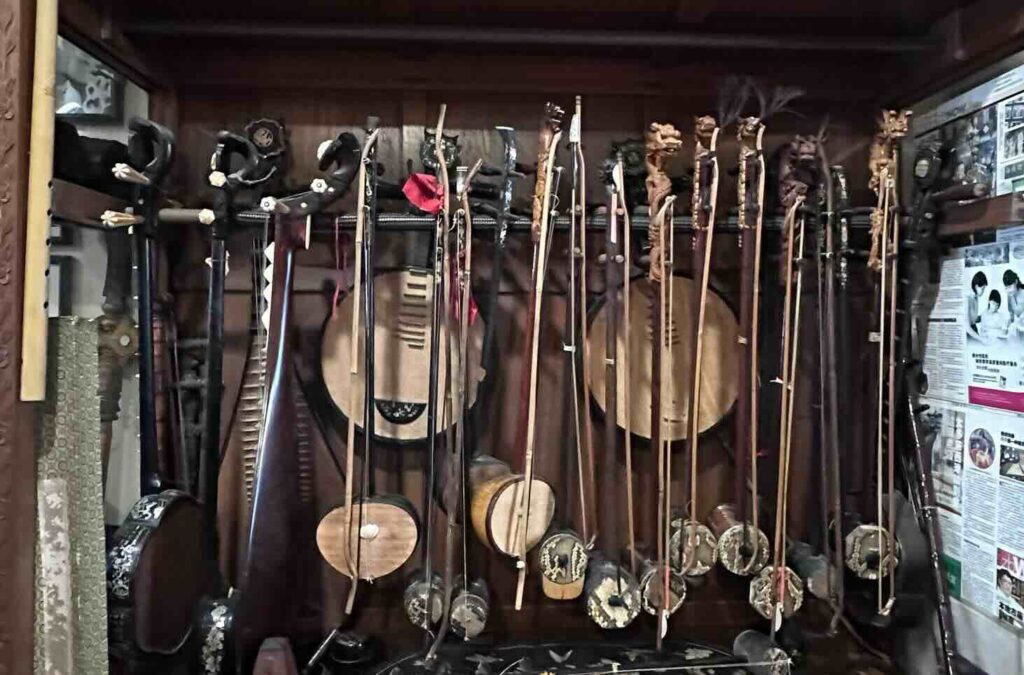
Word continued to spread among the discerning, and the shop gradually became a must-visit for anyone sourcing traditional Chinese instruments. Even today, Eng Tiang Huat continues to supply a variety of musical instruments to Chinese opera troupes and school ensembles across Singapore.
A Shop That Outlasted Its Original Neighbourhood
Now, after three generations, Eng Tiang Huat is located in a conservation shophouse along Lorong 24A in Geylang. The original shop on Merchant Road had to make way for the construction of a new highway in the 1980s – the Central Expressway.
Despite relocating twice—first to Neil Road and subsequently to River Valley Road—the shop eventually found its home in a Geylang shophouse. Remarkably, much of its timeless aura still endures within those walls.
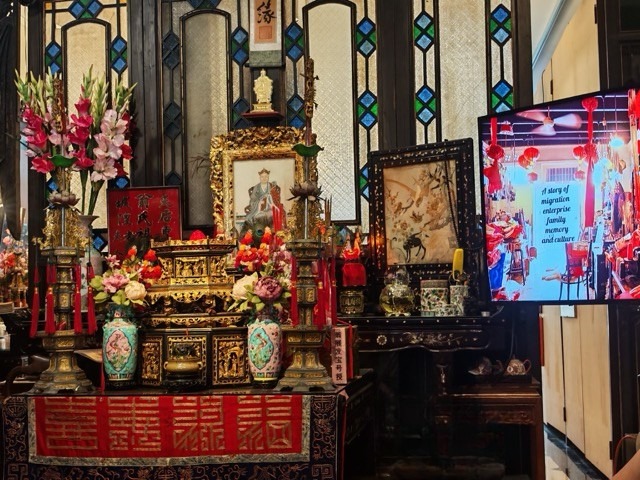
Moreover, under Jeffrey’s curatorial care, the shop is now a captivating living museum.
Why Mindfulness and Culture Belong Together
Recently, we attended the inaugural mindful cultural experience at Eng Tiang Huat. Upon our arrival, we were warmly welcomed with a light breakfast of traditional Teochew cakes alongside freshly brewed hot tea.
York, the gentle orchestrator of the morning, invited us to engage every sense fully: sight, sound, touch, breath, and even taste. We gathered around the shop’s dining table where our conversation naturally turned to heritage traditions. Specifically, we discussed how the classic Teochew approach to tea preparation serves as an intentional act of mindfulness.
Slowing Down Through Mindful Observation
York guided us through the quiet power of mindfulness, revealing the benefits of stepping back from our frantic routines. In doing so, she taught us that conscious breathing directly regulates the autonomic nervous system, calming the body from within.
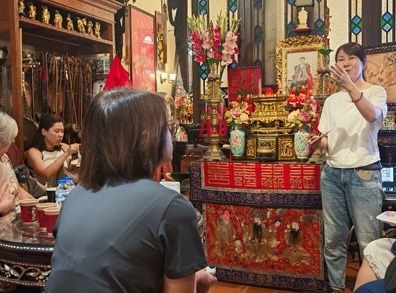
Yet York’s work as a mindfulness educator extends beyond breath mechanics. She channels her experience into finding spaces like Eng Tiang Huat. – places where curiosity ignites naturally and heritage becomes a bridge to presence.
Mindful Photography
We were incredibly fortunate to be guided by writer-photographer Lester V. Ledesma. He has spent over two decades documenting Asia as a travel writer. Under his gentle guidance, we were encouraged to set aside our instinct for speed.
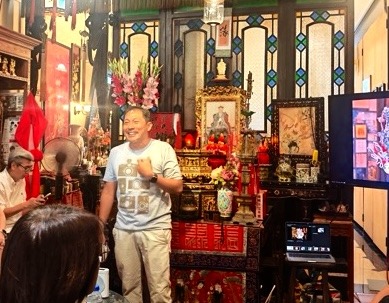
Lester completely transformed our perspective on how to see things around us. Specifically, he advised us to train our eyes on the subtle details in our surrounding environment.
For example, he pointed out the striking contrast of a modern digital calculator placed beside a traditional wooden abacus on a table top.. Immediately, this thoughtful observation unlocked the entire space for us, revealing how living history quietly breathes beneath everyday routines.
In particular, Jeffrey’s working vintage rotary telephone stood out as an authentic analogue treasure. .
A Chinese Cultural Shop as a Community Space
Jeffrey shared stories about his childhood days at the Merchant Road shop. After business hours, his father regularly welcomed neighbours and local musicians for impromptu music jam sessions.
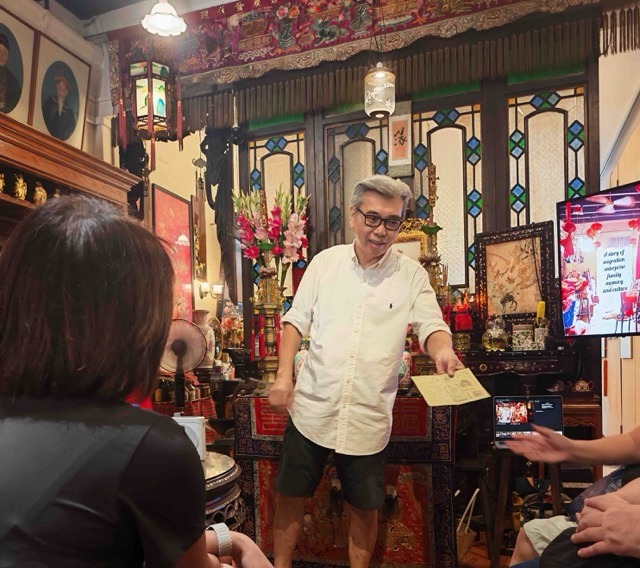
Gradually, these informal gatherings created a deep sense of belonging. At the same time, Chinese traditional music flourished as part of everyday social life. Opera troupes and temple bands filled the streets with the sounds of erhu, guzheng, and percussion instruments, turning performances into community celebrations.
As Jeffrey shared his childhood memories, he sprang a surprise on the entire group. Shifting the cultural journey into a vibrant world of sound, he brought out his collection of traditional Chinese percussion instruments, from brass cymbals to gongs. Then, he handed them directly to different people across the room and started an impromptu musical ensemble. Consequently, this spontaneous gesture dissolved the usual distance between host and guest. Rather than remaining passive listeners, our group of participants eagerly tapped out rhythms together.. It was so much fun!
Experience Singapore’s Living Heritage
For travellers, Teochew heritage offers a compelling alternative for exploring Singapore’s cultural roots. Instead of focusing solely on famous attractions, visitors can uncover how daily life was actually lived in the past century..
In particular, these firsthand accounts reveal a society profoundly shaped by early migration, adaptation, and cultural exchange. Consequently, the Singapore that emerges is a living narrative. Ultimately, a place like Eng Tiang Huat continues to evolve to meet contemporary society’s needs,
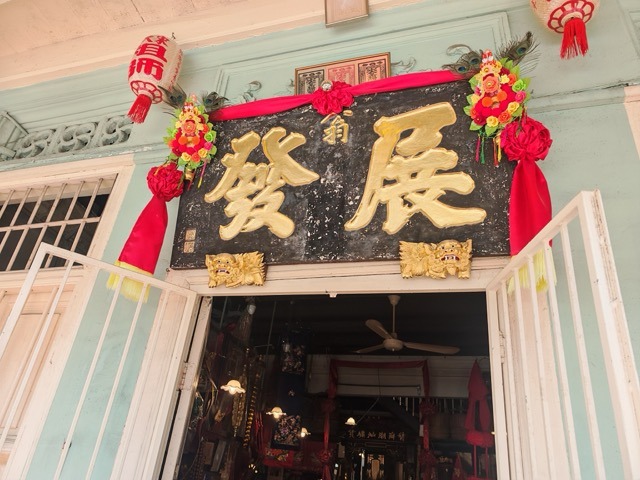
Indeed, the shop stands as a living archive of heritage, craftsmanship, and memory. And today, the family’s legacy lives on—in every instrument, every embroidery stitch, and every story shared across generations.
Eng Tiang Huat Chinese Cultural Shop
Open Mon-Sat, 11am to 5pm
Address: 10 Lorong 24A, Geylang, Singapore 398534
Nearest MRT station: Aljunied Station (7 min walk)
Alongside the scheduled experience, corporate organizations and overseas travel groups can contact York to organise private sessions for this heritage journey here.
About Tan York Cheng
York is a mindfulness educator who wants to help others find time to pause through cultural journeys. Her approach is designed to show non-practitioners how accessible mindfulness truly is, beginning with the simple act of awareness and learning breathing techniques. Drawing from both Eastern wisdom traditions and modern mindfulness science, she curates unique venues for immersive wellness experiences that invite moments of pause. Whether working with busy professionals, overwhelmed caregivers, or curious seekers, she empowers each individual to navigate stress, cultivate clarity, and reconnect with their authentic selves.