



Every serious traveler has, at least once, chased a legend — a restaurant whispered about in quiet reverence, a table that seems to exist outside ordinary geography.
We flew into Japan one summer afternoon just to have lunch at a restaurant that had captured the attention of food lovers everywhere. To eat at Yanagiya, we first landed in Nagoya, a vibrant city in central Japan. From there, we stayed overnight and caught a local train the next morning to a tiny station in Gifu Prefecture.
When the train finally slowed to a stop in the quiet town of Mizunami, a waiting van whisked us away. We drove through rice fields shimmering in the heat and winding country roads lined with cedar trees. After half an hour, the van turned up a narrow hill, and there it was — a quiet farmhouse framed by forest, bathed in summer light.
A Hidden Masterpiece in the Countryside
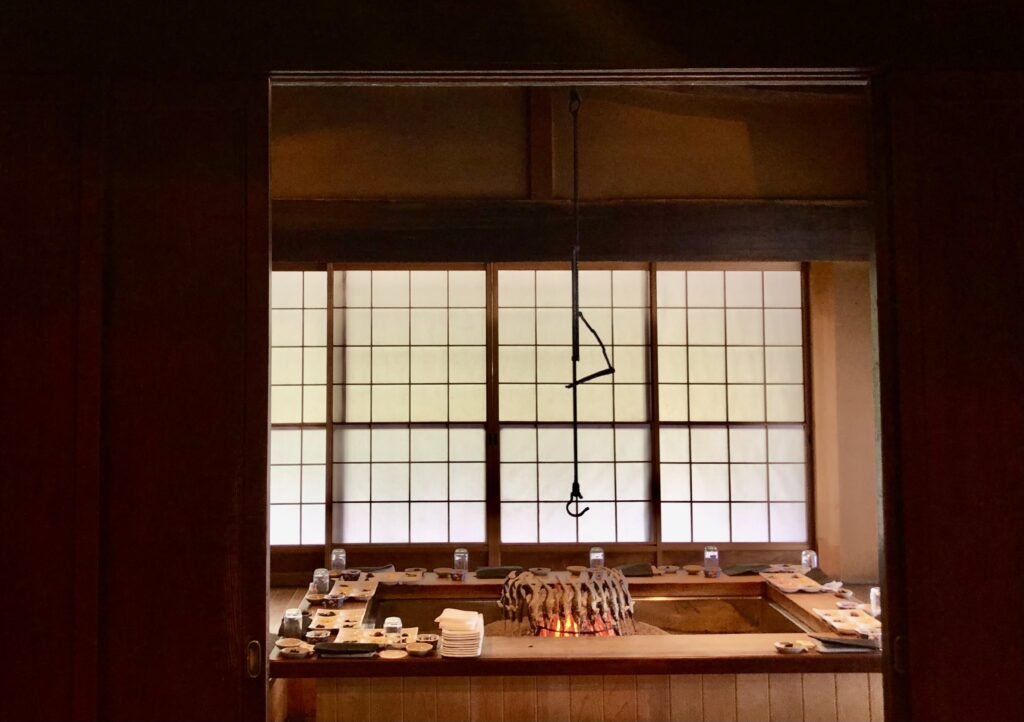
Yanagiya could pass for any rural home in Japan. Its low wooden roof and sliding doors reveal nothing of the reputation it holds. Yet inside this unassuming farmhouse lies one of the most revered dining experiences in the world.
For years, despite its secluded location and its formidable price, Yanagiya has reigned near the top of Tabelog, Japan’s most respected restaurant review site. Among those who follow the culinary world closely, that ranking alone is enough to make it a pilgrimage. Japan’s standards for dining are famously exacting — so when locals agree that something is extraordinary, you listen.
At first glance, Yanagiya’s simplicity is disarming. But the family who runs it understands quiet drama. The meal unfolds not with spectacle, but with devotion.
Around the Irori Fire
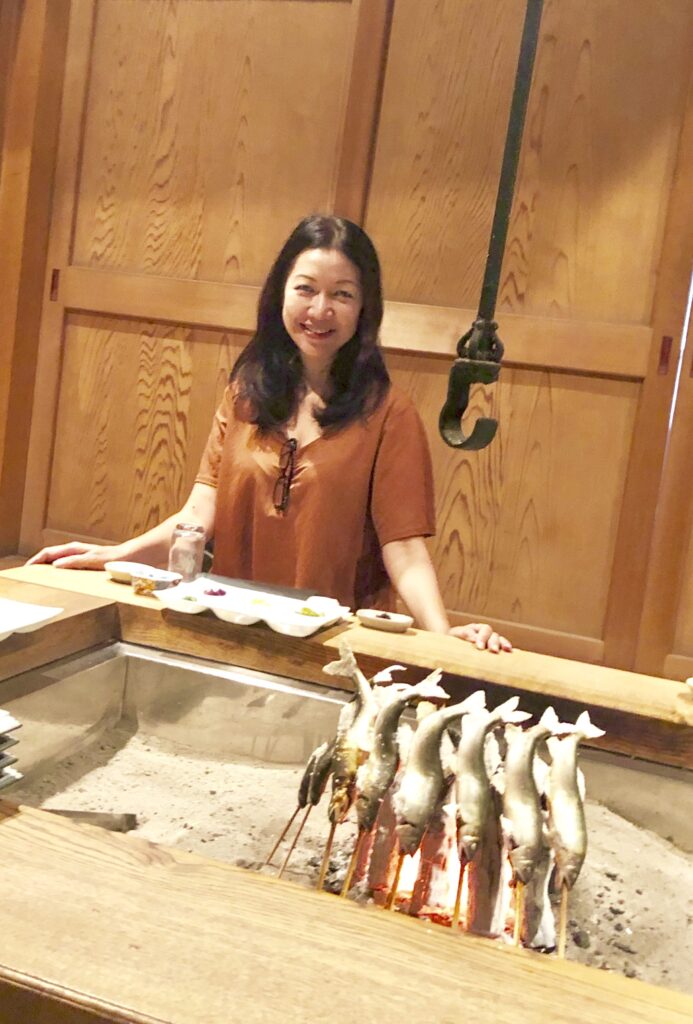
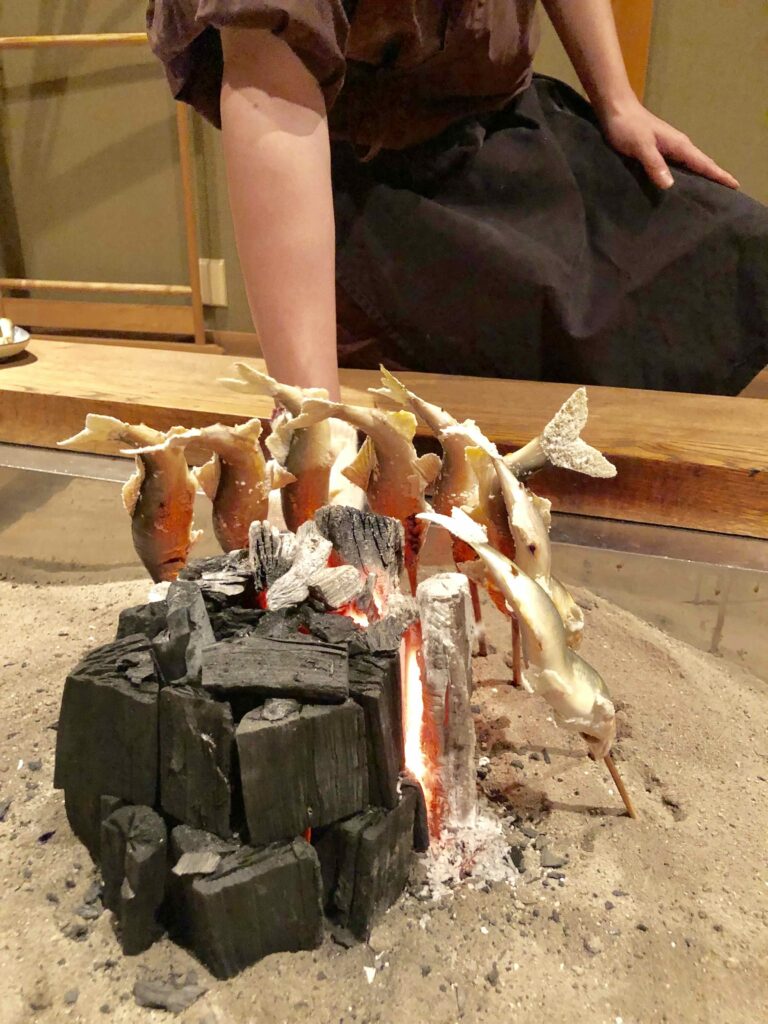
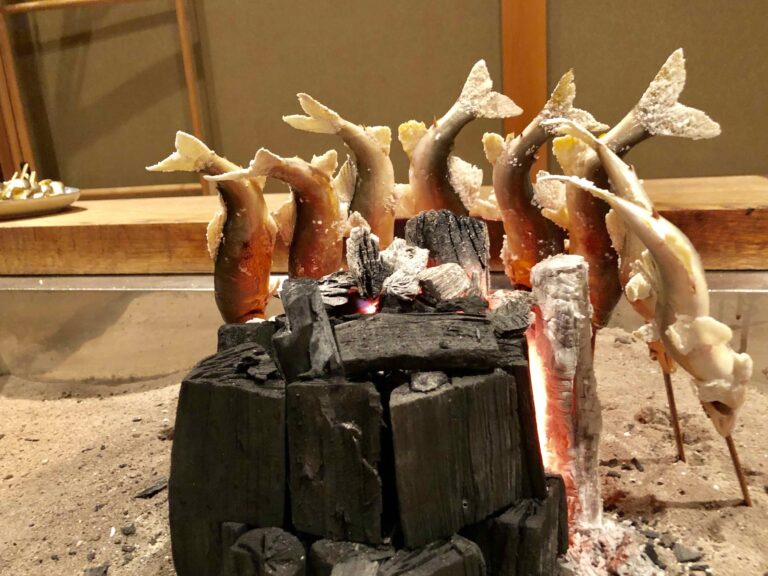
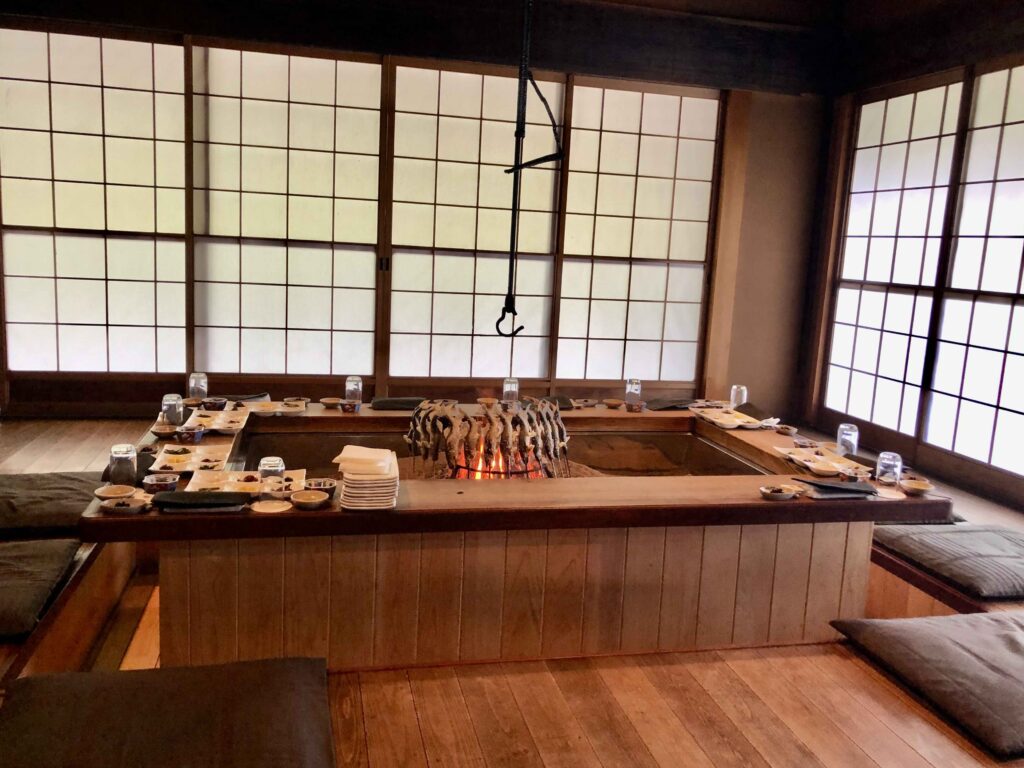
In the heart of the room burns the irori, an open-hearth sand pit once found in every farmhouse. Here, eight river fish are staked upright around the glowing charcoal, their salt-crusted skins turning slowly to bronze. The sight is almost ceremonial — part sculpture, part memory of old Japan.
The chef worked in near silence, adjusting each skewer by instinct rather than timing. “My grandfather started the restaurant,” he told us, never pausing. “But it was my father who began cooking with the irori. A customer from the local bank suggested it to him.” His movements were as calm as the firelight that danced on the walls.
The Taste of Summer: Ayu
The first course was ayu, Japan’s beloved river fish. Grilled over the embers, it was delicate and clean, its sweetness deepened by the salt. Ayu is a symbol of summer here — fleeting, refined, and always tied to the season’s flow.
We dipped it into a sharp sauce of herbs and vinegar, then ate it whole, head to tail. The flavor was so subtle it felt almost like an emotion — something sensed rather than tasted. Locals say foreigners often miss its nuance. We didn’t. Every piece was a small revelation, especially the final dish: ayu deep-fried in the thinnest tempura batter, crisp as parchment.
Wild Game, Reimagined
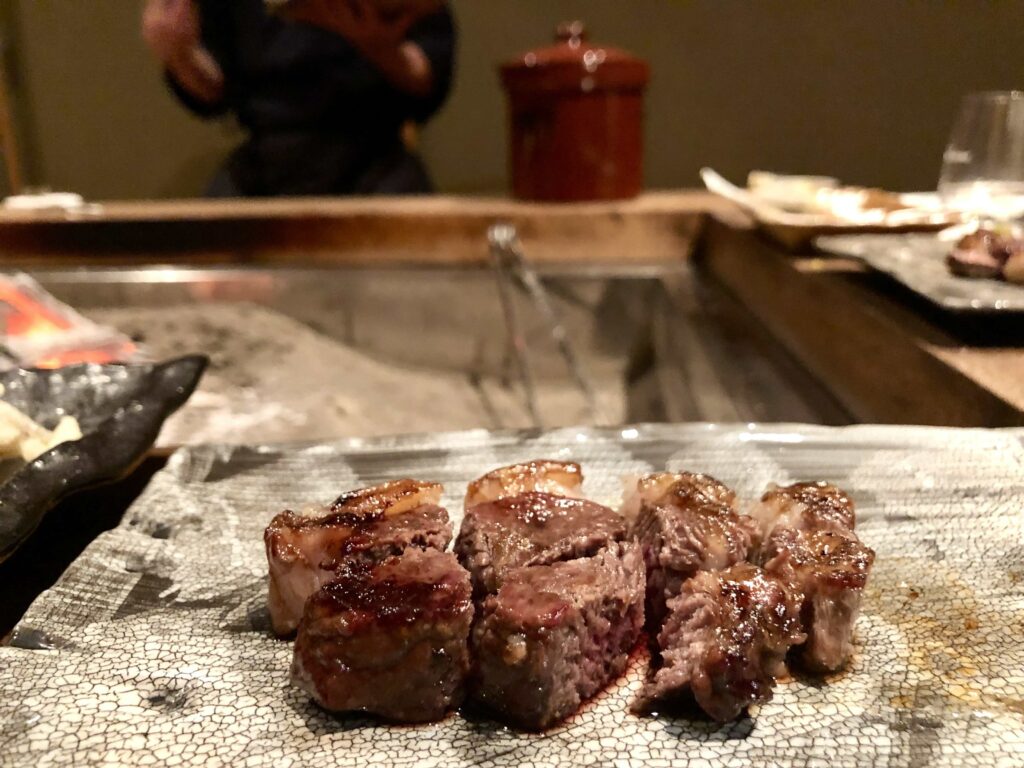
Still, the highlight of the meal came later — the grilled game. Yanagiya is famous for it. The restaurant sources its wild boar and venison from hunters in the surrounding forests, but only accepts animals that have been killed cleanly. The family insists on this. A single misplaced shot, they say, can taint the purity of the meat.
The difference is unmistakable. The venison arrived tender and fragrant, tasting of mountain air and wood smoke. The wild boar was deeper, almost sweet. There was no heaviness, no trace of gaminess — only the pure, clean flavor of the countryside. It was better than beef, and more honest. I could have eaten another plate, but here, extra orders are not part of the ritual.
The Clockwork of a Perfect Meal
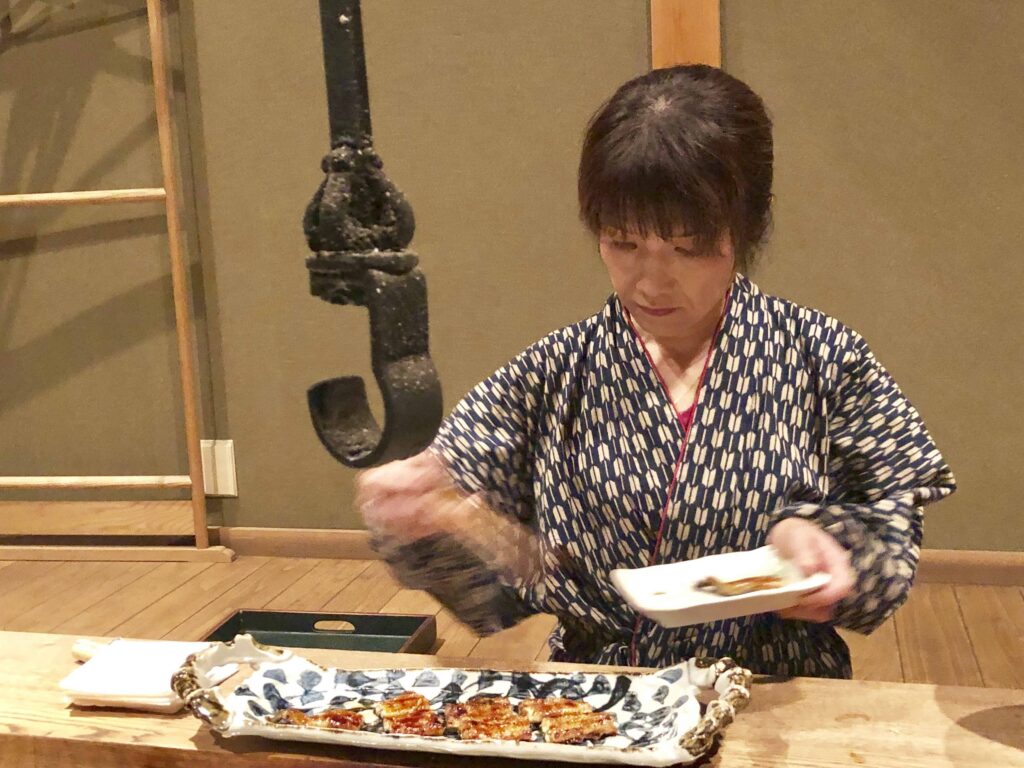
Meals at Yanagiya follow a quiet rhythm. There is no menu and no negotiation. Each course flows naturally into the next, ending exactly at three o’clock in the afternoon. When the last bite was served, the family gathered outside the door, bowing gently as each guest left.
Dessert, as always, was a small sweet — delicate, unassuming, and enough. Outside, the air was still thick with the scent of charcoal. We boarded the van back to Mizunami Station in silence, too content for words.
At the station, ritual gave way to reality. We bought ice creams from a tiny kiosk for a single coin — cold, sweet, and perfectly ordinary. It was the ideal ending to an extraordinary meal.
Quick Info: Yanagiya
Restaurant: Yanagiya
Location: Mizunami, Gifu Prefecture, Japan
Cuisine: Traditional Japanese countryside cooking (Irori-grilled fish and wild game)
Price Range: ¥15,000–¥20,000 per person
Reservations: Required, often months in advance
Access: About 20 minutes by taxi or shuttle from Mizunami Station
Tabelog Page: https://s.tabelog.com/en/gifu/A2103/A210301/21000023/
Frequently Asked Questions
How do you book Yanagiya?
Reservations are essential and can be made only by phone or through a Japanese-speaking contact. Bookings open several months ahead and fill quickly.
What is the signature dish at Yanagiya?
The restaurant is best known for irori-grilled ayu (sweetfish) in summer and wild game such as boar and venison in winter.
Does Yanagiya serve dessert?
The meal traditionally ends with a small sweet rather than a Western-style dessert. Diners often stop by the station shop afterward for ice cream.
Is Yanagiya worth the journey?
Completely. The food, setting, and precision of the experience make it one of Japan’s most authentic and unforgettable meals.
Ready for an Andalusian Foodtrip?

Discover local restaurants serving dishes based on heirloom recipes amidst the timeless landscapes surrounding La Esperanza Granada — a place where every stay becomes a story.
Learn more about La Esperanza Granada
Read more about the best restaurants in the world in Travelife Magazine.