


On Japan’s Awaji Island, a personalized wellness program offers an unexpectedly pleasurable path to healthier living—from early walks along the sea to time-honored Japanese therapies and meditation deep in the forest. This is the second part in a series on the Mibyo Experience offered by The Pasona Natureverse Retreat.
Our second day at The Pasona began perfectly: with a soak in the outdoor hot springs tub on the terrace, followed by a stroll in the gardens with Nordic walking poles, and finally a healthy breakfast with a view of the sea.
I had never given Nordic walking a moment’s thought. Until I arrived at THE PASONA natureverse retreat on Awaji Island, I was not entirely sure what it involved. Walking with poles struck me as something I could happily live without—particularly if it meant rising early on holiday.
Yet there I was one morning, trailing an instructor along the shore of the Seto Inland Sea, a pole in each hand, discovering that there was rather more to it than putting one foot in front of the other.
The poles drew my upper body into the effort, asked my arms and legs to move in concert and, most noticeably, coaxed my spine upright. I found myself attending to my posture in a way I seldom do. The air was cool and clean, the sea luminous, and what I had dismissed as an intrusion on my holiday turned out to be a genuine pleasure.
“Wow,” I told her, a little surprised at myself. “I didn’t think I would like Nordic walking, but I actually do.”
“Once you get used to it and your wrists loosen up a little, it’s not only surprisingly easy but quite enjoyable,” she replied. “And it does wonders for your posture and alignment.”
By the end of the session, I was already contemplating a pair of poles of my own for the streets of Tokyo.
“I would never have tried Nordic walking if it weren’t for THE PASONA,” I told my husband. “But I honestly feel as though I’m standing taller.”
It was an auspicious start to another day at a retreat where, I was beginning to realize, the most rewarding experiences were often the simplest.
ABOUT THE JAPANESE PHILOSOPHY OF MIBYO
We had come to THE PASONA for four days, curious about its approach to wellness and whether so brief a stay could make any perceptible difference to how we felt.
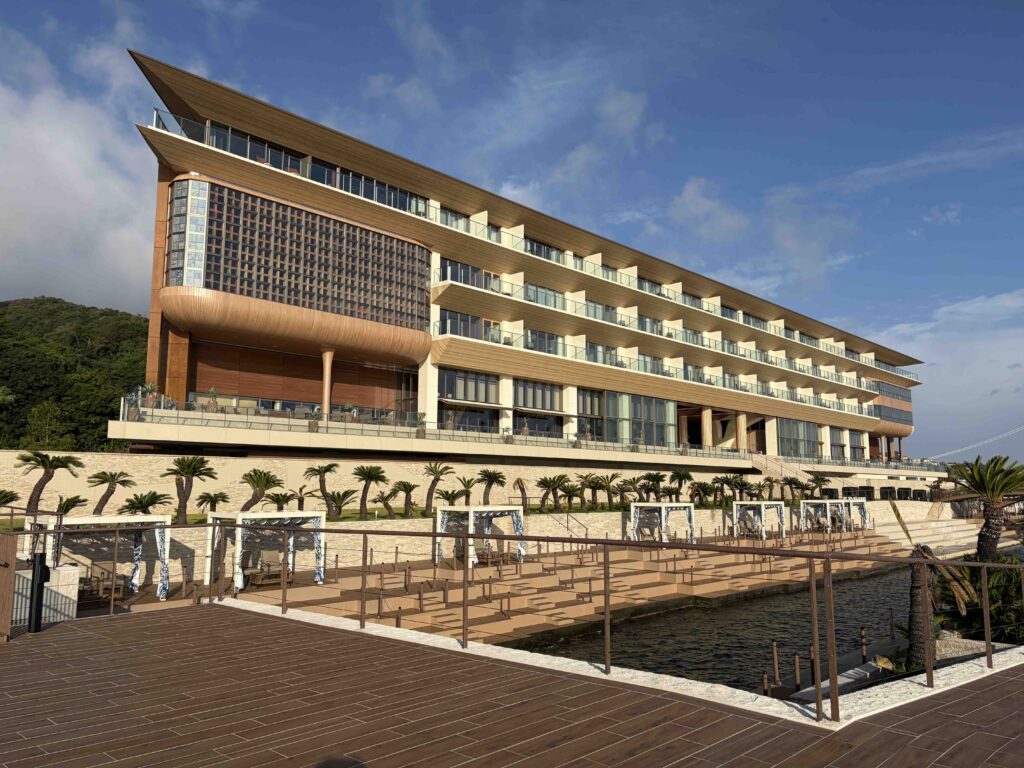
Our first day, chronicled in the opening installment of this series, had already surpassed expectations. We had met with a medical professional, sampled the resort’s thalassotherapy facilities, dined exceptionally well and marveled at Shigeru Ban’s architecture: honey-toned timber, slatted ceilings and walls of glass that hand every room to the sea.
Now it was time to settle into the personalized wellness program itself.
At the heart of THE PASONA’s philosophy lies Mibyo, a Japanese concept devoted to sustaining health and correcting imbalances before they harden into something more serious. Rather than waiting for the body to fail, it asks us to listen to it—and to cultivate, patiently, the habits that support wellbeing over time.
The resort expresses this through three pillars of daily life: nutrition, movement and sleep.
After an initial consultation, a wellness concierge composes an individual program from a repertoire of activities and treatments. These are organized around three approaches—Relax, Reset and Rebuild—according to each guest’s needs and aspirations.
What won me over at once was the pace.
There were rarely more than three scheduled sessions a day, leaving generous room for meals, rest and the surroundings. Activities wound down at around five in the afternoon; dinner followed at six or six-thirty, and the evenings belonged entirely to us.
I have stayed at wellness retreats whose schedules were so ambitious that the holiday began to resemble an unusually demanding working week. THE PASONA suffers from no such affliction.
The program was substantial enough to introduce us to new experiences, yet unhurried enough to let us savor them.
And the days began especially well.
BREAKFAST BY THE SEA
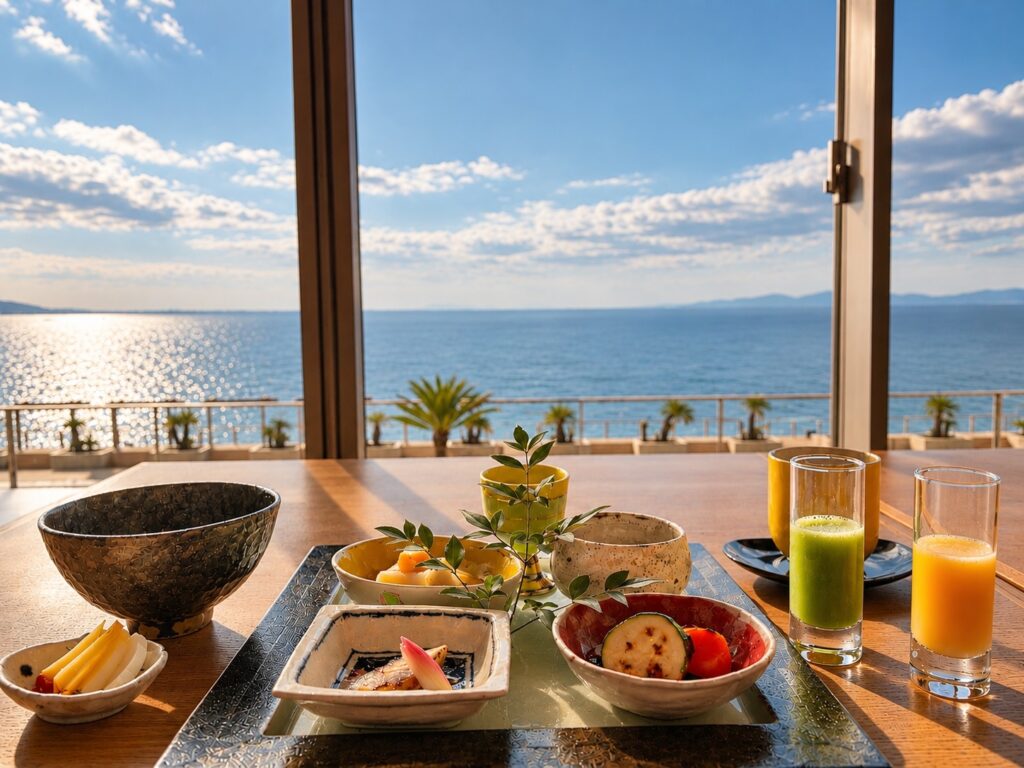
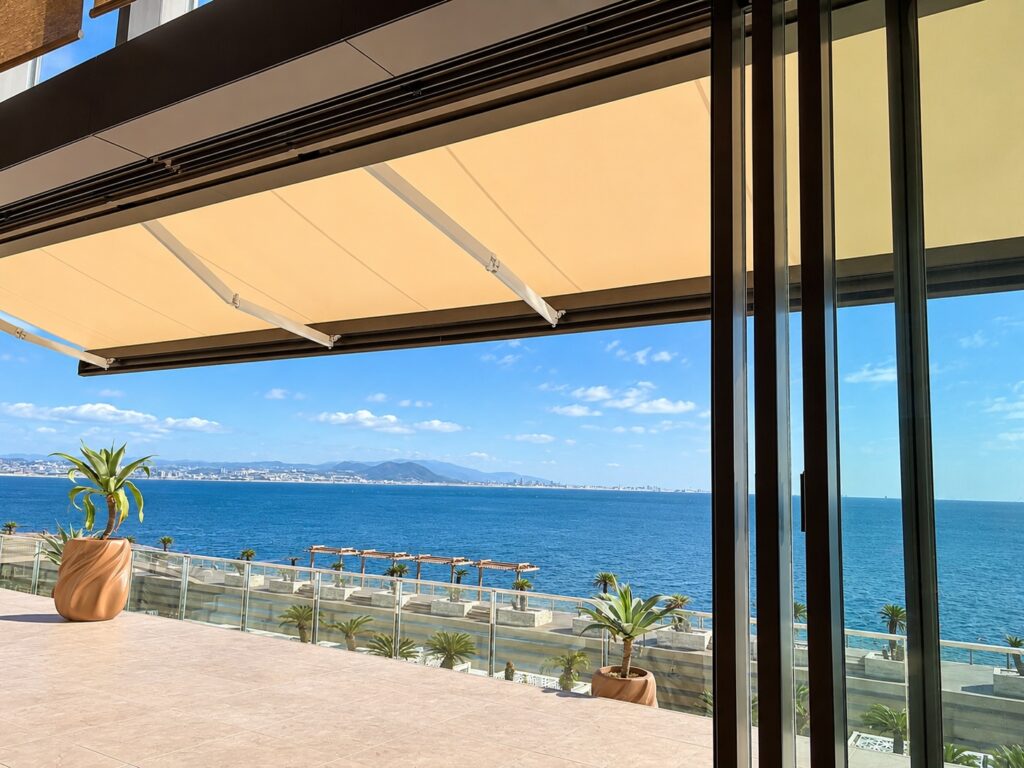
Each morning, we showed up for a Japanese breakfast laid out on a terrace table, the Seto Inland Sea glittering beyond a line of potted palms.
The sunlight broke into a thousand points on the water, but the tray in front of me commanded equal attention.
Breakfast arrived on a half-moon tray of red lacquer, a sheet of hammered silver at its center. Upon it sat a small constellation of vessels: a mustard-yellow bowl patterned in green, a squat square cup dotted red and white, a fillet of grilled fish finished with a blush-pink shoot of pickled ginger. Beside them stood two slim shot glasses, one of vivid green juice, one of orange, and a rolled white hand towel on a wooden rest.
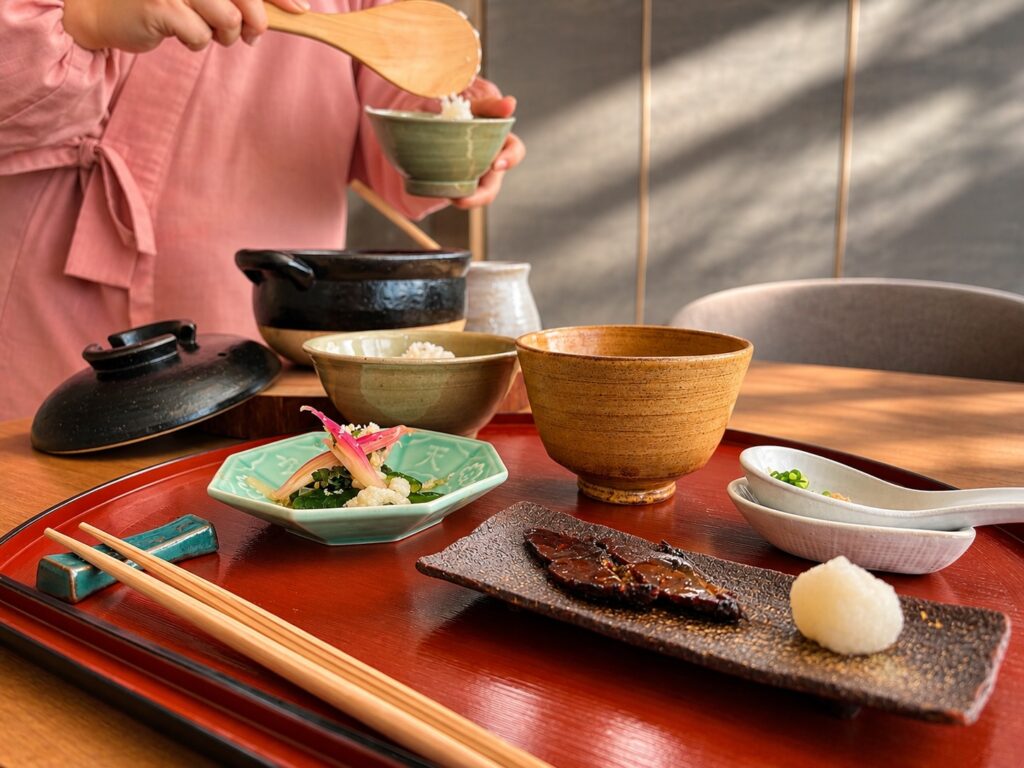
Another morning brought charred rounds of zucchini and tomato in a red-rimmed bowl, a sprig of fresh leaves rising from the center of the tray. On yet another, rice came steaming from a black clay donabe, spooned into a celadon bowl at the table, alongside a dark, soy-glazed fish, a snowy mound of grated daikon and spinach scattered with pink slivers of myoga.
The portions were exactly right.
Everything tasted clean and deeply savory, the flavors distinct rather than blurred. We rose from the table content but never heavy—the ideal prelude to a day devoted to wellbeing.
If every morning began like this, I thought, it was hard to imagine how the rest of the day could possibly improve.
And yet, more often than not, it did.
Food is taken seriously at THE PASONA, though never with the grim piety that so often attends healthy eating. Nothing on our plates hinted at deprivation. Quite the opposite: I anticipated each meal as eagerly as any treatment.
The resort’s restaurants, and the remarkable culinary talent behind them, deserve an article of their own, which will follow later in this series. For now, I was simply relishing the discovery that eating exceptionally well and eating healthily could be one and the same.
THE PLEASURE OF WARM SEAWATER
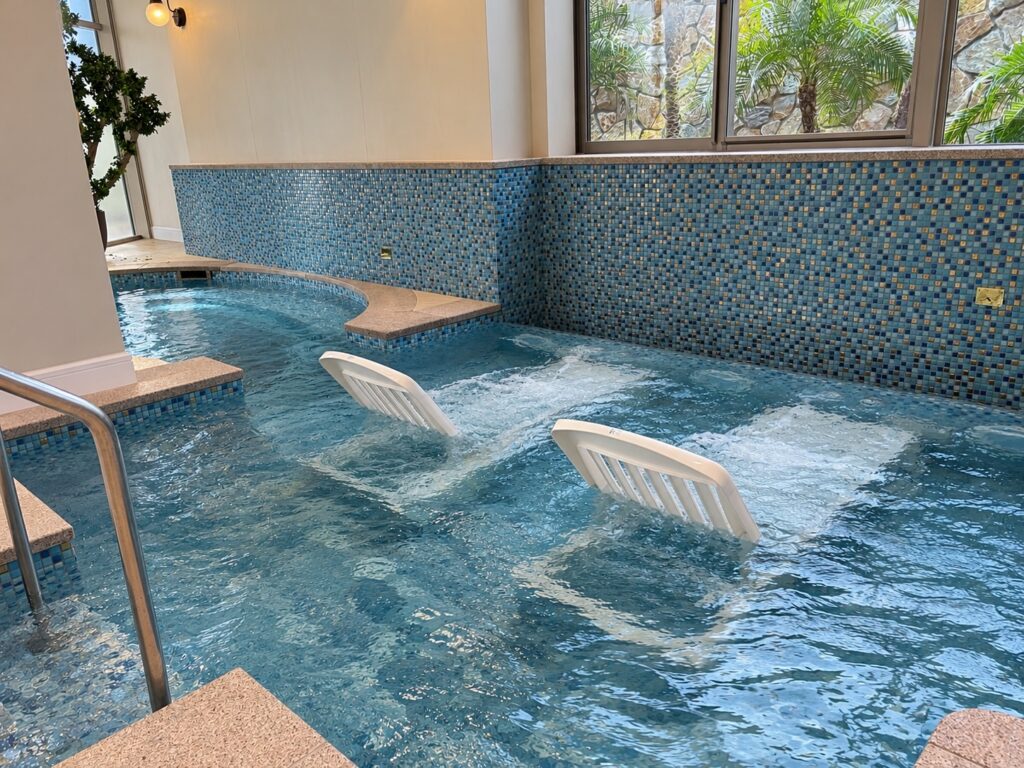
Thalassotherapy soon became a daily ritual.
THE PASONA draws water from the Seto Inland Sea, filters it and warms it to a gentle 33 to 36 degrees Celsius for use in its aquatic wellness facilities.
The pool room is lined in mosaic: tiny tiles of teal, cobalt and gold wrap its curved, stone-rimmed basins and shimmer beneath the surface. A wall of tall windows looks out onto palms and a rough wall of honey-colored stone, and sunlight falls in long bars across the water, which glows a clear, shifting blue. Steel handrails curve down into it; jets stud the pool floor.
The sessions themselves consisted of guided movement and stretching in the warm water, with each exercise adapted to the guest’s comfort and ability.
I found them immensely enjoyable.
The buoyancy made stretching almost effortless, while the water offered just enough resistance to give each movement purpose. There was none of the strain I associate with conventional exercise, and certainly no sense of being pushed toward some prescribed standard of fitness.
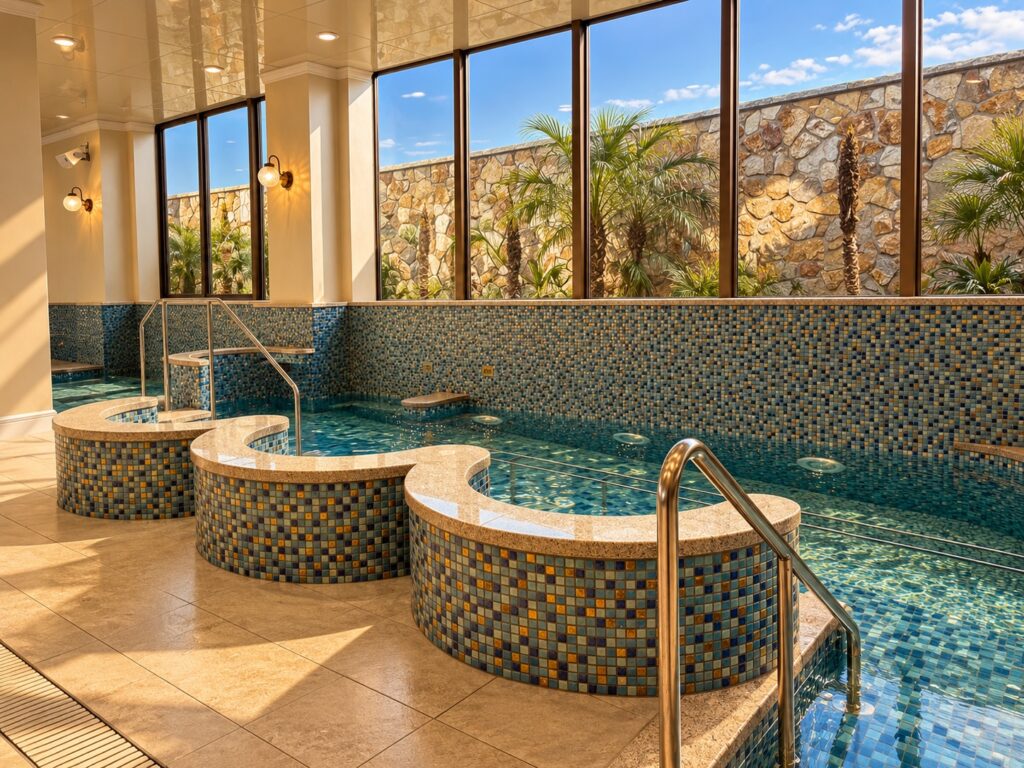
Instead, I could concentrate on moving with ease, attending to muscles that had long been neglected and simply luxuriating in the warmth.
What made the sessions so pleasurable was their marriage of activity and repose. I emerged refreshed rather than depleted.
I liked thalassotherapy so much that I returned every day.
There is a particular satisfaction in finding a form of exercise one genuinely looks forward to. I have never been one for long hours in the gym, but I could happily have spent a great deal longer in that pool.
And because the program allowed generous intervals between activities, I could drift back to our room afterward, read for a while or simply gaze at the sea before the next session.
It was an admirable arrangement.
ANCIENT REMEDIES, MODERN PLEASURES
One of the more intriguing aspects of THE PASONA’s program is the way it sets traditional Japanese and other Asian therapies alongside contemporary approaches to movement and relaxation.
I was especially curious about mugwort steaming, which I had never encountered.
“What are your priorities for today’s session?” my therapist asked me. I had a choice of relaxation, anti-aging, detoxification, and warmth.
“You can also do a combination,” she added. I chose a blend of anti-aging and detoxification herbs.
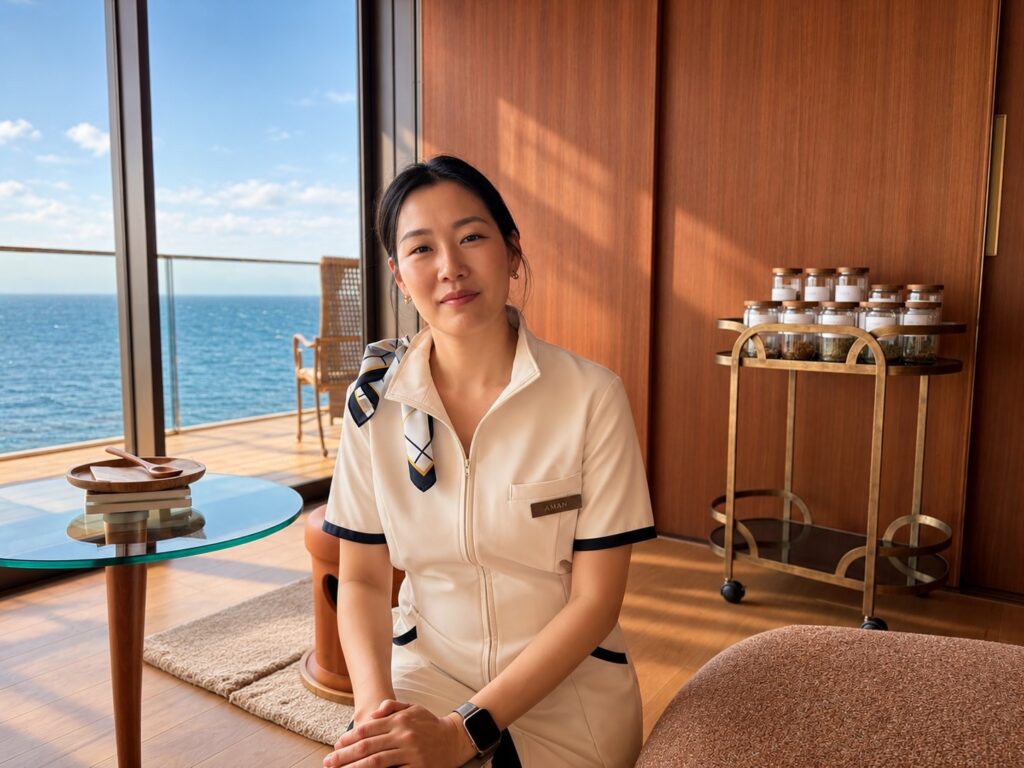
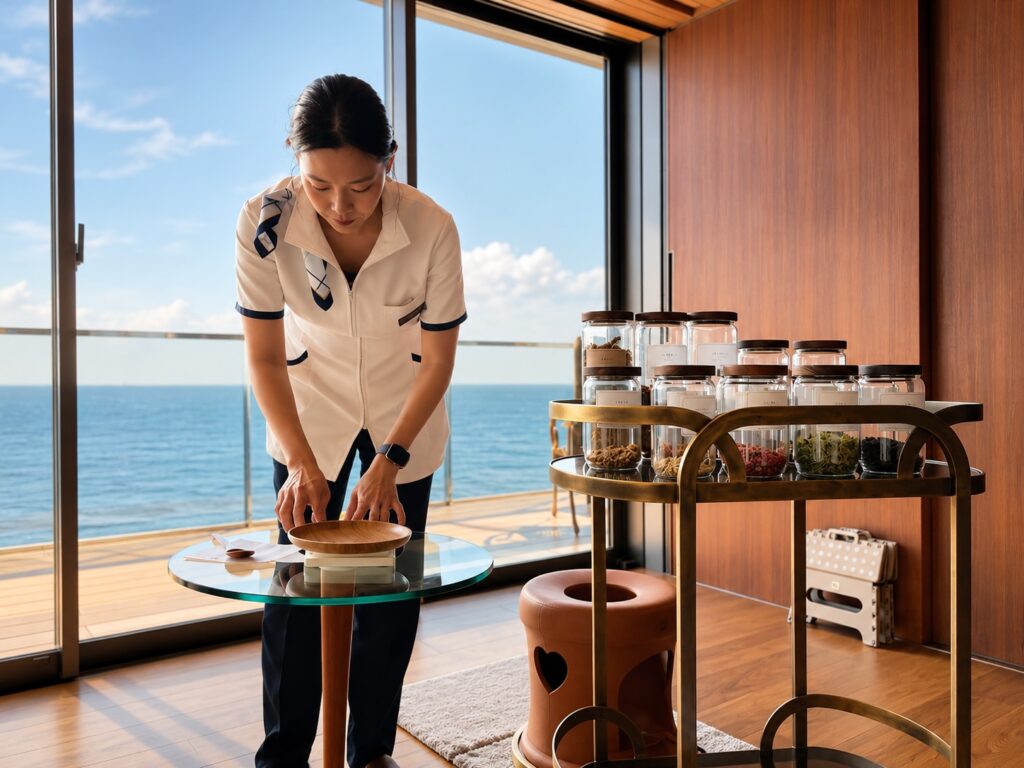
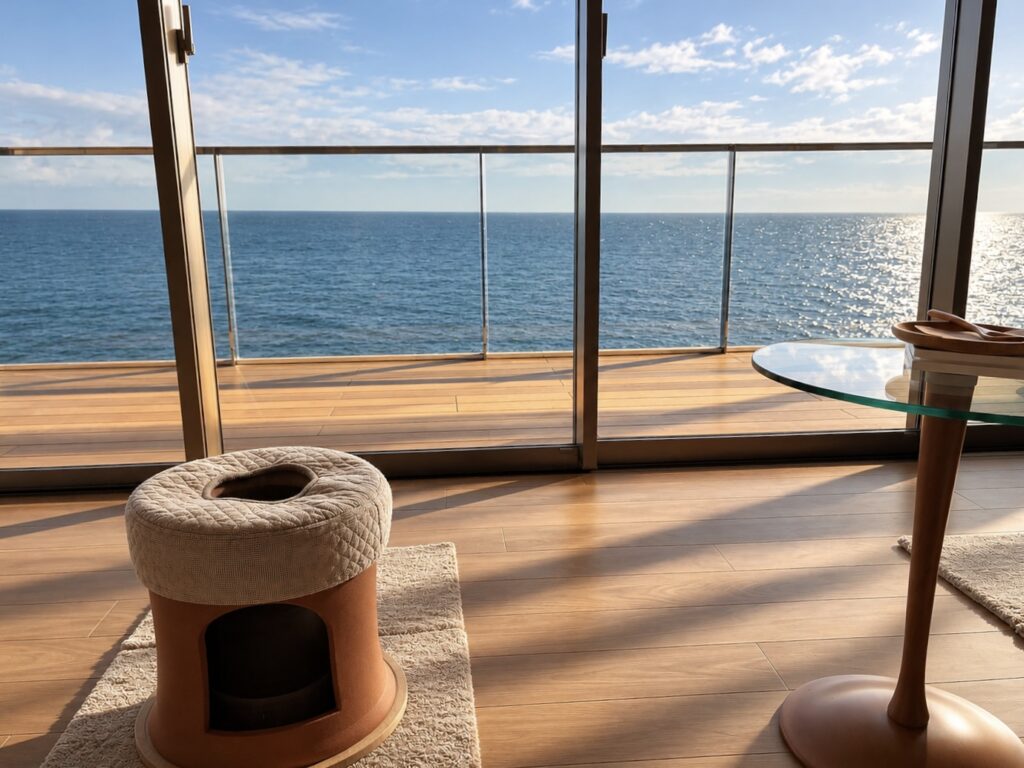
The treatment room faces the sea through floor-to-ceiling glass. You sit on a low, terracotta-colored stool, a small heart cut into its side, topped with a quilted cushion, while herb-infused steam rises from within and envelops the lower body.
Each guest’s blend is made to order from wood-lidded glass jars on a brass trolley: dried leaves of muted green, curls of pale root, berries of deep red, something almost black. My therapist first asked about my priorities. Detox, relaxation or beauty? I chose detox. Then I watched her set out a shallow wooden bowl and measure the herbs with unhurried care, as if preparing tea.
Its appeal lay partly in its simplicity.
I sat in stillness, wrapped in warmth and the scent of herbs, with nothing whatever to do but let go.
The heat crept upward slowly, steady and enveloping, and the scent of mugwort, green and faintly bitter, somewhere between sage and cut grass, made the experience all the more soothing.
I loved it enough to return every day.
I was not expecting a dramatic transformation, nor seeking any particular medical outcome. What I valued was how serene I felt, both during the treatment and long after.
In an era when wellness is so often bound up with elaborate equipment, costly supplements and intricate regimens, there is something quietly compelling about a treatment that asks for little more than warmth, herbs and time.
Facial acupuncture, by contrast, was something I had specifically requested.
I had heard a good deal about the benefits of acupuncture and was keen to try it for myself. The treatment was given by the same therapist who had blended my herbs, a practitioner with nine years of wellness training behind her, three of them in China and two in India. She used the fine, slender needles of the Japanese style, and I felt no pain at all.
Afterward, the face in the mirror looked noticeably firmer and more lifted. Even my eyes seemed larger than usual.
I kept glancing back at the mirror and I liked what I saw.
It was a welcome bonus: an unexpected beauty dividend from a holiday devoted chiefly to feeling better rather than looking younger.
OTHER PROGRAMS AT THE PASONA NATUREVERSE RETREAT
Our program also included aerial yoga, in which suspended fabric supports the body through stretches and movements. It offered yet another route to flexibility and physical awareness, free of the competitive undercurrent that can sometimes pervade an exercise class.
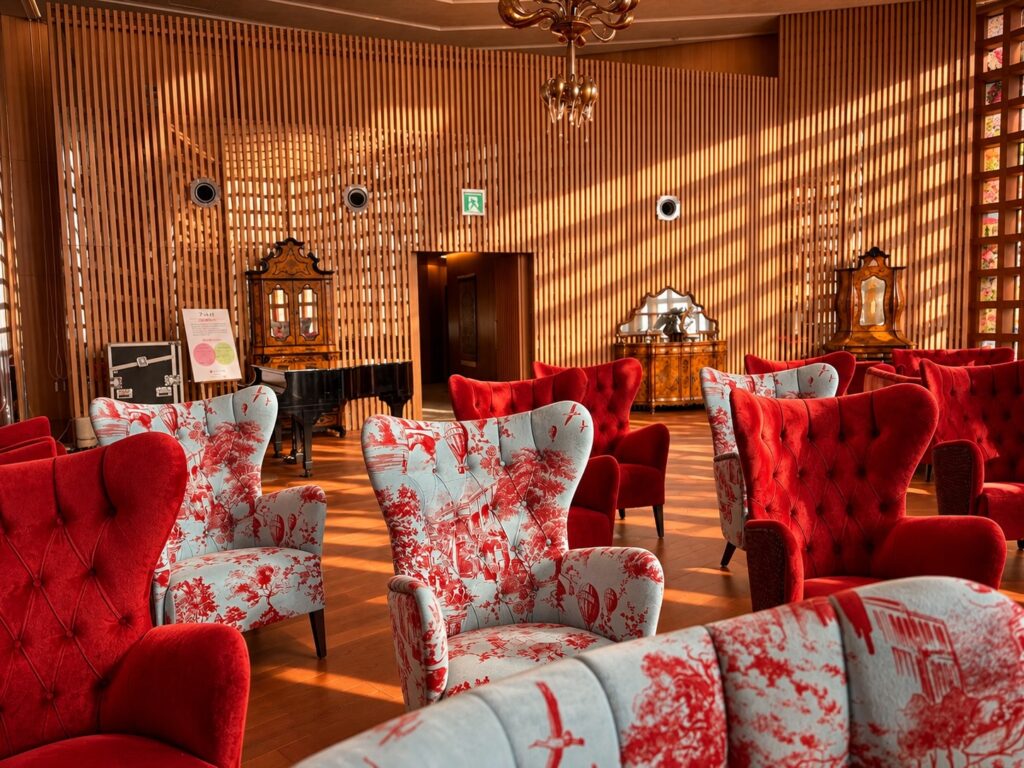
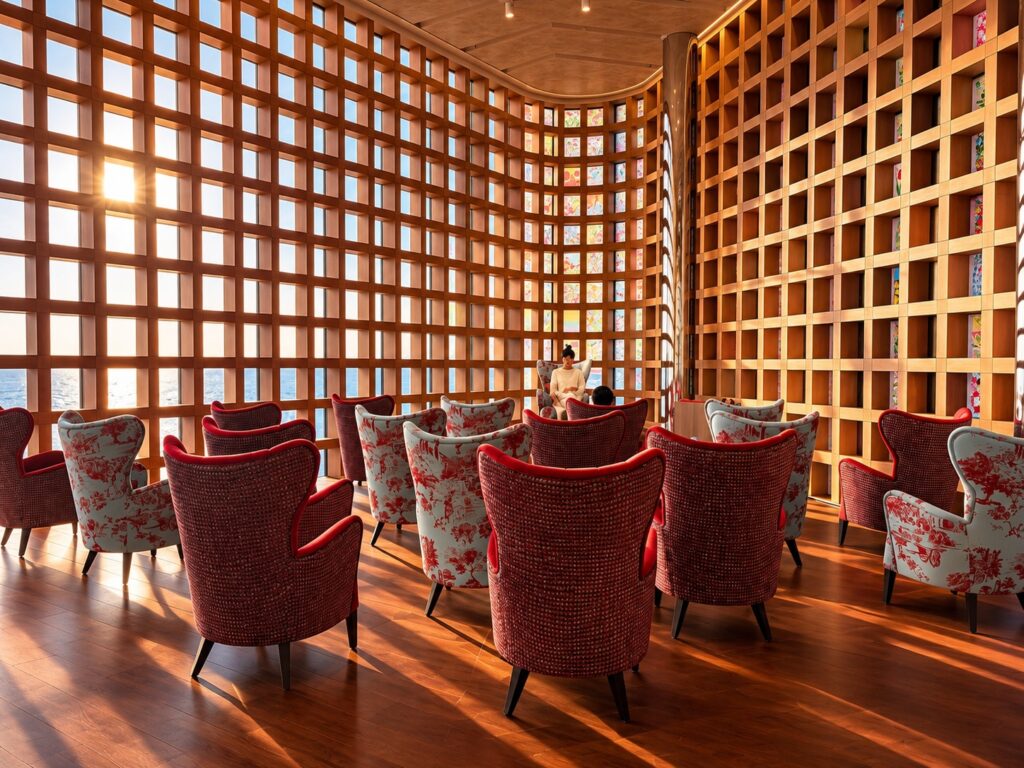
At seven one morning, we joined a stretching class in a lounge unlike any gym I know. A curved wall of honey-colored timber lattice rose around us, each square framing a slice of sea or a small, brightly colored artwork. Low sun poured through the grid onto a polished floor scattered with wingback armchairs in red toile and crimson weave. There, an instructor introduced us to the importance of stretching our toes.
Neither of us had ever given our toes much thought. They are, after all, the part of the body furthest from the brain. Now we found ourselves seeing them in a new light.
“Whether your toes are properly aligned or not determines so much about your body,” our instructor said. They govern how stable you are, how steadily you can stand and whether you can avoid falling, especially in old age.
What I appreciated most was being introduced to things I might never have chosen on my own.
Some I enjoyed more than others, but each invited me to reconsider how I might care for my body.
MEDITATION AMONG THE TREES
One of the most memorable experiences took place beyond the resort itself.
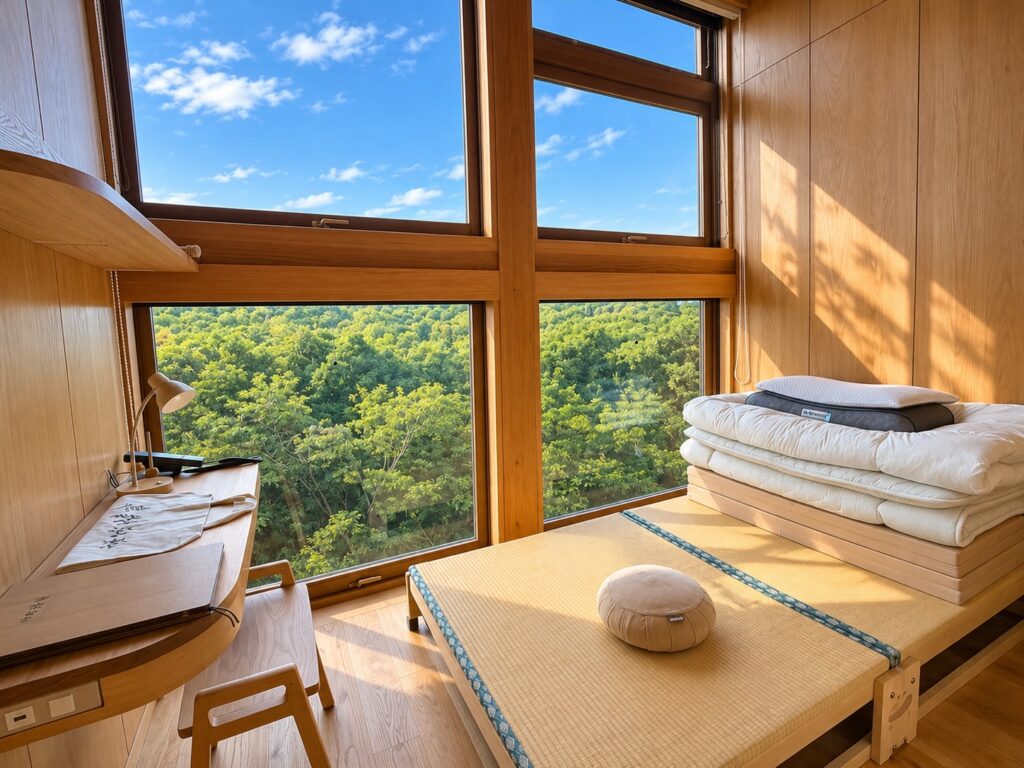
We visited Zenbo Seinei, a meditation retreat elsewhere on Awaji Island and another work by Shigeru Ban.
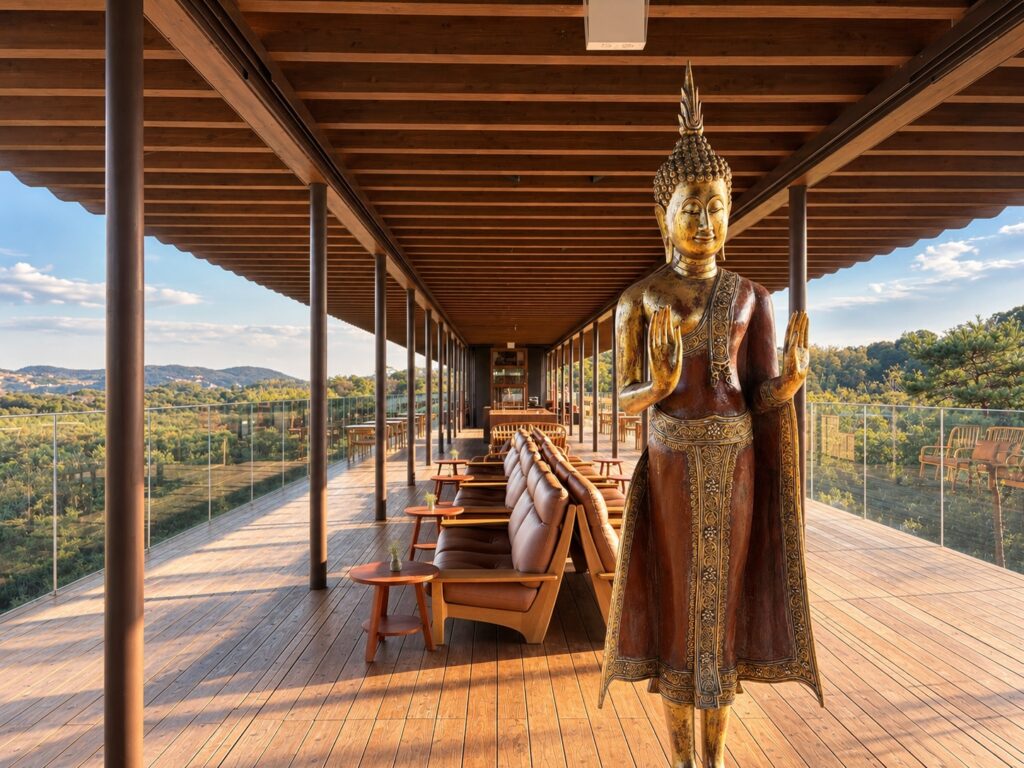
Set within woodland, the extraordinary timber structure extends into a long, open meditation deck that seems to hover above the surrounding forest. Its façade is a grid of dark-stained timber and glass, crowned by a deep, slatted eave, the treetops reflected in every pane. Yet its true achievement is how naturally it lends itself to its purpose.
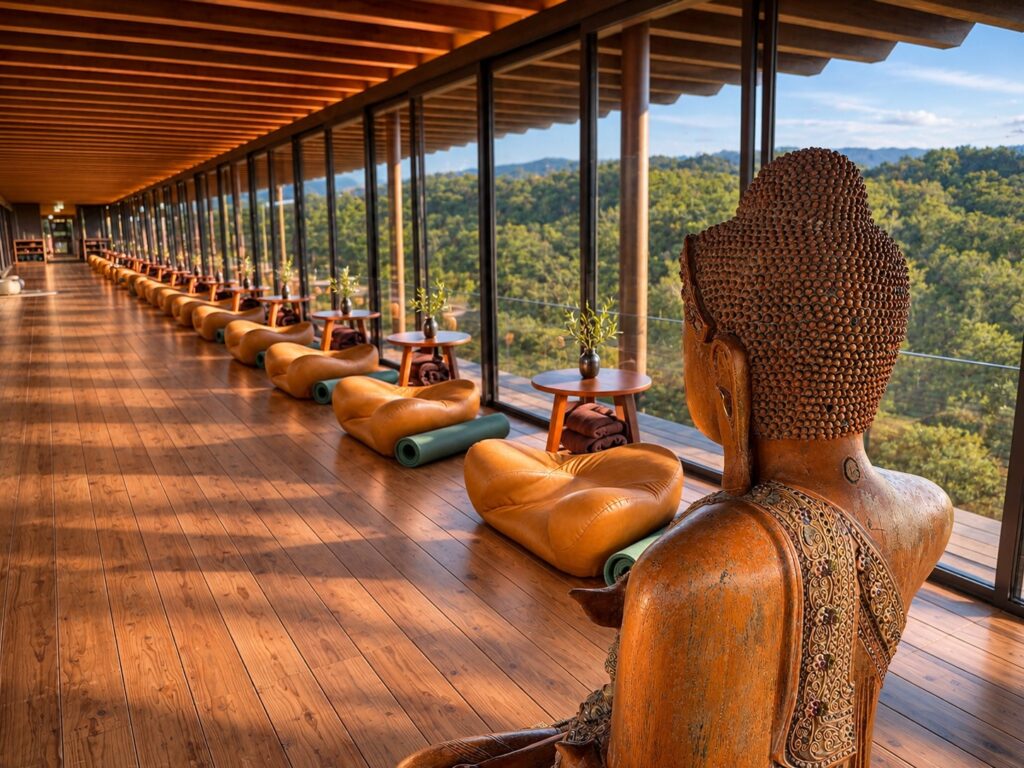
The deck runs the length of the building beneath a deep roof of exposed timber beams, carried on slender dark columns. Glass balustrades leave the view unbroken: a rolling canopy of pine and broadleaf, and beyond it, low blue hills. Wood-framed seats with tan leather cushions line the boards in quiet rows, small round tables between them, each holding a single green sprig in a tiny glass. Near one end stands a gilded Buddha, both palms raised, its red-lacquered robe edged in gold and catching the sun.
The setting began preparing us for meditation before the session had even started.
Trees enclosed us on every side; the quiet was profound, the atmosphere an invitation to contemplation. The architecture was striking without ever being distracting, and the forest offered a welcome remove from the world outside.
I found it an exceptionally restful place.
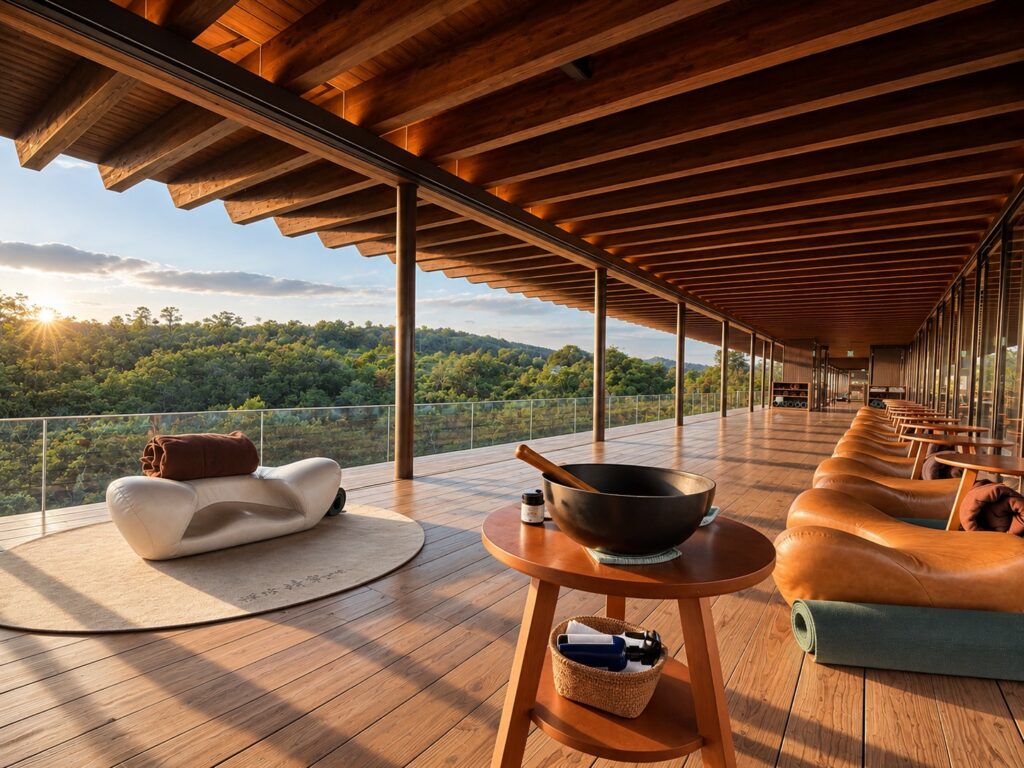
Our teacher was a Japanese woman who had spent more than twenty years teaching meditation in New York. She moved easily between English and Japanese, a gift in a group that included several visitors from abroad. We sat cross-legged on low, saddle-shaped cushions of caramel leather, a rolled green mat beside each, the forest pressing close against the glass. Our teacher’s own cushion, in pale grey, rested on a round mat facing the trees, and a dark singing bowl waited on a small table with its wooden striker. The cushions cradled the hips and took the strain off the knees—no small mercy for anyone unaccustomed to sitting still for long periods.
The experience struck me as particularly well suited to beginners.
Meditation can seem daunting to the uninitiated. There is the question of how to sit, what to do with one’s wandering thoughts and whether one is somehow getting it wrong.
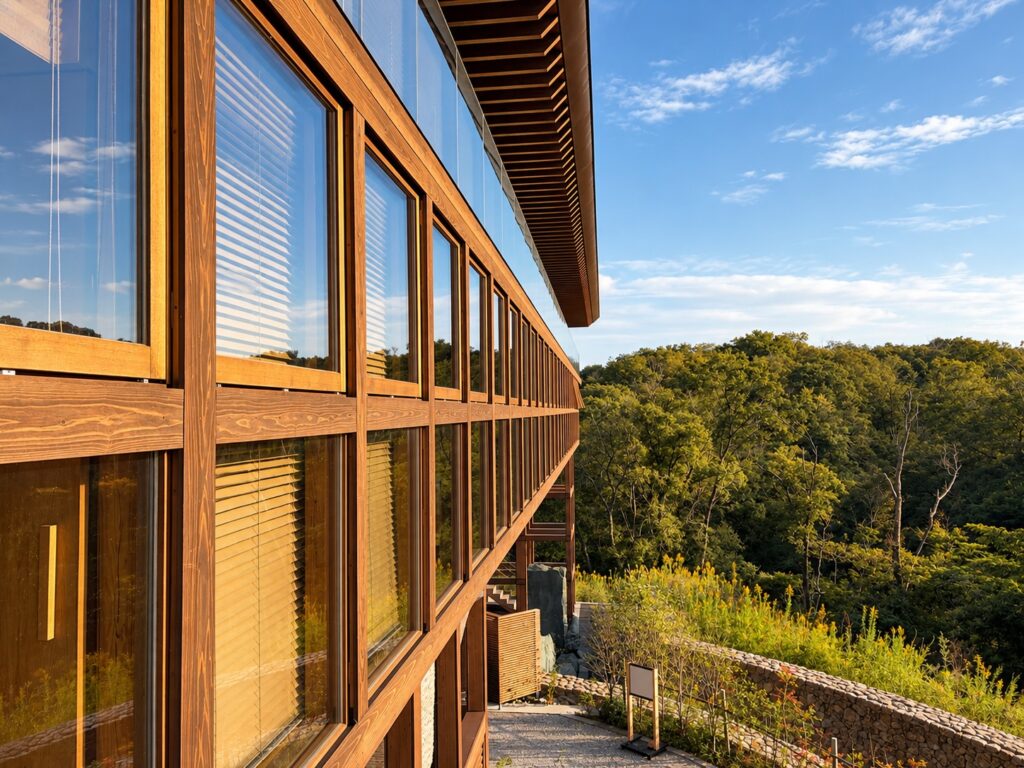
At Zenbo Seinei, the surroundings and gentle guidance made it all feel approachable. Sensing that many of us were first-timers, our teacher began with the simplest of exercises: close your eyes for five minutes, nothing more. Later she led us in a walking meditation around the deck. “Look at what’s around you as you walk,” she told us. “Don’t try too hard to meditate. Simply let yourself flow with the moment.”
Even a first-timer, I felt, could enjoy a genuine sense of mental ease without necessarily attaining a profound meditative state. Seasoned practitioners might well find that the same setting carried them into deeper concentration.
What fascinated me was how much the environment contributed.
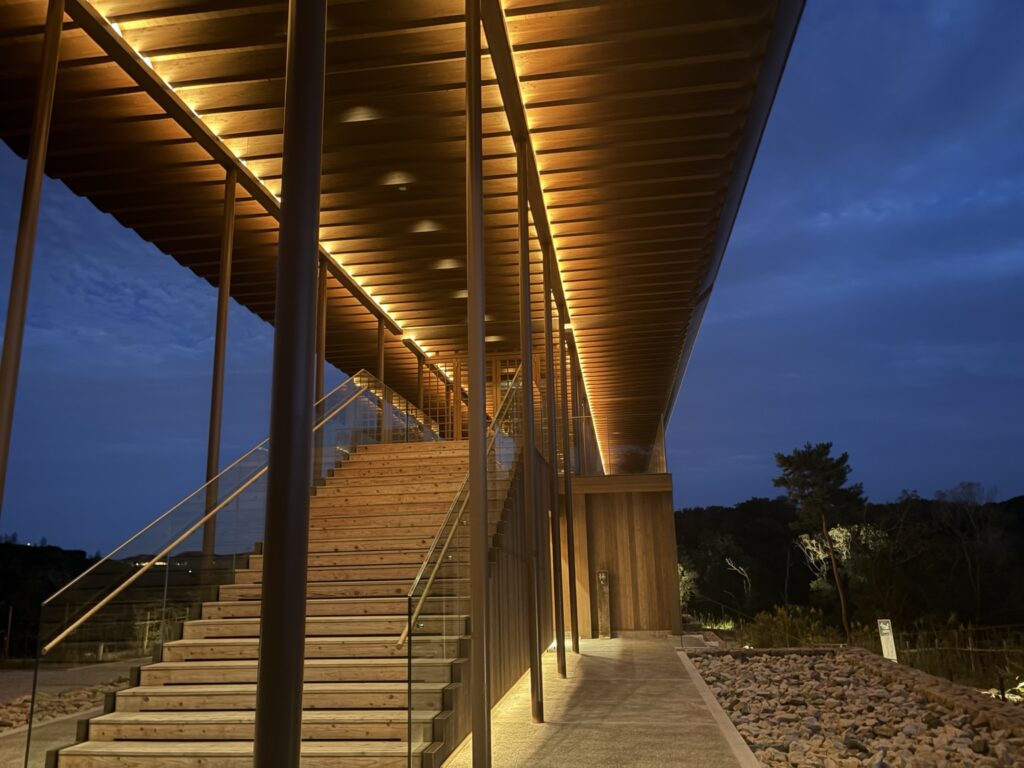
Ban’s building is not merely an architectural showpiece that happens to accommodate meditation. Its dialogue with the forest, the openness of the deck and the restraint of the setting all serve the practice unfolding within it.
Zenbo Seinei offers overnight stays, but we came for a meditation program as part of our wellness experience at THE PASONA.
Even so brief a visit proved worthwhile.
It was also a reminder that wellness need not concern itself only with the body. There is real value in setting aside time to quiet the mind.
THE LUXURY OF COMPLETE RELAXATION
Perhaps the greatest luxury of those four days was the time between treatments.
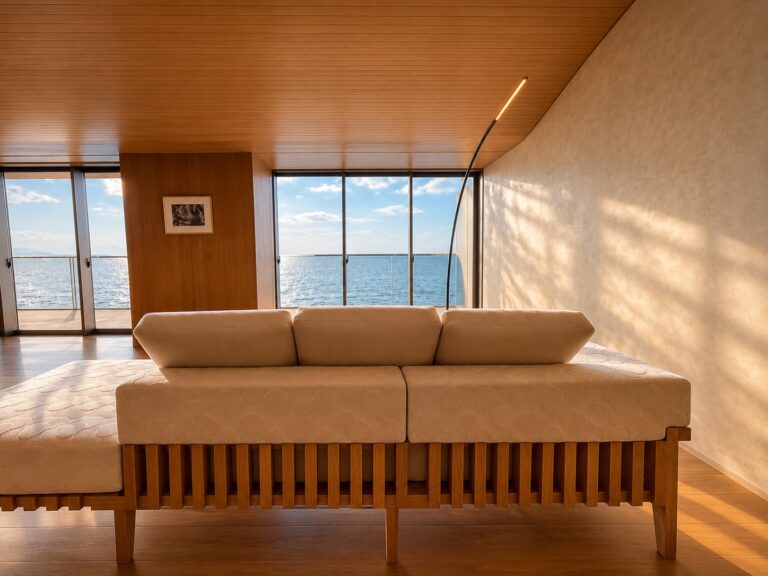
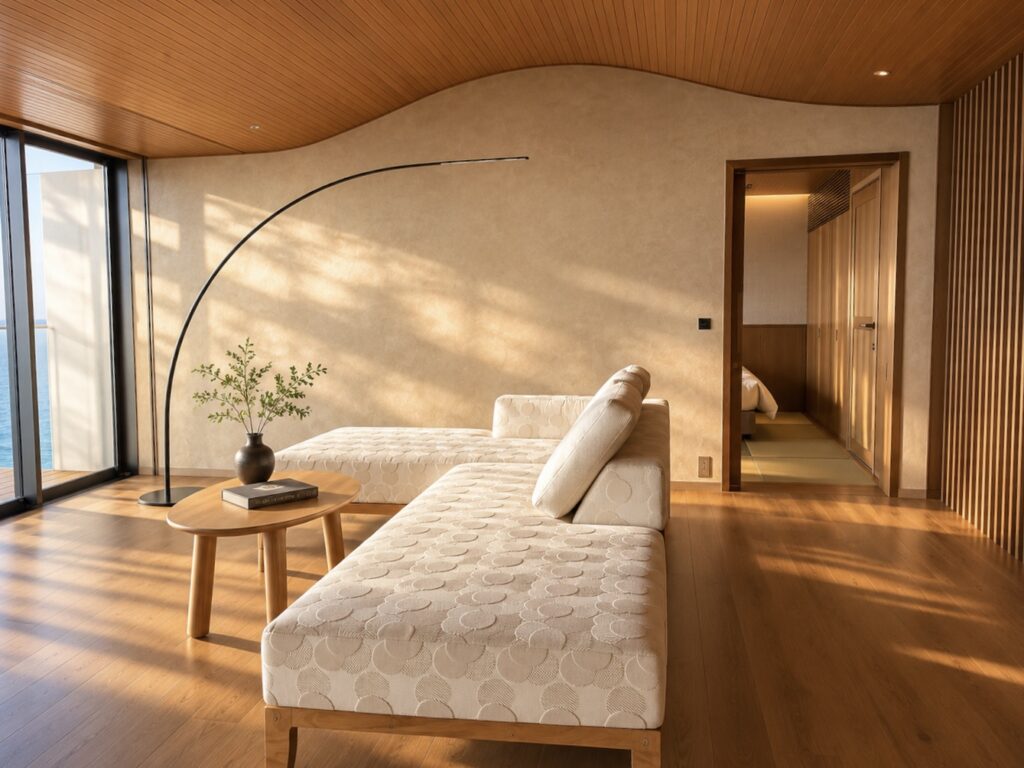
I had brought a book, and there were long, unbroken stretches when I could settle onto the cream sofa in our suite, its upholstery embossed with overlapping circles, and read without interruption. Above me, the timber ceiling swept in a slow curve like a wave; afternoon sun filtered across the plaster wall in shifting, honeyed patches.
At other times, I did very little at all.
I watched the water, savored the stillness and let my mind wander toward things that rarely get a hearing in a busy day.
There was nowhere in particular I needed to be.
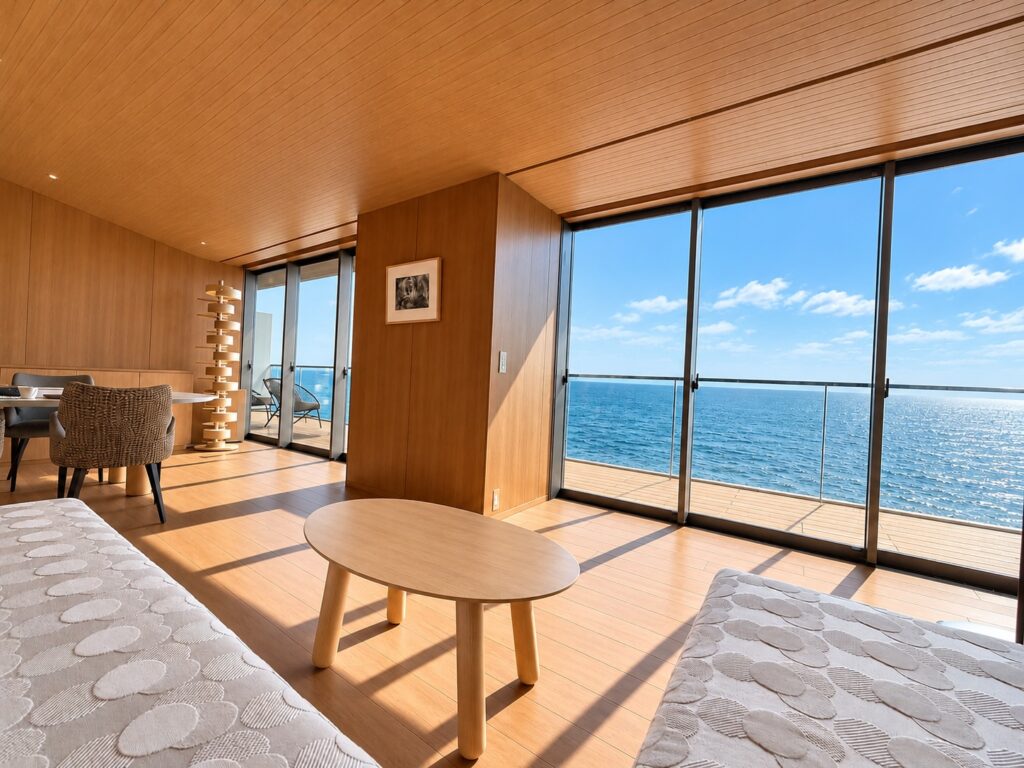
This is an underrated pleasure, especially for those whose lives are ruled by appointments, messages and obligations.
The trouble with holidays, I have often found, is that they can become yet another project to manage: sights to see, restaurants to try, experiences to be squeezed into too few days.
THE PASONA seemed to understand that true rest requires unclaimed time.
The wellness sessions mattered, of course—but so did the spaces between them.
Never once did I feel I was squandering my holiday by sitting quietly with the view.
Quite the reverse. I came to see these interludes as an essential part of the experience.
THE SIMPLE PLEASURE OF SLEEPING WELL
Each morning and evening, I lingered in the private outdoor hot-spring bath on our terrace: a deep oval tub the soft ochre of wet sand, set on timber decking beneath a slatted overhang, with nothing between it and the sea but a pane of glass.
It looked out over the Seto Inland Sea, the water flecked with silver wherever the sun caught it. I never tired of it.
In the morning, it was a tranquil way to greet the day. In the evening, it became part of our ritual before bed.
Once the day’s treatments ended at around five, we would dine early and retire to our room. There were no late-night diversions to attend and no reason to stay up longer than we wished.
I slept exceptionally well.
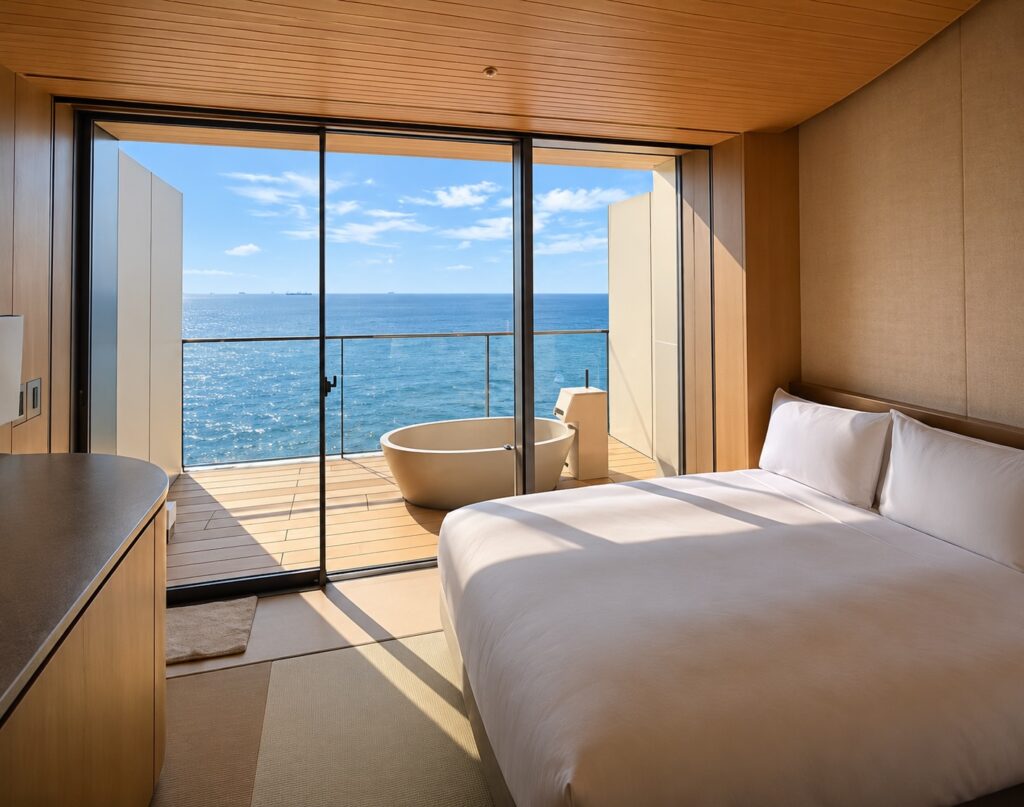
It is hard to say precisely why. Perhaps it was the gentle exercise, the warm-water treatments, the early dinners or simply the absence of everyday pressures.
More likely, it was all of them together.
Whatever the cause, I found myself going to bed earlier than usual and waking clear-headed, with none of the usual fog.
Sleep is one of the central pillars of Mibyo, and this was one part of the program whose value I could feel at once.
There was something almost old-fashioned about the rhythm of our days: rising early, spending time outdoors, eating proper meals, moving our bodies, resting in the afternoon and retiring at a sensible hour.
None of it was revolutionary.
Yet I could not remember the last time I had kept to such a routine for several days in a row.
And I felt remarkably well.
WHAT FOUR DAYS OF MIBYO TAUGHT ME
By the end of our stay, I felt relaxed, restored and—perhaps most importantly—inspired.
I had eaten superbly, slept better than I had in a long while and discovered treatments and activities I might never otherwise have tried.
Yet what lingered was not any single experience.
It was the realization that feeling better need not depend on complicated interventions.
In four days at THE PASONA, I had taken no special supplements and submitted to no sophisticated machinery. Although the resort has considerable medical expertise and technology at its disposal, my own program consisted largely of traditional Asian wellness practices, gentle movement, relaxation, nourishing meals and ample sleep.
None of it was especially difficult.
The real challenge, I understood, lay in finding the time—and in weaving these things into everyday life.

This is where the personalized approach proved its worth. Rather than simply exhorting guests to exercise more, eat better or sleep longer, THE PASONA creates an environment in which all of this happens naturally—and with genuine pleasure.
I began to consider which habits I might carry home.
Nordic walking was the obvious candidate. I could certainly make more room for stretching and relaxation. And while Tokyo could never offer a breakfast view of the Seto Inland Sea, I could make a greater effort to begin each day with a proper, nourishing meal.
I also hoped to preserve something of the unhurried rhythm I had found on Awaji Island.
Four days, of course, are not enough to judge whether a wellness program will leave a lasting mark on one’s health, let alone one’s longevity. I would not pretend otherwise.
But they were enough to remind me how good it feels to sleep deeply, move easily, eat thoughtfully and spend time doing nothing in particular.
I had come to THE PASONA hoping for a restorative holiday.
I left with something far more useful: a renewed commitment to taking better care of myself.
And a firm resolve to order those Nordic walking poles.
Frequently Asked Questions About THE PASONA Wellness Retreat in Japan
What is THE PASONA natureverse retreat on Awaji Island?
THE PASONA natureverse retreat is a personalized wellness destination on Awaji Island, Japan, overlooking the Seto Inland Sea. Its approach combines nutrition, movement, sleep, relaxation and traditional Asian wellness practices, with individual programs organized following an initial consultation.
What is Mibyo in Japanese wellness?
Mibyo is a Japanese concept focused on maintaining health and addressing imbalances before they develop into more serious problems. At THE PASONA, the philosophy emphasizes three foundations of daily wellbeing: nutrition, movement and sleep.
What wellness activities can guests experience at THE PASONA?
My four-day personalized program included Nordic walking, warm-seawater thalassotherapy, mugwort steaming, facial acupuncture, aerial yoga, guided stretching and a meditation visit to Zenbo Seinei. Individual programs vary according to each guest’s needs.
What is thalassotherapy at THE PASONA?
THE PASONA uses filtered seawater from the Seto Inland Sea, warmed to approximately 33 to 36 degrees Celsius, in its aquatic wellness facilities. My sessions involved gentle guided movement and stretching, adapted to individual comfort and ability.
What is Japanese mugwort steaming?
Mugwort steaming is a traditional herbal wellness treatment in which a guest sits over rising herb-infused steam. At THE PASONA, a therapist prepared a personalized herbal blend after discussing my preferences. I particularly enjoyed its warmth, herbal aroma and relaxing atmosphere.
Can beginners enjoy meditation at Zenbo Seinei?
Yes. During my visit, the instructor guided participants in English and Japanese, beginning with a simple five-minute meditation and later introducing walking meditation. The comfortable seating, gentle instruction and forest setting made the experience approachable for first-time meditators.
Is Zenbo Seinei part of THE PASONA retreat?
Zenbo Seinei is a separate meditation retreat on Awaji Island, designed by architect Shigeru Ban. We visited for a guided meditation program during our stay at THE PASONA natureverse retreat. We did not stay overnight at Zenbo Seinei.
Is four days enough for a wellness retreat in Japan?
Four days allowed me to experience a personalized wellness program, discover new activities, enjoy nourishing meals and establish a restful daily rhythm. I left feeling relaxed and rejuvenated, although four days cannot establish lasting health or longevity benefits.