

This is the first article in a series on the Mibyo program experience at The Pasona Natureverse Retreat in Japan.
Japan is the world’s byword for long life. On Awaji Island, three hours from Tokyo, THE PASONA natureverse retreat pairs startling architecture with preventive-health traditions and exceptionally good food, to increase one’s chances of maintaining wellbeing. In the first of a series of daily dispatches: a dramatic arrival, a pool worth the journey and a vegetarian dinner that wins over a sceptic.
WORLD-CLASS WELLNESS RETREAT IN JAPAN
For years I have been looking for a world-class wellness retreat closer to home, which is Tokyo. The famous health resorrs ones are elsewhere, including in Thailand, and in Europe. I have visited a fair number and considered more.
However, I knew of none in Japan that came close to the international wellness destination retreats I have experienced so far. So Japan has made longevity something close to a national trait, and attention to detail is almost an art form, but until this year, it had no authentic destination wellness resorts that could stand alongside the best in the world.
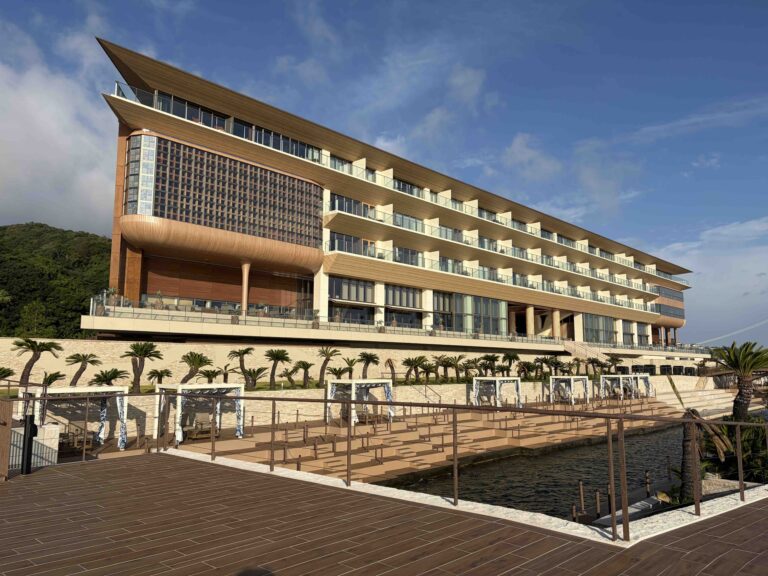
Fortunately, THE PASONA natureverse retreat opened on Awaji Island, in Hyogo Prefecture, in June 2026, The photos immediately caught my attention. It was also an easy three-hour journey on the bullet train, plus a short drive from Shin Kobe Station to Awaji Island.
We packed our bags and booked the three-night Personalized Mibyo Program.
The wellness program offers three themes. Relax is aimed chiefly at stress and sleep. Reset, concentrates on movement, nourishment, warm-water bathing and restoring balance. Rebuild targets strength, physical resilience and healthier routines. Each runs over three night and four days, with a dedicated wellness concierge shaping the schedule around the guest and a medical facilitator on hand throughout.
We chose the “Reset” theme.
WHAT HAPPENS WHEN YOU HAVE BEAUTY ALL AROUND
I was therefore looking forward to an enjoyable holiday that also offered renewed energy and an overall feeling of lightness.
However, wellness is not just about treatments and activities. The effect of living with beauty and nature all around for four days is vastly underestimated, but I can attest to its effects.
Many people say one’s surroundings can greatly influence one’s outlook on life. In this case, The Pasona Natureverse Retreat, designed by Shigeru Ban, the Pritzker Prize-winning architect best known for his inventive use of paper tubes, certainly provided serenity and also inspiration.
THE GRAND ENTRANCE BY SHIGERU BAN
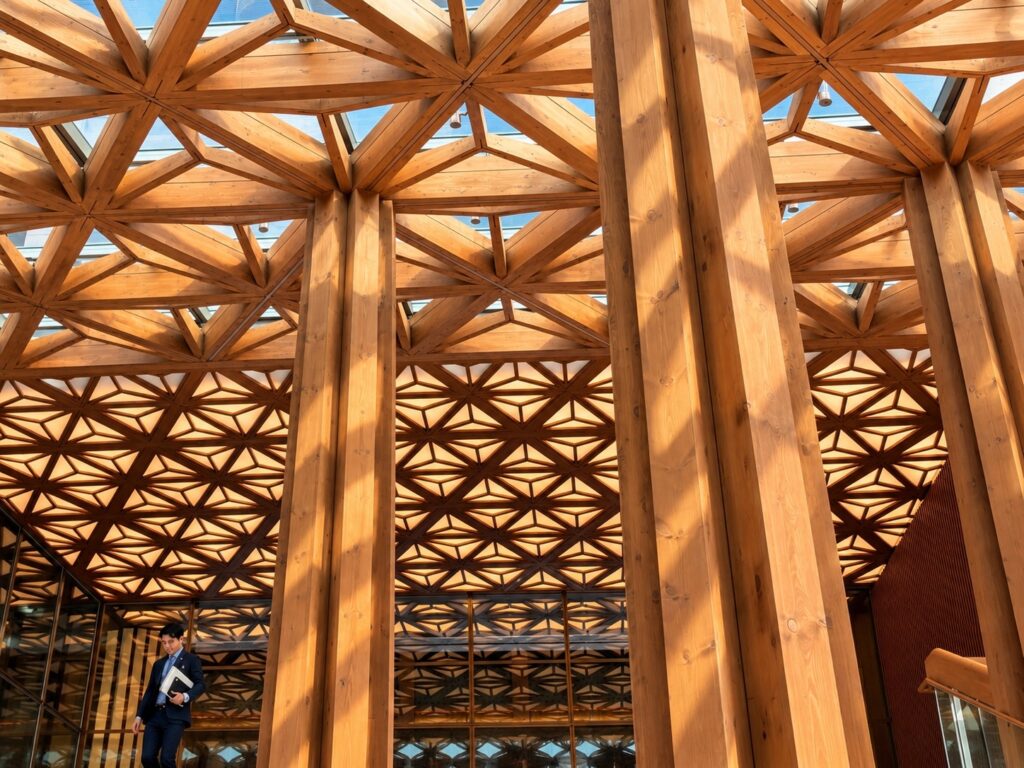
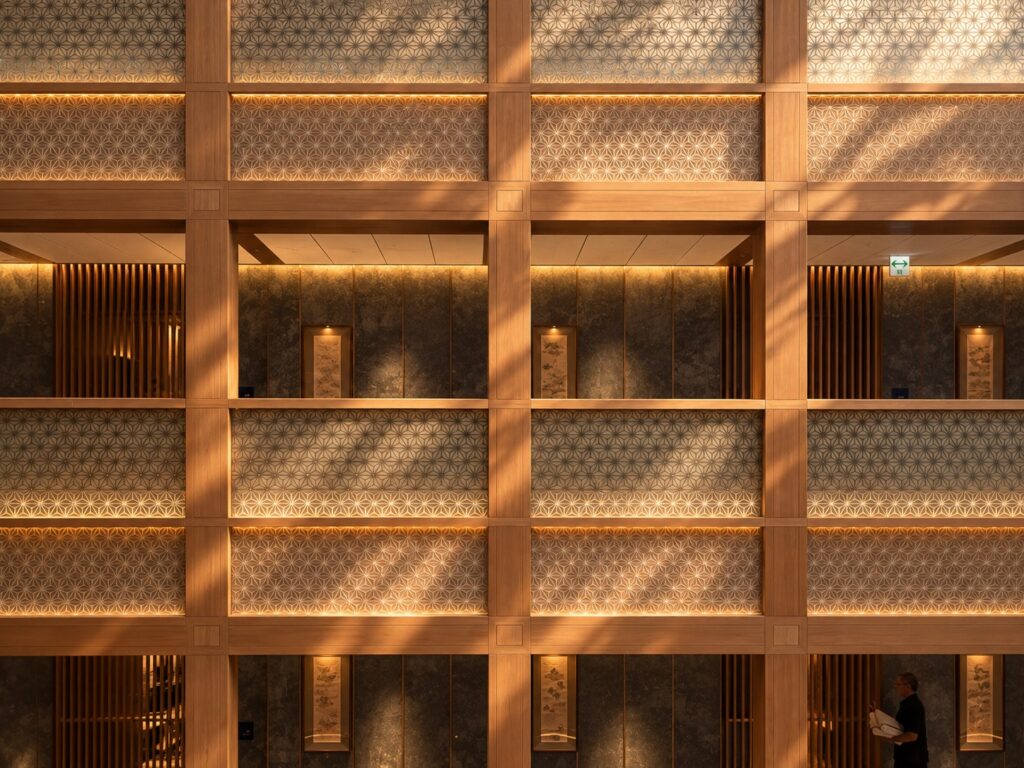
The first surprise was the entrance. As the car drew up, I found myself craning upwards at a vast geometric lattice of timber beams, glass and steel, borne on great forked columns modelled on trees. The pattern is intricate enough to seem to multiply the longer you look at it.
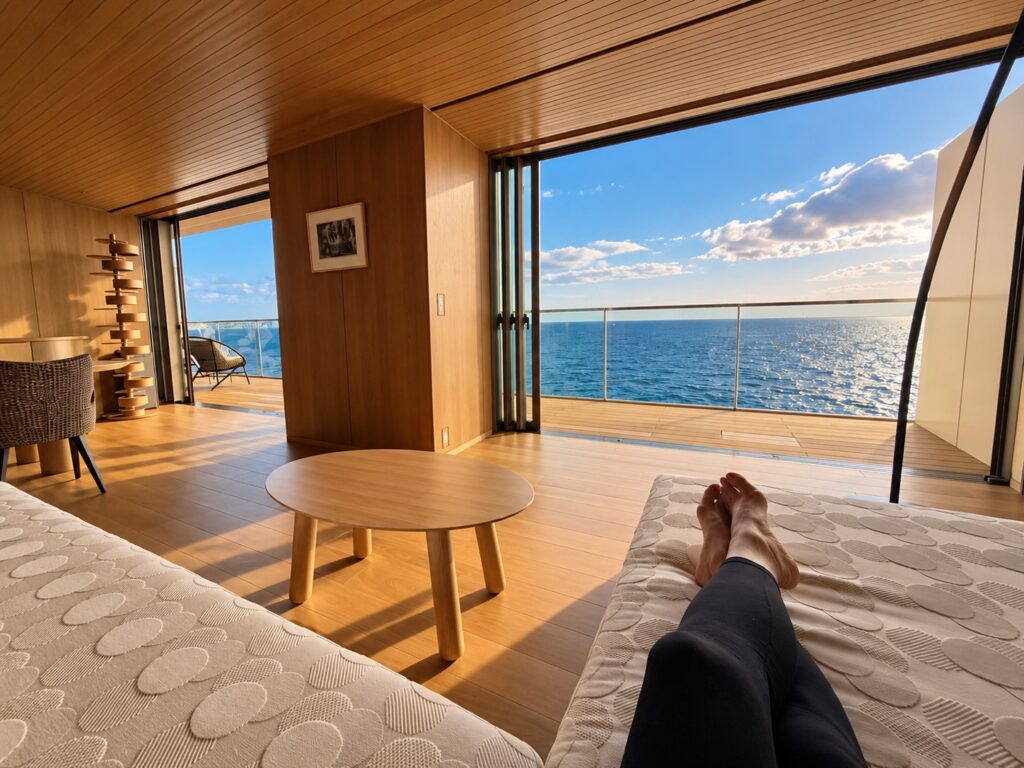
However, the effect is calming rather than overbearing, like a piece of fine Japanese joinery scaled up to the size of a building. The lattice follows asanoha, the traditional hemp-leaf pattern long associated with health and growth. The building is Ban’s third project on the island, and he also designed several of the guest rooms, including the suite we stayed in.
Then the doors opened onto what lay beyond.
RELAXING BY THE SEA
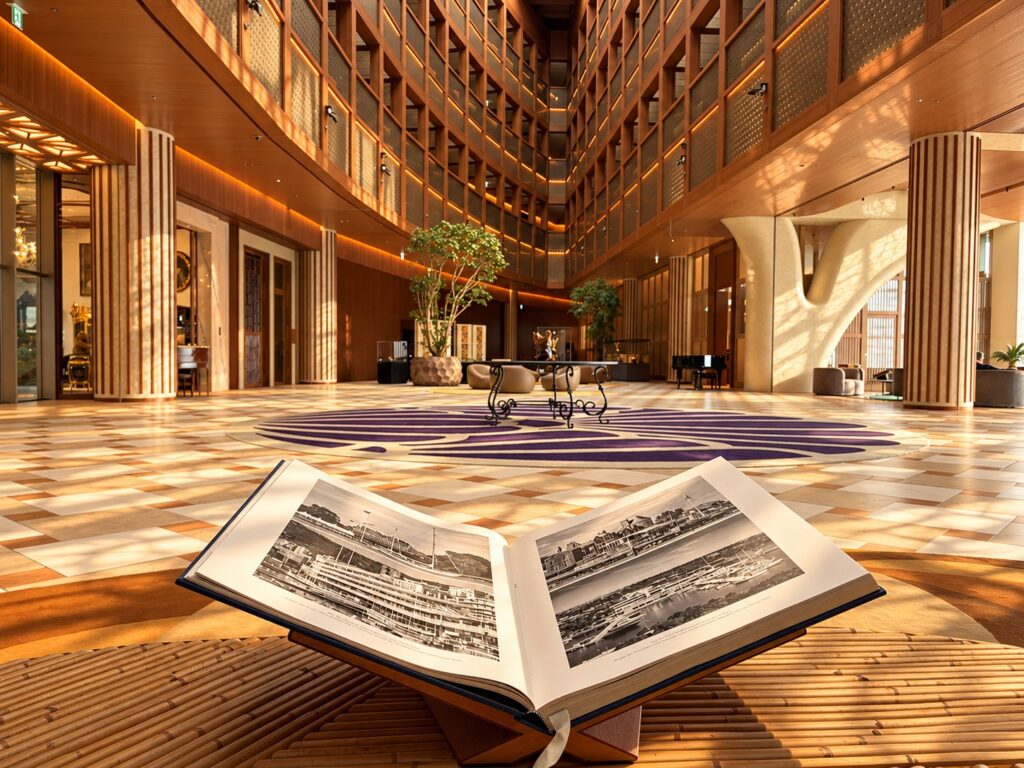
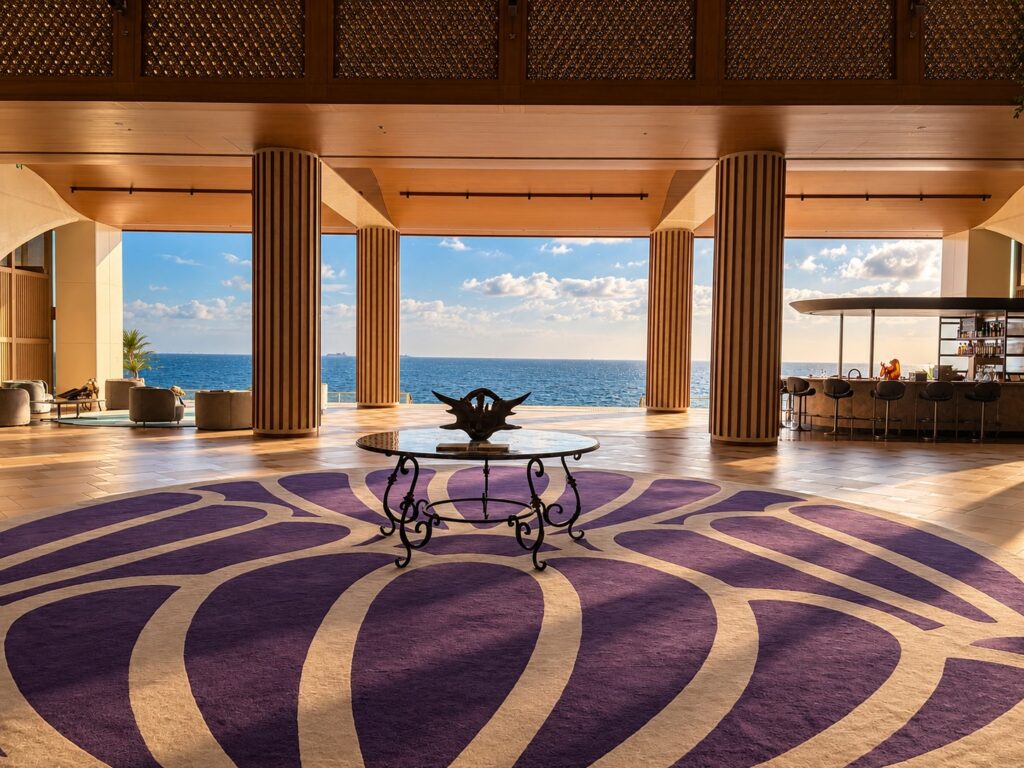
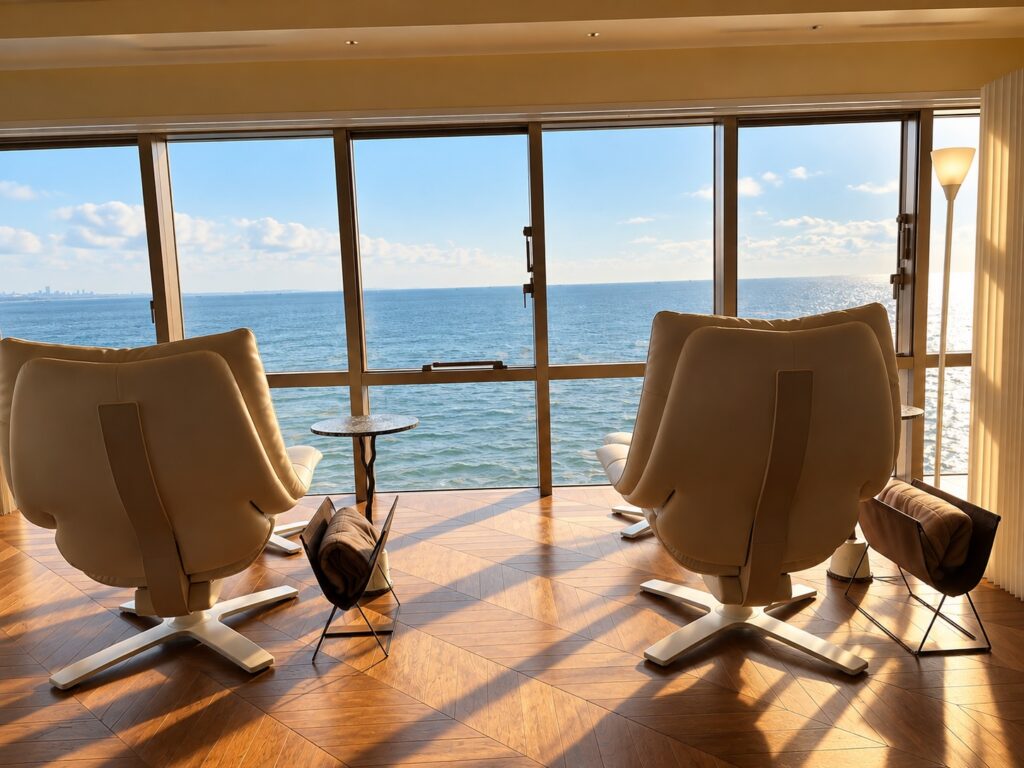
It was the sea, and it seemed to fill the entire horizon, with Kobe, Osaka and the Akashi Kaikyo Bridge strung along the far shore. Massive columns framed it, and the lobby opened towards the water with an almost theatrical sense of scale. Its glass doors measure some 24 metwea across and slide fully open. Doors that size, I later learned, called for technology normally used in aircraft hangars rather than in wellness retreats.
The whole lobby is raised to the second floor, above a protective seawall. Standing at the edge of it, I felt there was nothing between me and the water.
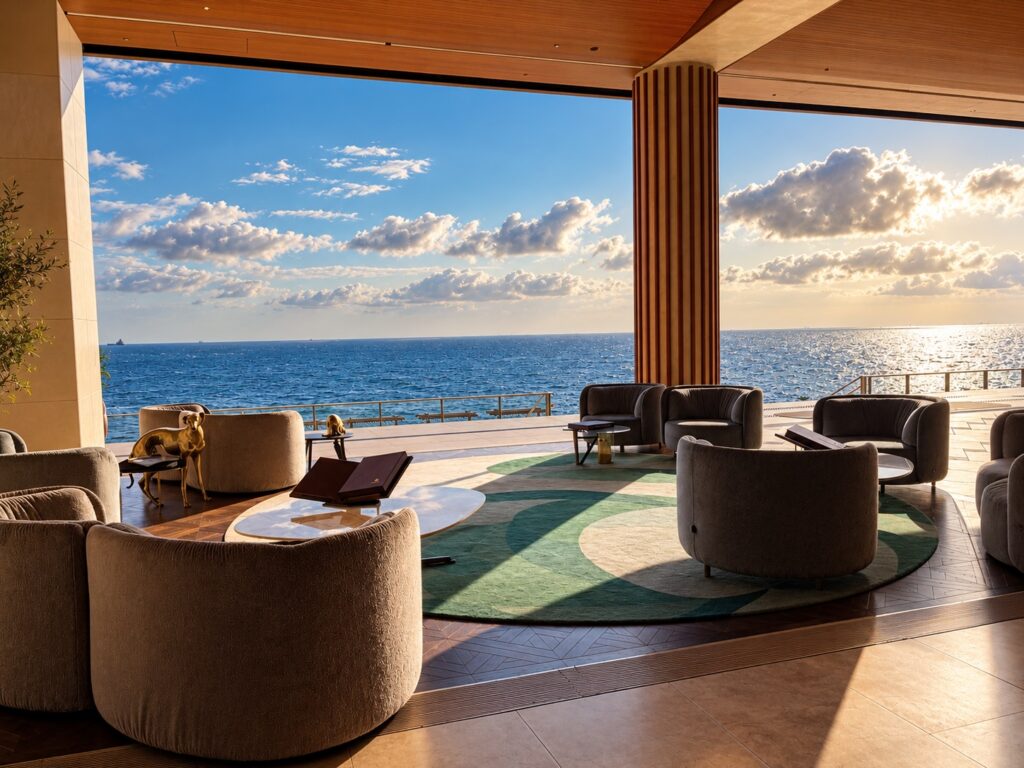
I stood there for some time. The effect was so improbable that I felt I had stepped into a kind of perfect metaverse of design. This was most fitting, especially for a place called natureverse.
THE MEANING OF NATUREVERSE
“Why is this called natureverse?” I asked one of the wellness concierge team members.
“The name is actually from the Pasona Group’s pavilion at the Osaka Expo 2025,” she explained. Then it dawned on me that it was a clever play of words. We were inside a world where we were attempting to reverse time and nature by either looking or feeling younger again.
Already, just be standing in this impressive lobby, I was feeling good about myself and the entire world. One step forward towards feeling like a better version of myself achieved within minutes of arrival.
HEALTH AND WELLNESS IN JAPAN
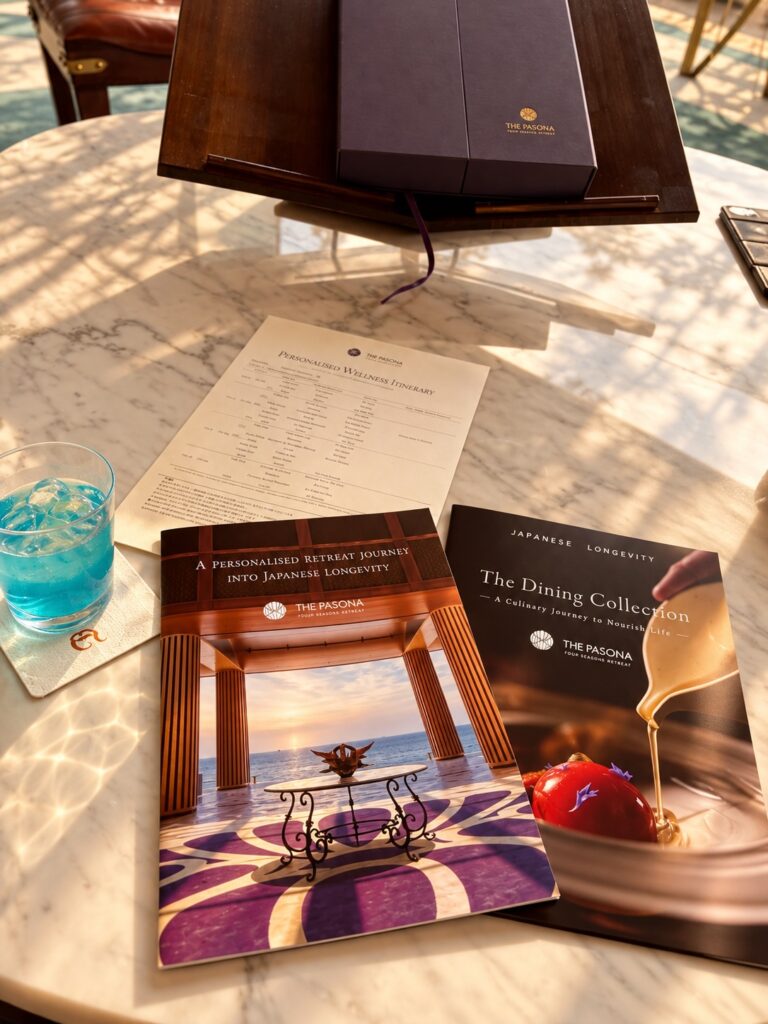
The retreat’s philosophy rests on mibyo, a Japanese concept describing the state between full health and illness. Rather than waiting for something to go wrong, the idea is to listen to the body and make small corrections that support wellbeing over the long term. It sits naturally in Japan, where preventive habits, bathing rituals, seasonal eating and a regard for balance have long been woven into daily life.
THE PASONA treats wellness as a state maintained day by day through habit, and sees in that idea the key to Japanese longevity. If there is a Japanese art to adding years to one’s life, mibyo sits close to its heart.
ABOUT THE PASONA NATUREVERSE RETREAT
The flexibility appealed. People arrive at retreats wanting different things: some need a complete break from punishing jobs, some want to get fitter, others simply want to take better care of themselves. I wanted to see what a carefully designed Japanese program could offer when professional guidance came wrapped in the comforts of a luxury resort.
The treatment menu is not yet as long as those at the older international clinics. But THE PASONA is new, and given its facilities, resources and available space, I suspect it will grow considerably. What it already offers is impressive, particularly for those in search of restoration rather than an intensive medical regime.
A PERSONALIZED WELLNESS REGIMEN
Our first afternoon began at the Mibyo Lab, the on-site clinic staffed by licensed physicians and nurses, with a consultation about our health, habits and aims, followed by a physical assessment to give the coming days a baseline. None of it felt rushed or formulaic. The questions were those of people genuinely interested in what we hoped to take away.
Then came the first treatment, which proved to be the high point of my day.
THALASSOTHERAPY AT THE PASONA NATUREVERSE RETREAT
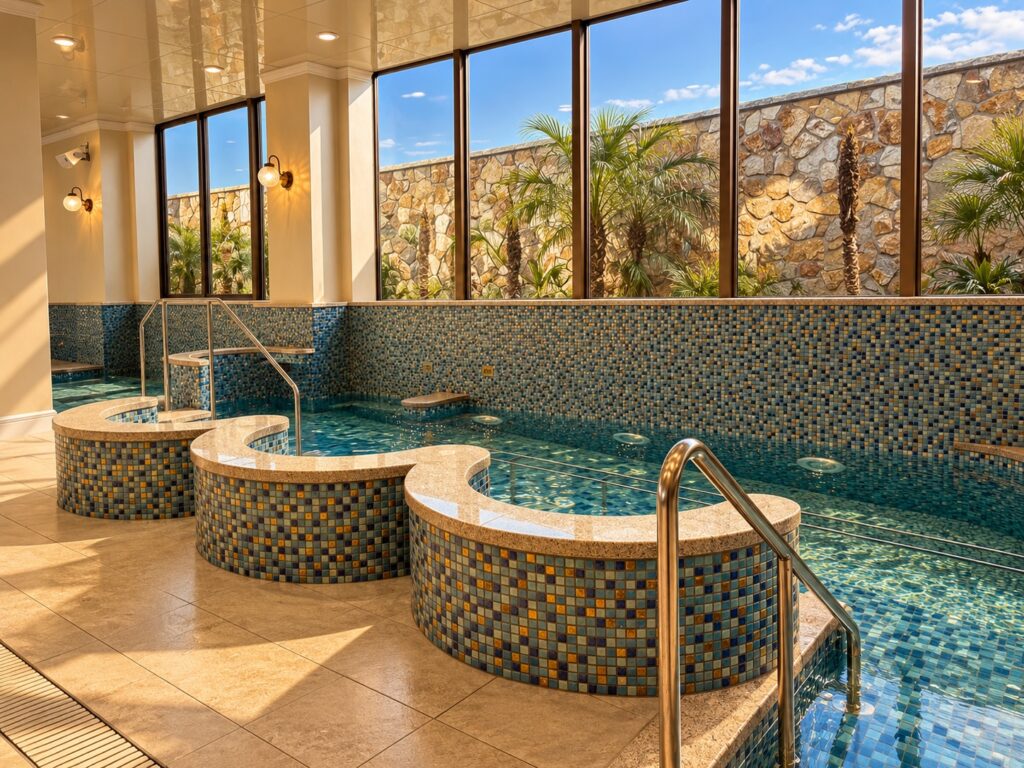
The private thalassotherapy session here is unlike any other in Japan. The pool uses seawater drawn from the surrounding Seto Inland Sea, filtered and heated to between 33C and 36C.
Meanwhile, the aquatic therapy area is a remarkable piece of design. Sections with curved stone edges, lined with mosaic tiles in blue, turquoise and gold, each serve a purpose for exercise or relaxation. Each is controlled to a particular temperature.
There are submerged reclining loungers, places to sit and separate zones for guided movement, with handrails and carefully placed entry points that make the pools usable for guests of varying mobility. Every detail seems to have been considered as much for ease of movement as for looks.

BENEFITS OF THALASSOTHERAPY
My trainer led me through a sequence of exercises and stretches in the warm water, adjusting each one to what I could comfortably manage. The program was effortless and relaxing. The buoyancy took my weight, so stretches that would have been a struggle on land came easily.
One movement flowed into the next, the trainer explaining each and correcting where needed. The warmth, the gentle resistance of the water and the surroundings made the whole thing close to meditative. I lost track of time entirely.
A hammam, kept at around 40C and full humidity, rounded off the session. I emerged so thoroughly relaxed, and so taken with the experience, that I began seriously wondering whether something similar could be built at home. It was not the most practical idea I have ever had. I would, however, return to Awaji island for that pool alone.
VEGETARIAN DINNER INSPIRED BY BUDDHISM
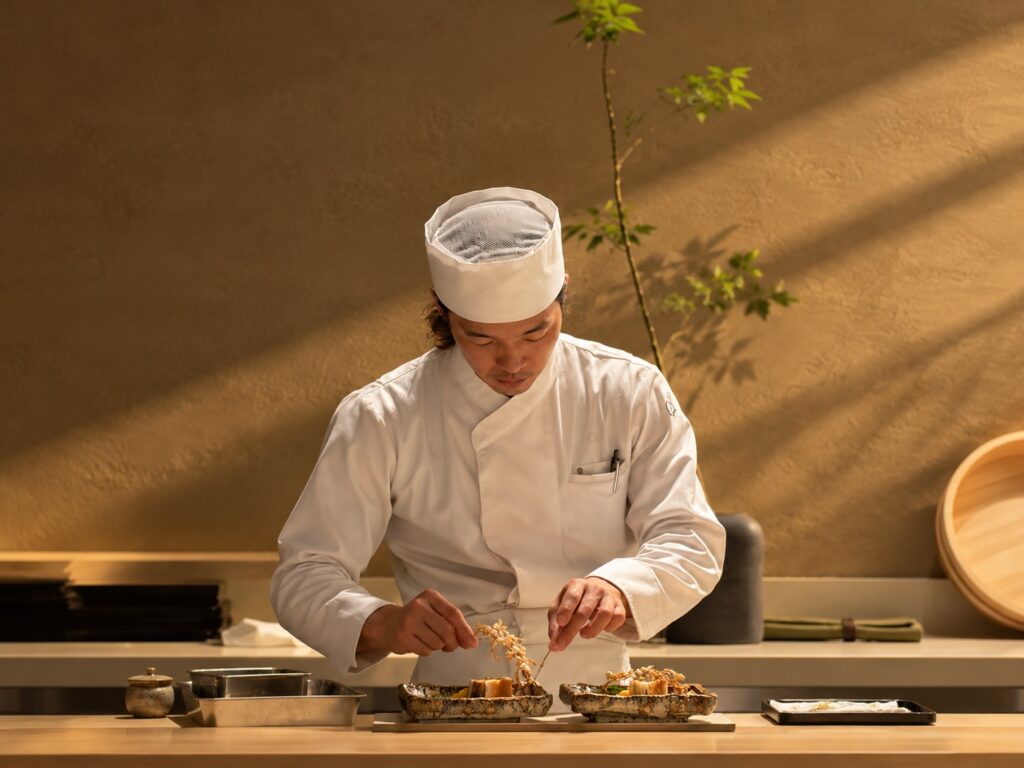
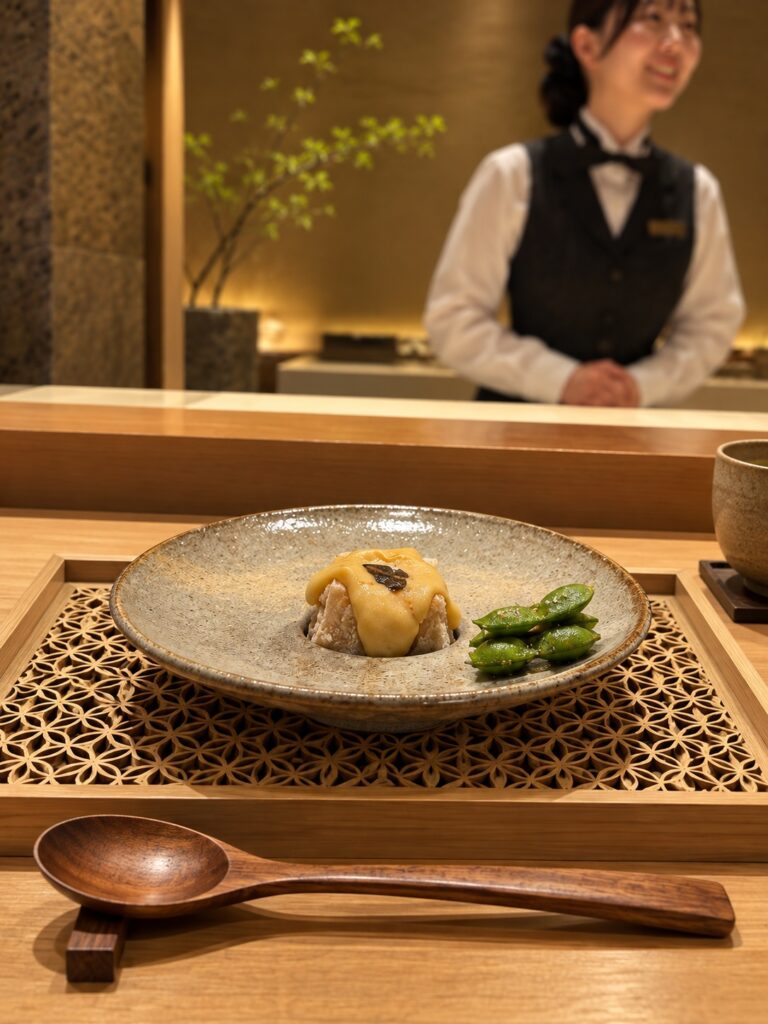
That evening we ate at Awaji Sougo, one of the retreat’s restaurants, which specialises in shojin ryori, the plant-based cooking of Japan’s Buddhist temples, a tradition stretching back more than 700 years and served here as a kaiseki meal.
I am not by nature a vegetable person, and a salad is the last item I will ever order in a restaurant. However, Awaji Sougo, a sister restaurant of the famous vegetarian restaurant Daigo in Tokyo, changed the way I thought about vegetables completely.
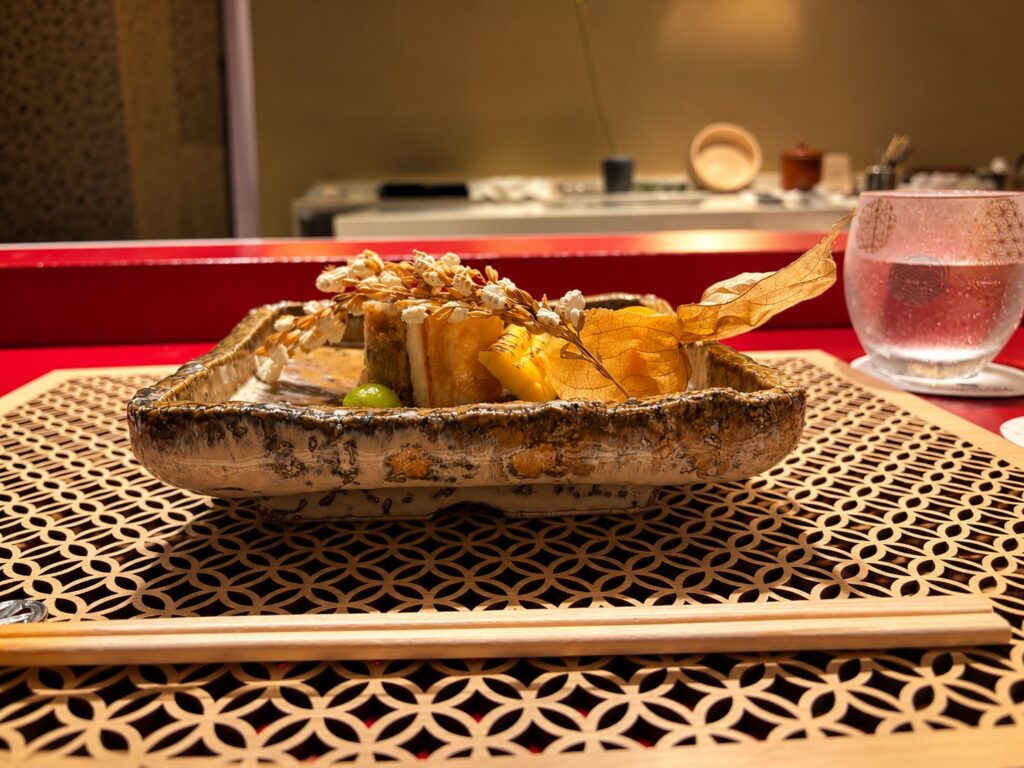
The food was exquisite, beautifully presented and full of flavour. Each course disclosed unexpected texture, depth of flavour, and unmistakable umami.
“If I could eat like this everyday, I would happily become a vegetarian,” I said.
THE CREATIONS OF DAIGO
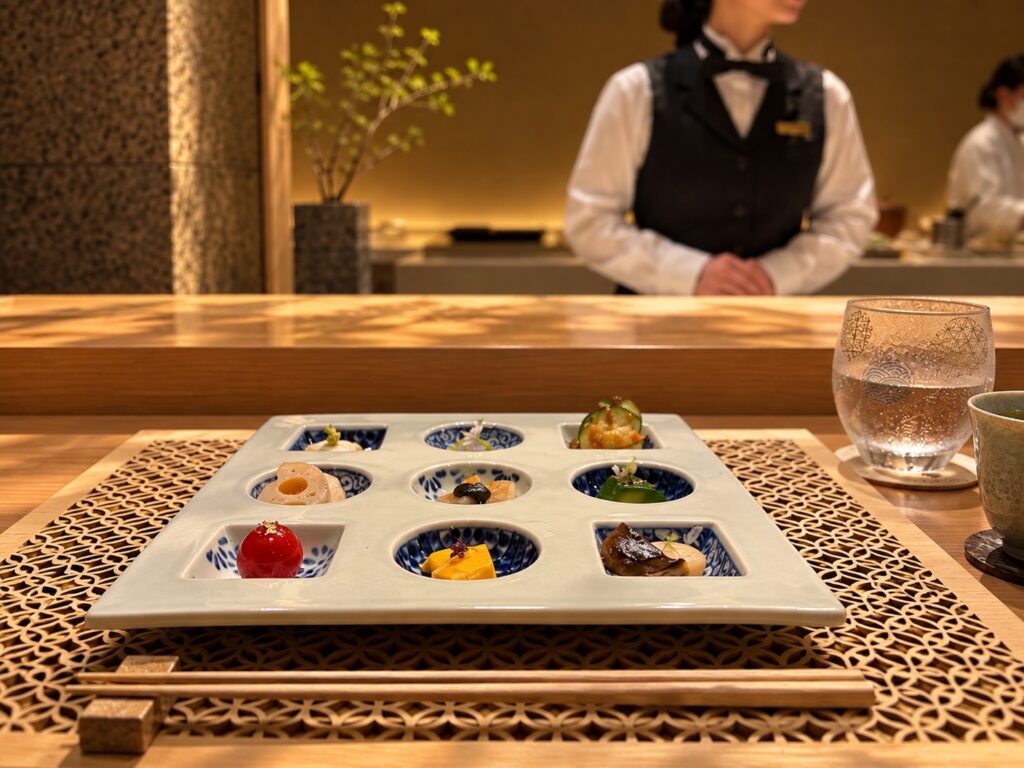
The dishes on offer are the creations of Daisuke Nomura, of the family that founded Daigo, the celebrated Tokyo temple-cuisine restaurant revered by vegetarians the world over. As its third-generation head chef he earned two Michelin stars in 2008, before opening Shojin SOUGO in 2015.
His food honours the principles of shojin ryori, a tradition grounded in respect for ingredients and the natural world, but with a contemporary sensibility. The result is sophisticated cooking that happens to be vegetarian, rather than vegetarian food straining to imitate something else.
DINING CHOICES ON THE MIBYO WELLNESS PROGRAM
The resort’s four other restaurants are all overseen by other notable names. Kosei Togei offers Kansai dishes from the Michelin-starred Asai Togei. Hisato Nakahigashi of Miyamasou, the three-star restaurant outside Kyoto, serves food built on foraged wild plants. The sushi, created with fish so fresh that the chef said he fished for produce that same morning himself, is oveseen by Nobu Awajishima.
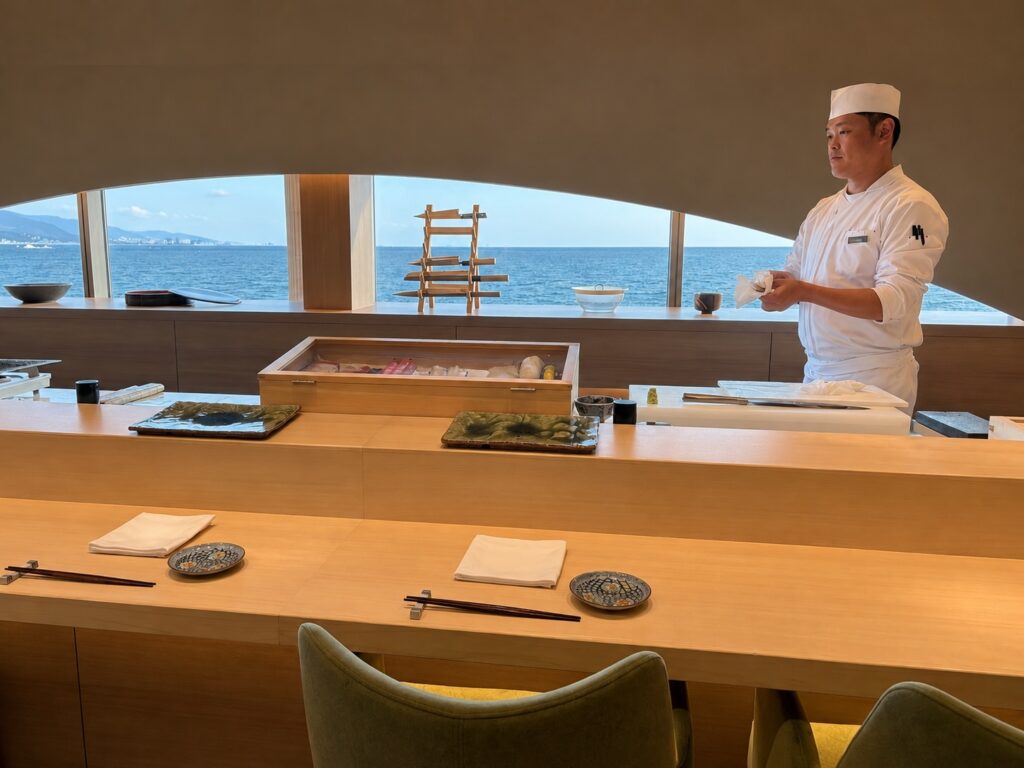
“We have clients who come to Awajishima from Tokyo simply for our sushi lunch,” our wellness concierge said.
Finally, on the fourth floor, a tasting course of French-inspired dishes is recreated under the supervision of Kosuke Nabeta of Restaurant Sola in Paris. All draw on seasonal produce from Awaji and the surrounding region.
WHEN FOOD IS HEALTHY AND ENJOYABLE
The aim is food that gives pleasure while suiting the retreat’s philosophy. Food is often the dreariest part of a health retreat. In fact, few prospects are less enticing than travelling somewhere beautiful only to be served meals that feel like penance for past indulgences.
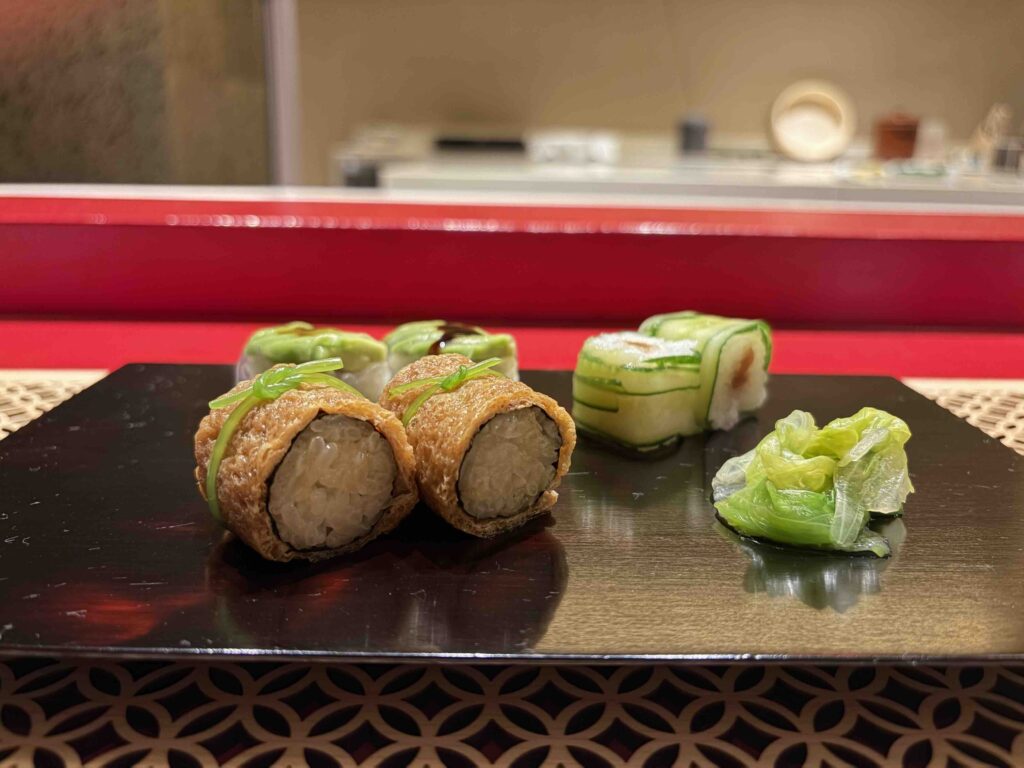
At Awaji Sougo there was no sense of sacrifice whatsoever. We left entirely satisfied, and I found myself thinking that I ought to eat vegetarian more often. I would, admittedly, need Nomura in my kitchen.
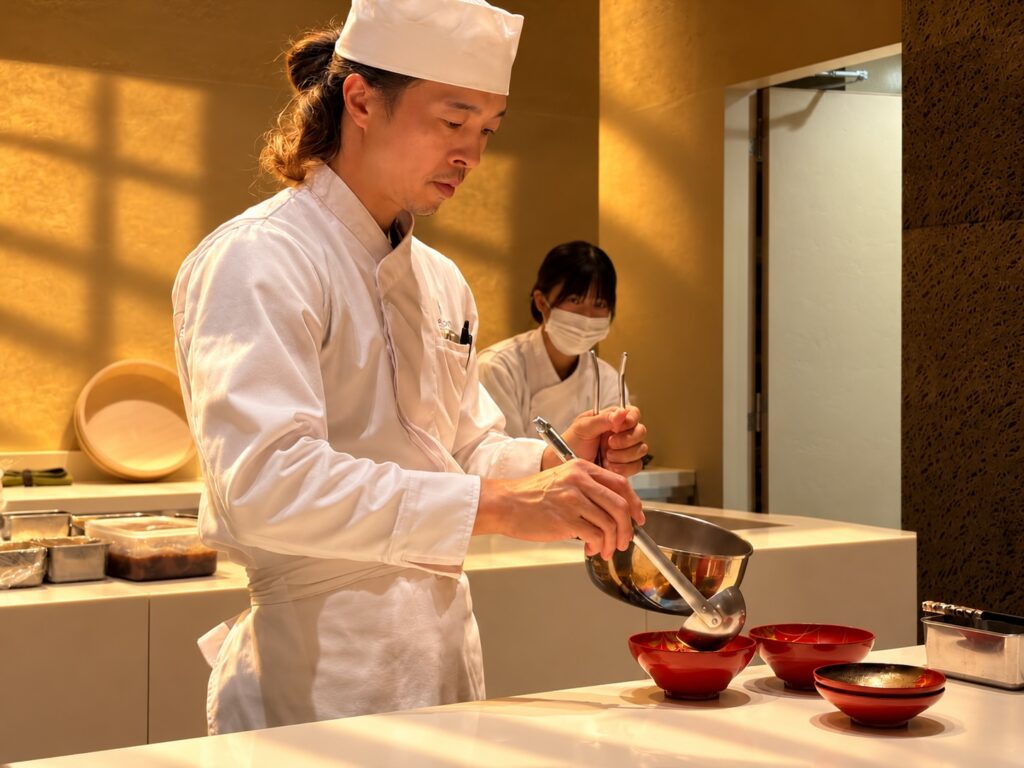
THE MIBYO EXPERIENCE
It was only Day 1 of our Mibyo Experience, and already I was very glad we had made the journey.
Architecturally, THE PASONA Natureverse Retreat had exceeded my expectations as a building worth visiting and experiencing. Meanwhile, the programme had been thoughtful, professional and genuinely enjoyable. The thalassotherapy was exceptional, and our vegetarian dinner was an unexpected delight.
I had come hoping to find a luxury wellness retreat in Japan that could hold its own against the established international names. This one certainly has the makings of it.
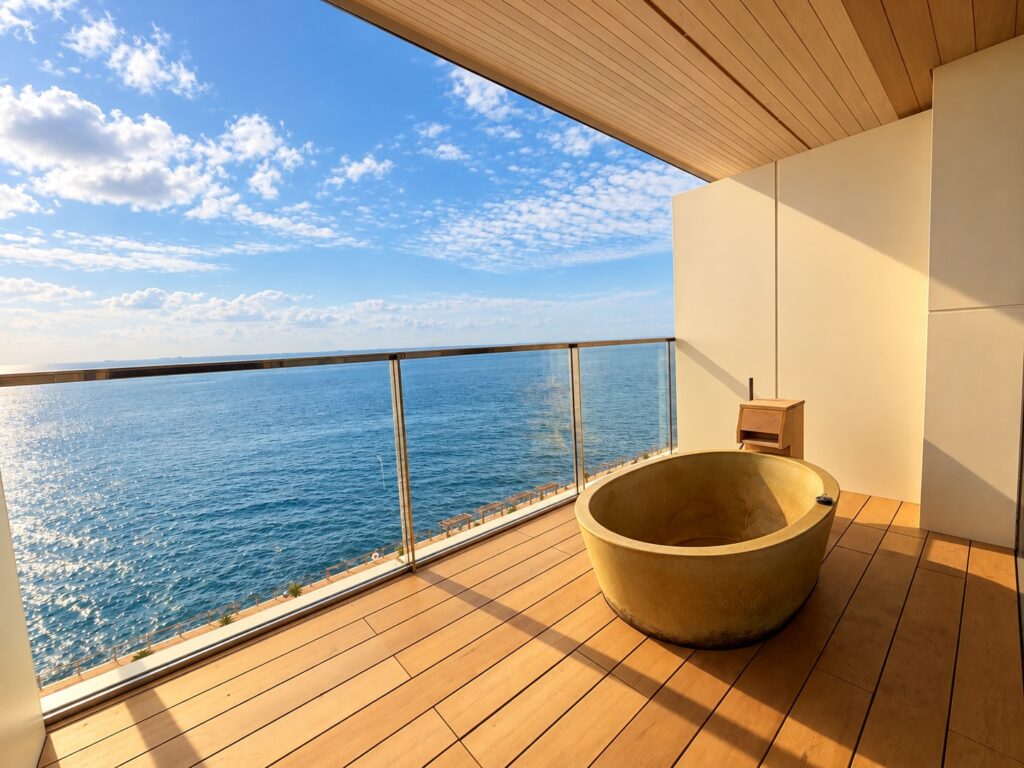
Three more days lay ahead, and I was keen to see how the personalized program would unfold. Already, it ended as beautifully as it began: with a soak in the outdoor hot springs bath right on the terrace. This certainly was an encouraging start.
OPTIONS FOR SERIOUS HEALTH ENTHUSIASTS
The three-night Mibyo Experience is an excellent restorative break. A long-stay programme of 30 nights or more, tailored to each guest, is also on offer for serious health and wellness enthusiasts.
“I’m going to do this one day,” I said to myself. “This alone will probably add ten years to my life.”